Paragraph
Paragraph is a Web3-native publishing platform that empowers writers and creators to build, own, and monetize their audience. …
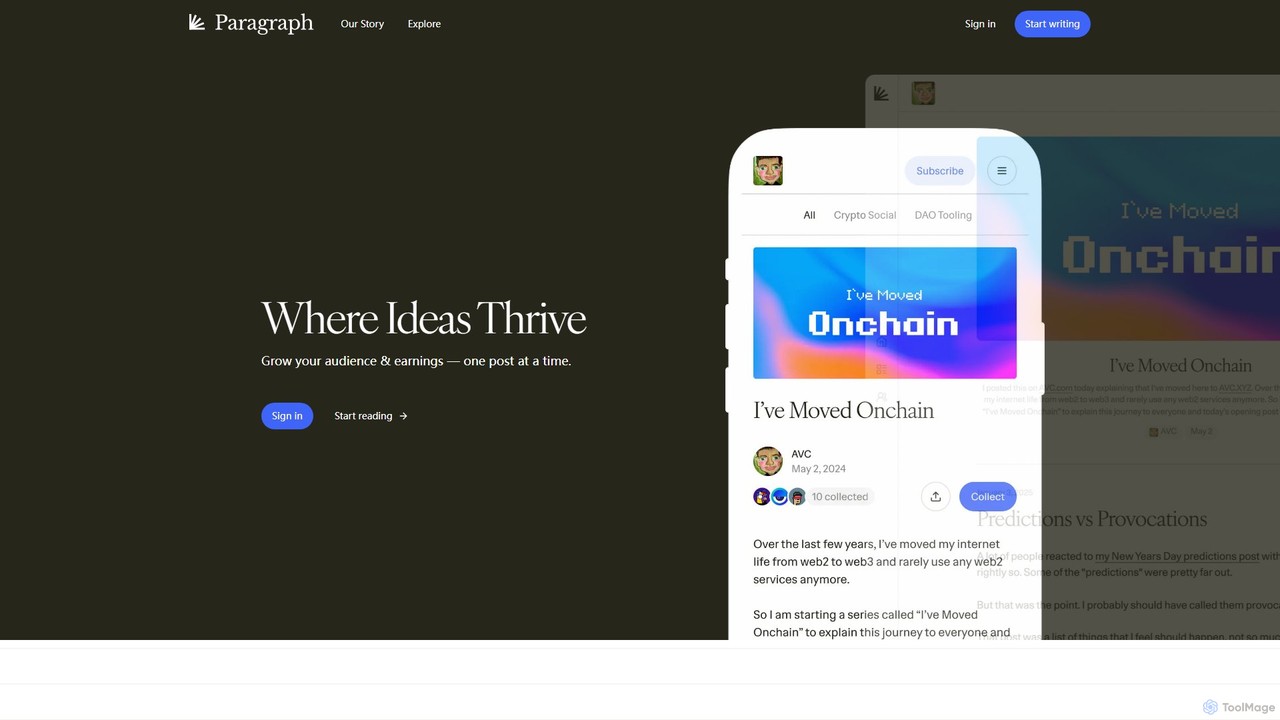
Paragraph is a Web3-native publishing platform that empowers writers and creators to build, own, and monetize their audience. It integrates blockchain technology to offer unique features like crypto subscriptions, content NFTs, and token-gated access, moving beyond traditional ads and paywalls.
About Newsletter
AI Newsletter tools are a specialized category of marketing software that uses artificial intelligence to automate and enhance the creation, personalization, and distribution of email newsletters. These tools leverage machine learning and natural language processing (NLP) to generate content, write compelling subject lines, and segment audiences dynamically. The primary value lies in saving significant time on content creation while increasing subscriber engagement through hyper-personalized messaging and optimized delivery times. This data-driven approach transforms newsletters from static broadcasts into dynamic, individualized communication channels.
Core Features
- AI Content Generation: Automatically drafts articles, summarizes content, and suggests topics based on specified inputs or web sources.
- Predictive Personalization: Tailors content, product recommendations, and calls-to-action for each subscriber based on their past behavior and preferences.
- Smart Segmentation: Uses AI to automatically group subscribers into dynamic segments based on engagement levels, interests, and predicted future actions.
- Send Time Optimization: Analyzes individual subscriber habits to send emails at the precise time they are most likely to open them.
- Subject Line Optimization: Generates and A/B tests multiple subject lines to identify and use the most effective version for different audience segments.
Use Cases
These tools are ideal for content creators, e-commerce businesses, and marketing teams. For instance, a media company can use AI to curate and summarize daily news for its morning brief, while an online store can automatically send personalized product recommendations to different customer segments, boosting sales and engagement.
How to Choose
When selecting an AI Newsletter tool, consider the quality and control over the AI-generated content. Evaluate its integration capabilities with your existing CRM or e-commerce platform. Assess the depth of its analytics and personalization features. Finally, compare pricing models, whether they are based on subscriber count, email volume, or feature tiers.

NewsletterUse Cases
Automated Content Curation for Publishers
A digital media publisher needs to send a daily news digest to thousands of subscribers. Instead of manually selecting and summarizing articles, the editorial team uses an AI Newsletter tool. The tool is configured to scan trusted news sources and the publisher's own website for top stories. It then automatically generates concise summaries for each story and drafts a complete newsletter. An editor reviews the draft for a few minutes, makes minor adjustments, and schedules the send. This process reduces the daily curation time from over two hours to under 15 minutes, allowing the team to focus on creating original content.
Personalized E-commerce Product Recommendations
An online fashion retailer wants to increase repeat purchases. They use an AI Newsletter tool that integrates with their e-commerce platform. The AI analyzes each customer's browsing history, past purchases, and items left in their cart. Every week, the tool automatically generates a personalized newsletter for each subscriber, featuring a 'You Might Like' section with AI-selected products. This hyper-personalization leads to a 30% higher click-through rate compared to their previous generic promotional emails, resulting in a measurable uplift in sales from their email marketing channel.
Optimizing Send Times for a Global Audience
A SaaS company has users across different time zones worldwide. Sending a feature update newsletter at a single time means it arrives at inconvenient hours for many. They adopt an AI Newsletter tool with Send Time Optimization (STO). The tool tracks when each user typically engages with their emails. When the company schedules a campaign, instead of sending it to everyone at once, the STO feature delivers the email to each subscriber at their individual optimal time over a 24-hour period. This simple change increases their overall open rate by 15% and ensures critical updates are seen by more users.
Automating a Creator's Weekly Newsletter
A solo content creator produces a weekly YouTube video and wants to engage their audience via email without spending hours writing. They use an AI Newsletter tool that can process a video link. The creator simply pastes the new video's URL into the tool. The AI transcribes the video, identifies the key topics, and drafts a newsletter that summarizes the video's main points, includes interesting quotes, and creates a clear call-to-action to watch the full video. The creator can then quickly add a personal note and send it, turning a multi-hour task into a 10-minute review process and consistently driving traffic back to their channel.
AI-Powered Subject Line A/B Testing
A marketing agency managing multiple client accounts wants to maximize email open rates. For a major campaign, they use an AI Newsletter tool's subject line generator. It produces ten diverse options, from straightforward to creative. Instead of manually setting up a complex A/B test, they use the tool's automated testing feature. The platform sends the different subject lines to a small percentage of the audience, measures which one performs best in the first hour, and then automatically sends the winning subject line to the rest of the list. This data-driven process consistently finds the optimal message and improves campaign performance without manual oversight.
Dynamic Segmentation for Re-engagement Campaigns
A mobile app company notices a segment of users has become inactive. Instead of sending a generic 'We miss you' email, they use their AI Newsletter platform's smart segmentation. The AI identifies users who haven't opened the app in 30 days and further segments them based on their most used features before they became inactive. The tool then helps craft different newsletter versions for each segment, highlighting new updates related to their favorite features. This targeted approach feels more personal and relevant, resulting in a significantly higher reactivation rate than a one-size-fits-all campaign.