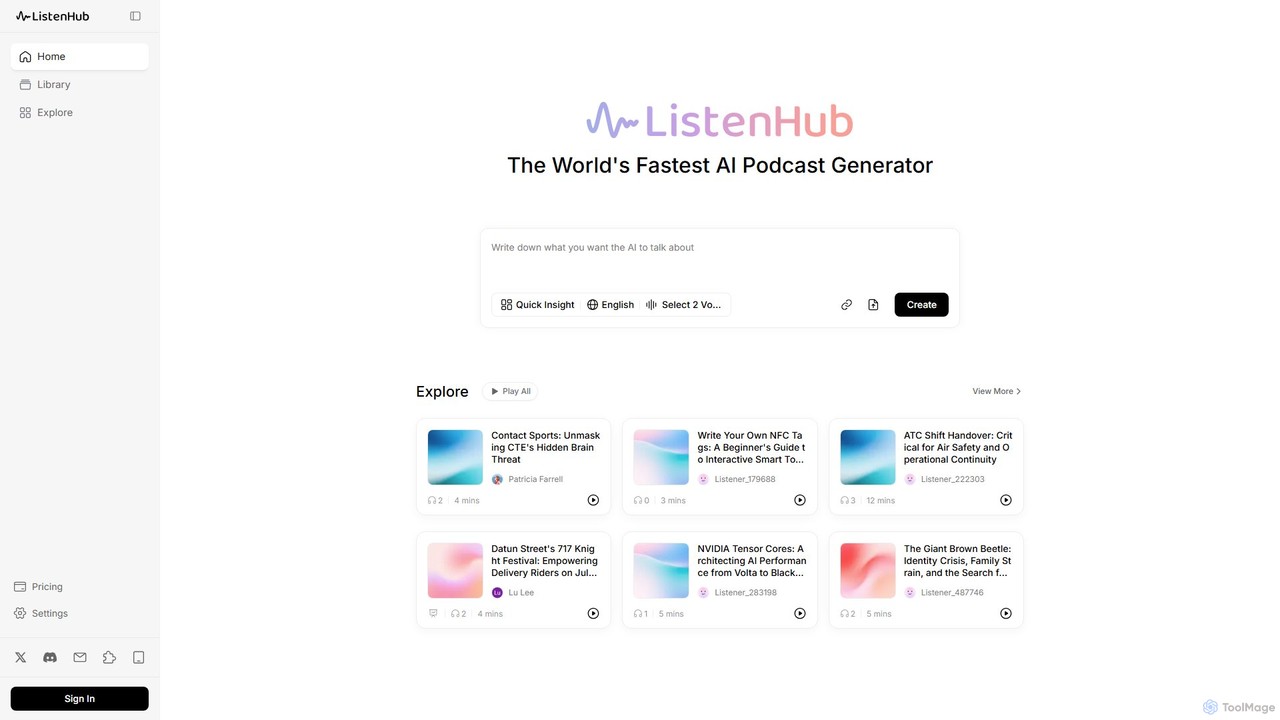
ListenHub
ListenHub is an AI-powered podcast generator that transforms text, documents, and articles into ultra-realistic audio podcasts. It features …
ListenHub is an AI-powered podcast generator that transforms text, documents, and articles into ultra-realistic audio podcasts. It features advanced voice cloning, a library of premium voices, and supports various content formats, making it easy to create and listen to personalized audio content anywhere.
About Podcast Generation
Podcast Generation tools are AI-powered platforms that automate the creation of audio content for podcasts. They leverage advanced natural language processing (NLP) and text-to-speech (TTS) technologies to convert scripts into natural-sounding spoken audio. These tools enable content creators, marketers, and businesses to produce high-quality podcast episodes quickly and efficiently, even without professional voice actors or extensive audio editing skills. They often include features for script writing assistance, voice customization, and background music integration, streamlining the entire production workflow within the broader marketing context.
Core Features
- Text-to-Speech (TTS) Conversion: Transforms written scripts into lifelike spoken audio using various AI voices.
- Voice Customization: Allows users to select different voice styles, accents, and emotional tones, or even clone existing voices.
- Script Generation/Assistance: Provides AI-driven suggestions or full script drafts based on topics and keywords.
- Background Music & Sound Effects: Integrates royalty-free music and sound effects to enhance audio quality and listener engagement.
- Multi-language Support: Generates podcasts in multiple languages, expanding audience reach.
Use Cases
Content creators, marketers, educators, and businesses utilize these tools for various audio content needs. They are ideal for repurposing written content, creating educational modules, or producing regular brand communication. These tools fit seamlessly into digital marketing strategies by providing an efficient way to engage audio audiences.
How to Choose
When selecting a podcast generation tool, prioritize voice quality and variety to ensure natural-sounding audio. Evaluate the range of script editing and AI assistance features, as well as integration capabilities with existing content workflows. Consider the pricing model and scalability to match your production volume and budget, ensuring it meets your specific content creation and marketing objectives.
Podcast GenerationUse Cases
Automating Daily News Briefs
News organizations or content curators can use podcast generation tools to automatically convert daily news summaries or blog posts into short audio briefs. This allows them to quickly deliver timely updates to listeners, expanding their content distribution channels and reaching audiences who prefer audio consumption, without the need for manual recording or voice talent.
Creating Educational Audio Lessons
Educators and e-learning platforms can leverage these tools to transform written course materials, lecture notes, or textbook chapters into engaging audio lessons. This provides students with an alternative learning format, supports accessibility, and allows for rapid production of supplementary educational content, making learning more flexible and accessible.
Generating Marketing & Brand Story Podcasts
Marketing teams can utilize AI podcast generation to produce regular brand story episodes, product updates, or thought leadership content. By converting blog posts, whitepapers, or campaign narratives into audio, they can engage audiences on podcast platforms, enhance brand presence, and repurpose existing content efficiently for a wider reach in the marketing funnel.
Producing Internal Company Communications
Large organizations can use podcast generation tools to create internal audio newsletters, executive messages, or training modules for employees. This offers a dynamic and accessible way to disseminate important information, foster a sense of community, and ensure consistent messaging across distributed teams, improving internal communication efficiency.
Repurposing Blog Posts into Audio Episodes
Bloggers and content creators can easily convert their existing written articles into full-fledged podcast episodes. This strategy maximizes content reach by catering to audio listeners, boosts SEO through diverse content formats, and saves significant time and resources compared to manually recording each episode, effectively expanding their audience base.
Developing Fictional Storytelling Podcasts
Independent writers and creative studios can employ AI podcast generation to bring fictional narratives to life. By inputting scripts, they can experiment with different AI voices for characters, add atmospheric sound effects, and produce serialized audio dramas or short stories, offering a cost-effective way to produce immersive storytelling content.