e_label
e_label is a specialized platform for wineries to effortlessly create EU-compliant electronic labels. It simplifies adherence to Regulation …
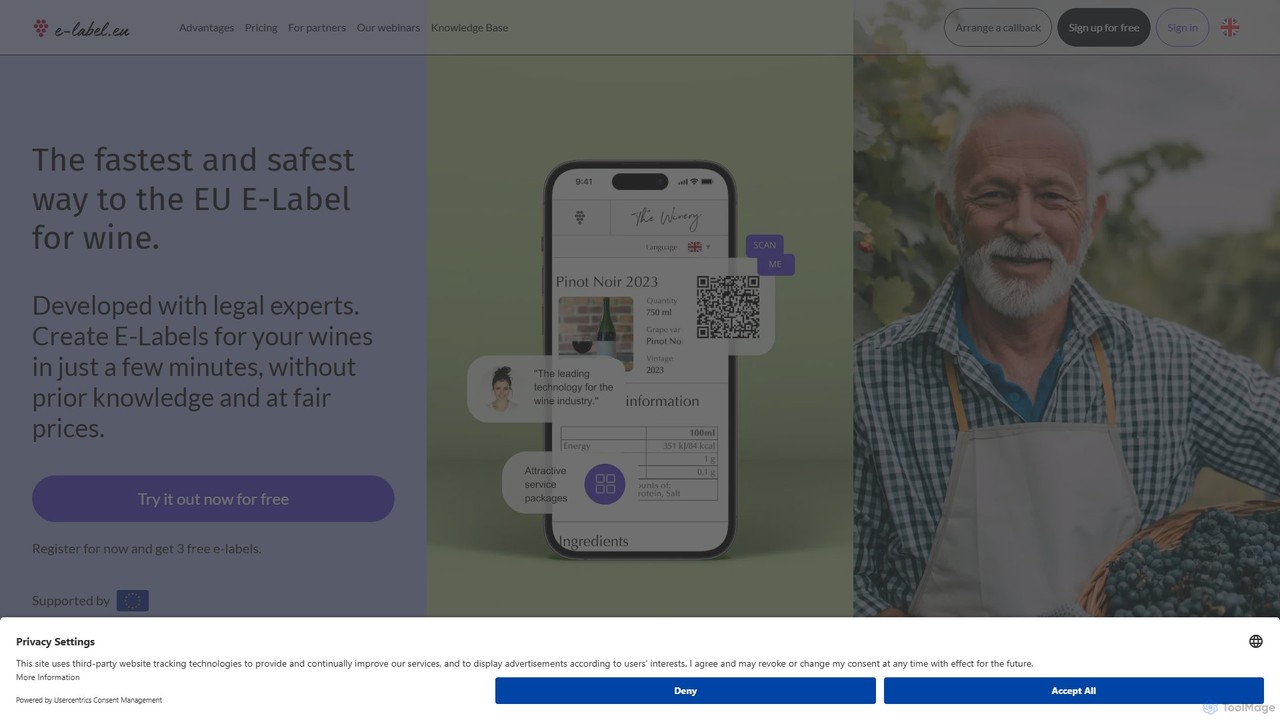
e_label is a specialized platform for wineries to effortlessly create EU-compliant electronic labels. It simplifies adherence to Regulation (EU) 2021/2117 by generating dynamic QR codes that link to comprehensive nutrition facts, ingredient lists, and recycling information. Developed with legal experts, the tool automates calculations and translations, providing a fast, secure, and cost-effective solution for wine producers to meet new labeling requirements without technical expertise.
About Product Labeling
Product Labeling tools are AI-powered solutions designed to automate and optimize the creation of product descriptions, labels, and marketing copy. These tools leverage natural language generation (NLG) and machine learning to analyze product attributes, target audience data, and market trends. They help businesses generate accurate, compliant, and compelling product information at scale, significantly enhancing efficiency in marketing and e-commerce operations.
Core Features
- Automated Description Generation: Automatically creates unique and engaging product descriptions based on input data like features, benefits, and keywords.
- Compliance Checking: Scans generated content for adherence to industry regulations, legal requirements, and brand guidelines.
- Multi-language Support: Generates product labels and descriptions in various languages, facilitating global market reach.
- SEO Optimization: Integrates relevant keywords and phrases to improve product visibility in search engine results.
- Variant Generation: Produces multiple versions of labels or descriptions for A/B testing or different marketing channels.
Use Cases
These AI tools are primarily used by e-commerce businesses, marketing teams, product managers, and content creators. They streamline the process of launching new products, updating existing catalogs, and ensuring consistency across all sales channels. For instance, a large online retailer can use these tools to quickly generate thousands of unique product descriptions for their diverse inventory.
How to Choose
When selecting an AI product labeling tool, consider its integration capabilities with existing PIM/e-commerce platforms, the accuracy and naturalness of its language generation, and its support for multiple languages. Evaluate its compliance features for your specific industry, the level of customization offered for brand voice, and the scalability of its output to match your product volume.

Product LabelingUse Cases
Generating E-commerce Product Descriptions at Scale
E-commerce managers often face the challenge of writing unique, SEO-friendly descriptions for thousands of products. AI product labeling tools allow them to input product specifications and target keywords, then automatically generate high-quality, engaging descriptions in minutes. This drastically reduces manual effort, ensures consistency, and improves product visibility on online marketplaces and brand websites.
Ensuring Regulatory Compliance for Food Labels
Food manufacturers must adhere to strict labeling regulations regarding ingredients, nutritional facts, and allergens. AI product labeling solutions can analyze product formulations and automatically generate compliant labels, flagging potential issues or missing information. This minimizes the risk of legal penalties and ensures consumer safety, saving significant time for regulatory affairs teams.
Localizing Product Information for Global Markets
Businesses expanding internationally need to translate and localize product labels and descriptions for various regions. AI product labeling tools can generate culturally appropriate and linguistically accurate content in multiple languages simultaneously. This accelerates market entry, ensures brand consistency across borders, and resonates better with local consumers.
Creating Dynamic Marketing Copy for Product Launches
Marketing teams launching new products require diverse copy for social media, ads, and email campaigns. AI product labeling tools can generate various compelling headlines, taglines, and short descriptions tailored to different channels and audience segments. This enables rapid A/B testing and optimizes campaign performance, ensuring the product's unique selling points are effectively communicated.
Automating Product Attribute Extraction and Tagging
For large product catalogs, manually extracting key attributes and tagging them for search and filtering is time-consuming. AI product labeling tools can process raw product data (e.g., from supplier sheets) to automatically identify and tag attributes like color, material, size, and features. This improves data quality, enhances search functionality for customers, and streamlines inventory management.
Personalizing Product Recommendations with AI-Generated Labels
Retailers aim to offer personalized shopping experiences. AI product labeling can generate dynamic, personalized product descriptions or labels based on individual customer preferences and browsing history. For example, highlighting 'eco-friendly' aspects for a sustainability-conscious shopper. This increases engagement and conversion rates by making product information more relevant to each customer.