ToolMage
Sign in

Best 1 Qr Code Generation AI tools for Marketing

Popular Qr Code Generation AI tools in Marketing include Menyo AI, helping you work more efficiently.

Menyo AI
Freemium

Menyo AI

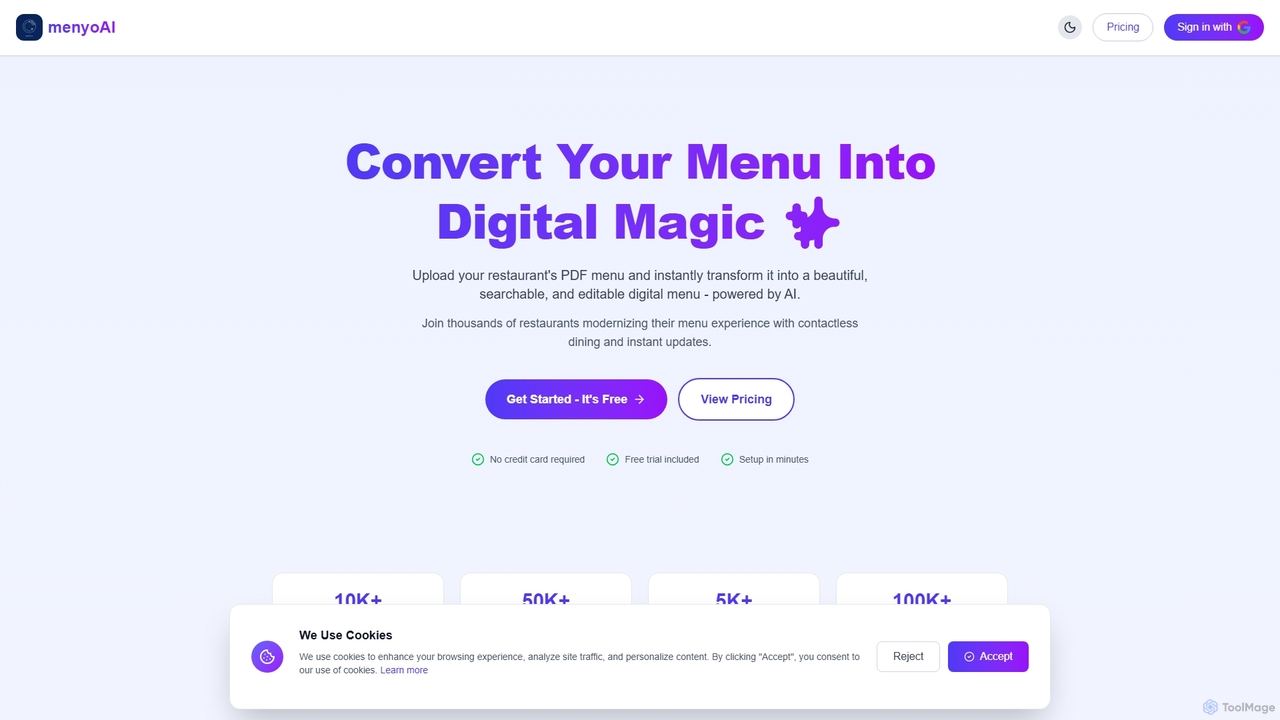
Menyo AI is an AI-powered platform that transforms traditional PDF restaurant menus into interactive, digital experiences. It enables restaurants to effortlessly create, manage, and update beautiful, searchable, and multi-language digital menus, complete with custom QR codes and real-time analytics, enhancing customer engagement and operational efficiency.

Restaurant Insights
Visits 4.7KFavorites 144Likes 141

About Qr Code Generation

QR Code Generation tools are AI-powered platforms designed to create scannable two-dimensional barcodes that store various types of information. These tools leverage advanced algorithms to produce both static and dynamic QR codes, often incorporating customization, tracking, and bulk generation capabilities. They serve as a vital bridge between physical and digital realms, enabling businesses and individuals to drive engagement, share information efficiently, and enhance marketing strategies.

Core Features

  • Dynamic QR Codes: Generate editable QR codes whose destination content can be changed anytime without reprinting, crucial for flexible marketing campaigns.
  • Customization & Branding: Integrate logos, brand colors, and unique designs into QR codes, making them visually appealing and consistent with brand identity.
  • Performance Tracking & Analytics: Monitor scan rates, locations, and device types to gain insights into user engagement and campaign effectiveness.
  • Bulk Generation: Create multiple QR codes simultaneously from a spreadsheet or database, ideal for large-scale product labeling or event ticketing.
  • API Integration: Seamlessly connect QR code generation functionality with existing marketing platforms, CRM systems, or content management tools.

Use Cases

These tools are indispensable for marketers, small business owners, and event organizers looking to connect offline audiences with online content. They are used to direct customers to websites, social media profiles, app downloads, or contact information, streamlining user journeys and providing measurable interaction points in print media, product packaging, and physical advertisements.

How to Choose

When selecting a QR Code Generation tool, consider the need for dynamic codes for campaign flexibility, the extent of customization options for branding, and the availability of robust analytics for performance measurement. Evaluate integration capabilities with your existing marketing stack and assess pricing models based on features like bulk generation limits and scan volumes to ensure it aligns with your operational scale and budget.

Qr Code Generation use cases

1

Enhance Product Packaging with Interactive Content

A consumer goods brand uses QR code generation tools to embed dynamic QR codes on product packaging. Scanning the code directs customers to product tutorials, recipe ideas, or exclusive promotional offers, enriching the post-purchase experience and driving repeat engagement. This allows for real-time content updates without costly packaging redesigns.

2

Streamline Event Registration and Information Sharing

Event organizers utilize QR code generators to create unique codes for attendee tickets or information booths. Attendees can quickly scan a code to access event schedules, speaker bios, venue maps, or register for sessions, significantly reducing wait times and paper waste while providing a seamless experience.

3

Boost Restaurant Menu Accessibility and Updates

Restaurant owners employ QR codes to provide digital menus. Customers scan a code at their table to view the latest menu, complete with high-resolution images and allergen information. This enables easy, instant menu updates for daily specials or price changes, eliminating printing costs and ensuring accuracy.

4

Facilitate Business Card Digitalization and Networking

Professionals generate vCard QR codes for their business cards. When scanned, the code automatically adds their contact details to a smartphone's address book. This modernizes networking, ensures accurate information transfer, and allows for easy updates to contact details without reprinting cards.

5

Drive App Downloads and User Acquisition

Mobile app developers and marketers use QR codes in print ads, posters, or websites to directly link to app store download pages (App Store or Google Play). This simplifies the user acquisition process, providing a direct and trackable path from offline promotions to app installation.

6

Collect Customer Feedback and Reviews Efficiently

Retail businesses and service providers place QR codes at points of sale or service locations. Customers can scan the code to instantly access a feedback form or review platform, making it convenient to share their experience and helping businesses gather valuable insights for improvement.

Qr Code Generation FAQ

What are QR Code Generation tools?

QR Code Generation tools are software or online platforms that create scannable two-dimensional barcodes, known as QR codes. These codes can store various data types like URLs, text, contact information, or Wi-Fi credentials, acting as a quick link between physical objects and digital content. They are widely used in marketing, logistics, and information sharing.

How do I choose the right QR code generator for my needs?

To choose the right QR code generator, consider if you need dynamic codes for editable content and tracking, the level of customization for branding, and the availability of robust analytics to monitor performance. Also, evaluate bulk generation capabilities for large projects, API integration options for workflow automation, and the pricing structure based on your usage volume and feature requirements.

What is the difference between static and dynamic QR codes?

Static QR codes store destination data directly and cannot be changed once generated; if the linked content changes, a new code is needed. Dynamic QR codes, however, use a short redirect URL, allowing you to change the destination content anytime without altering the physical code. Dynamic codes also enable tracking and analysis, making them ideal for marketing campaigns.

What types of content can QR codes link to?

QR codes can link to a wide array of content types, including website URLs, plain text, email addresses, phone numbers, SMS messages, Wi-Fi network credentials, vCards (contact information), app store download links, PDF files, and even locations on maps. This versatility makes them highly adaptable for various communication and marketing purposes.

How do QR codes enhance marketing efforts?

QR codes enhance marketing by bridging the gap between offline and online channels. They provide a quick, measurable way for consumers to access digital content from print ads, product packaging, or storefronts. This drives website traffic, increases social media engagement, facilitates lead generation, and offers valuable data on campaign performance through scan analytics, ultimately improving ROI.