
Marketing Best in category 1 results Restaurant Tech AI Tool

Popular AI tools in the Restaurant Tech field of Marketing include Menusso, etc., helping you quickly improve efficiency.

Menusso

Menusso

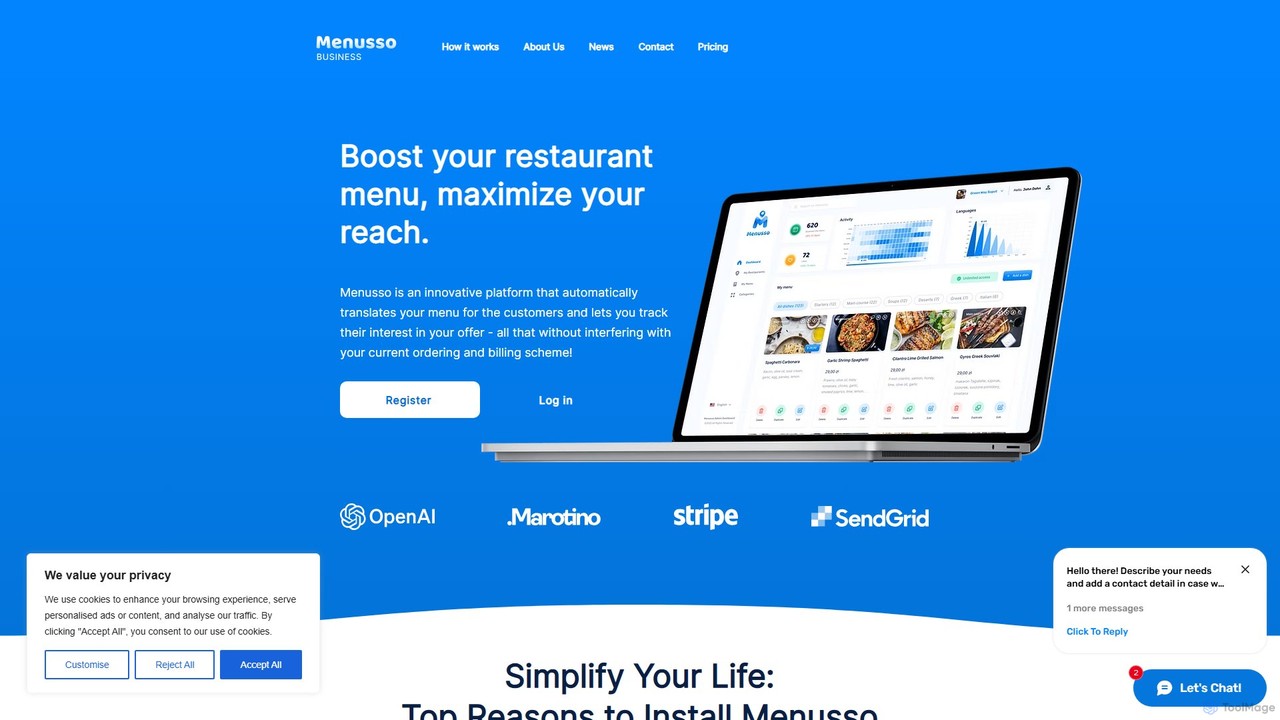
Menusso is an AI-powered digital menu system for restaurants. It offers real-time menu updates, automatic translation into 15 …

2.9K

About Restaurant Tech

Restaurant Tech AI tools are specialized applications designed to optimize restaurant operations, marketing, and the customer experience. These tools leverage artificial intelligence, machine learning, and data analytics to automate tasks, provide predictive insights, and personalize guest interactions. They help restaurants increase efficiency, boost online visibility, manage inventory, and build customer loyalty in a competitive market. This technology transforms raw data from sales and customer feedback into actionable strategies for growth.

Core Features

  • Predictive Analytics: Forecasts sales trends, customer traffic, and inventory needs to optimize staffing and reduce food waste.
  • AI-Powered Menu Engineering: Analyzes item profitability and popularity to suggest pricing adjustments, menu placement, and promotional strategies.
  • Automated Customer Engagement: Manages loyalty programs, sends personalized marketing messages, and uses chatbots for reservations or inquiries.
  • Online Reputation Management: Monitors reviews across multiple platforms, analyzes sentiment, and can generate draft responses to customer feedback.
  • Smart Ordering & Delivery Optimization: Streamlines online ordering systems with intelligent upselling and optimizes delivery routes for efficiency.

Use Cases

These tools are valuable for various food service businesses, from single-location cafes and quick-service restaurants (QSRs) to multi-unit chains and fine-dining establishments. Restaurant managers use them for daily operations and staff scheduling, while marketing teams leverage them for targeted campaigns and reputation management. Chefs and kitchen staff benefit from precise inventory forecasting.

How to Choose

When selecting a Restaurant Tech AI tool, first consider its integration capabilities with your existing Point of Sale (POS) system and delivery platforms. Evaluate the depth of its analytics and reporting features. Assess its scalability to ensure it can grow with your business. Finally, consider the user interface and the level of training required for your staff to use it effectively.

Restaurant TechUse Cases

1

Dynamic Menu Pricing and Promotions

A cafe manager uses a restaurant tech tool to implement dynamic pricing. The AI analyzes real-time data, including local weather, nearby events, and historical sales patterns. On a hot afternoon, the system automatically suggests a 15% discount on iced coffees and promotes it on digital menu boards. Conversely, it might slightly increase the price of popular pastries during peak morning hours. This strategy helps maximize revenue and move inventory efficiently without constant manual oversight.

2

Automating Customer Loyalty and Retention

A marketing coordinator for a small restaurant chain uses an AI tool integrated with their POS system. The tool automatically segments customers based on visit frequency and spending habits. It identifies a group of 'at-risk' customers who haven't visited in over 90 days and sends them a personalized 'We Miss You' email with a compelling offer. For loyal customers, it automatically sends a birthday reward. This automated process saves hours of manual work and helps maintain a strong customer base.

3

Optimizing Kitchen Inventory with Predictive Analytics

A head chef at a fine-dining restaurant uses an AI platform to reduce food waste. The system analyzes past sales data, upcoming reservations, and even external factors like holidays or local weather forecasts. It then generates highly accurate purchasing recommendations for perishable items. For example, it might predict a higher demand for seafood on a sunny weekend and advise ordering more fish, while reducing the order for heavy stews. This leads to fresher ingredients, lower waste, and better cost control.

4

Managing Online Reputation Across Multiple Platforms

The owner of a restaurant with locations in three cities uses an AI reputation management tool. It aggregates all new reviews from Google, Yelp, and TripAdvisor into a single dashboard. The AI analyzes the sentiment of each review, flagging urgent negative feedback for immediate attention. For common positive comments, it generates several context-aware response drafts. The owner can then quickly review, edit, and post a reply, ensuring consistent and timely engagement across all platforms, which significantly boosts their online ratings.

5

Intelligent Staff Scheduling and Labor Cost Control

A manager of a busy quick-service restaurant (QSR) uses an AI scheduling tool to optimize labor costs. The tool integrates with the POS system to analyze historical sales data and foot traffic patterns, accurately forecasting staffing needs for different times of the day. It automatically generates a schedule that ensures enough staff are on hand for peak rushes while preventing overstaffing during slower periods. The system also considers employee availability and local labor laws, reducing the time spent on manual scheduling by over 70%.

6

Enhancing Online Ordering with Smart Upselling

A ghost kitchen operator implements an AI-powered online ordering system. As a customer adds a burger to their cart, the AI instantly suggests relevant add-ons based on popular pairings, such as 'Add fries and a drink to make it a meal and save $2' or 'Customers also loved our onion rings with this'. This intelligent upselling is more effective than static suggestions because it's personalized and data-driven. This simple feature increases the average order value by 18% and improves the overall customer experience by making ordering easier and more intuitive.

Restaurant TechFrequently Asked Questions