ToolMage
Sign in

Best 25 Search Engine Optimization AI tools for Marketing

Popular Search Engine Optimization AI tools in Marketing include Clicks.so, Waikay, datahawk, DemandSphere, Ranklytics, ParasiteSEO, New, Loop54, LinkDR, and Relixir, helping you work more efficiently.

grocliq
Freemium

grocliq

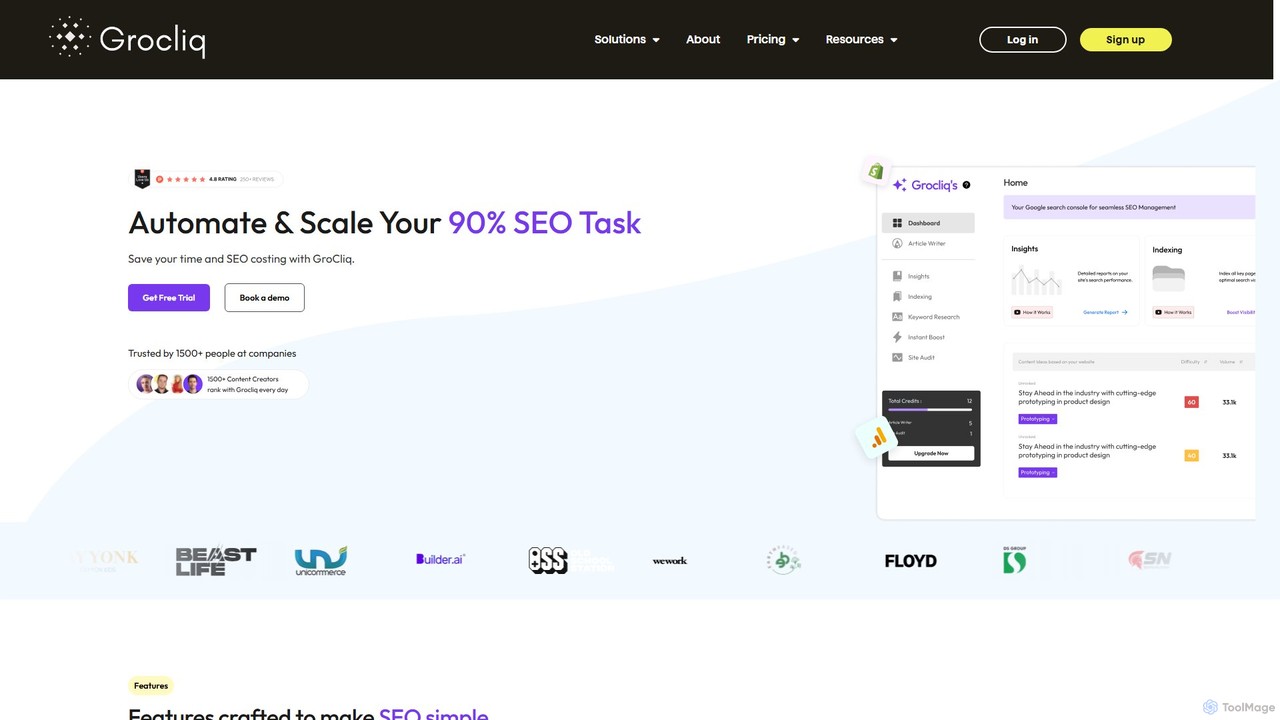
Grocliq is an all-in-one AI-powered SEO platform designed to automate and scale your search engine optimization efforts. It offers a comprehensive suite of tools for AI content creation, keyword research, instant indexing, competitor analysis, and website audits. Ideal for e-commerce stores, freelancers, and agencies looking to save time, reduce costs, and significantly boost organic traffic and sales.

Search Engine Optimization
Visits 7KFavorites 148Likes 135
About Search Engine Optimization

AI Search Engine Optimization (SEO) tools are specialized applications that leverage artificial intelligence and machine learning to automate and enhance the process of improving a website's visibility in search engine results. These tools analyze vast datasets to identify patterns, predict trends, and provide actionable insights that go beyond traditional manual analysis. They are designed to streamline complex tasks such as keyword research, content optimization, and technical site audits, ultimately helping to drive more organic traffic. As a key component of digital marketing, AI SEO tools empower users to make more data-driven decisions and adapt quickly to changing search engine algorithms.

Core Features

  • AI-Powered Keyword Research: Identifies high-opportunity keywords, analyzes search intent, and groups related terms into topic clusters automatically.
  • Content Optimization: Provides real-time feedback on content, suggesting relevant terms, optimal structure, and readability improvements to rank higher.
  • Automated Technical Audits: Scans websites to detect and prioritize technical issues like crawl errors, broken links, and schema markup problems.
  • Predictive Analytics: Forecasts ranking performance, estimates traffic potential for keywords, and identifies emerging content trends.
  • Backlink Analysis: Uses AI to assess the quality of backlinks, identify toxic links for disavowal, and discover new link-building opportunities.

Use Cases

These tools are essential for SEO specialists, content marketers, digital marketing agencies, and business owners. They are used for developing data-backed content strategies, optimizing existing web pages for higher rankings, monitoring competitor SEO performance, and automating routine technical checks to maintain site health.

How to Choose

When selecting an AI SEO tool, consider the scope of its features—whether it's an all-in-one platform or specialized for a task like content or technical SEO. Evaluate its integration capabilities with tools like Google Analytics and Search Console, the accuracy of its data, and the user interface's ease of use. Finally, match the tool's complexity and pricing model to your team's expertise and budget.

Featured tool rankings

Search Engine Optimization use cases

1

Automated Content Brief Generation

For content managers and SEO strategists, creating detailed, data-driven content briefs is a time-consuming but critical task. An AI SEO tool automates this process by analyzing top-ranking pages for a target keyword. It extracts key information such as common subheadings, frequently asked questions, optimal word count, and semantically related terms. The tool then compiles this data into a structured brief. This allows writers to receive a comprehensive guide in minutes, ensuring every piece of content is created with SEO best practices from the start, significantly reducing research time and improving ranking potential.

2

Intelligent Keyword Clustering

An SEO strategist often deals with thousands of keywords. Manually grouping them into relevant topics is prone to errors and incredibly inefficient. AI SEO tools use natural language processing (NLP) to understand the semantic relationship between keywords. By inputting a large list of keywords, the tool automatically groups them into tight, relevant clusters based on search intent. This helps in planning a pillar-and-cluster content model, structuring the website architecture logically, and ensuring that pages target a focused group of related queries, which is highly favored by search engines.

3

Real-time On-Page SEO Optimization

Content writers and editors can use AI SEO tools integrated into their writing platforms (like Google Docs or WordPress). As they write, the tool provides a real-time SEO score and actionable suggestions. It highlights missing keywords, suggests improvements for headings, checks readability, and ensures the tone matches the target audience's intent. This iterative feedback loop allows creators to optimize content during the creation process, not as an afterthought. The result is a highly optimized article ready for publication, saving significant time on post-writing edits and increasing the chances of ranking well from day one.

4

Automated Technical SEO Site Audits

A technical SEO specialist or webmaster needs to regularly monitor a website's health. AI SEO tools can be scheduled to perform comprehensive site audits automatically (e.g., weekly or monthly). These tools crawl the entire site, simulating search engine behavior, to identify issues like 404 errors, slow page speeds, improper redirects, duplicate content, and missing schema markup. The AI then prioritizes these issues based on their potential impact on SEO performance. This provides a clear, actionable roadmap for technical fixes, ensuring the site remains technically sound and easily crawlable by search engines without constant manual checks.

5

Competitor Content Gap Analysis

A digital marketing manager can use an AI SEO tool to perform a content gap analysis against key competitors. By inputting their own domain and several competitor domains, the tool crawls and analyzes all sites to identify keywords and topics that competitors are ranking for, but the user's site is not. The AI can even categorize these opportunities by search volume and relevance. This provides a strategic list of high-potential content ideas to target, allowing the marketing team to systematically close the gap and capture a larger share of the market's organic search traffic.

6

Internal Linking Structure Optimization

For an established website with hundreds or thousands of pages, identifying the best internal linking opportunities is a major challenge. An SEO specialist can use an AI tool to analyze the entire site's content. The tool identifies 'orphan pages' with few or no internal links and suggests relevant contextual linking opportunities. For example, it might recommend linking from a high-authority blog post to a related product page that lacks link equity. This process helps distribute PageRank more effectively across the site, improves crawlability, and strengthens the topical authority of key pages in the eyes of search engines.

Search Engine Optimization FAQ

What are AI Search Engine Optimization (SEO) tools?

AI Search Engine Optimization (SEO) tools are advanced software that use artificial intelligence and machine learning to enhance and automate SEO tasks. Unlike traditional tools that rely on static rules and manual data sifting, AI tools can analyze massive datasets, identify complex patterns, predict search trends, and provide data-driven recommendations. Their primary goal is to make SEO more efficient and effective by automating tasks like keyword clustering, content optimization, and technical site auditing, allowing specialists to focus on high-level strategy.

How do AI SEO tools differ from traditional SEO tools?

The key difference lies in data processing and insight generation. Traditional SEO tools (like basic rank trackers or keyword finders) provide raw data and rely on the user to interpret it. AI SEO tools go a step further by using machine learning to analyze that data, uncover hidden correlations, and provide predictive insights and actionable recommendations. For example, a traditional tool might give you a list of 1,000 keywords, while an AI tool will automatically group them into semantic clusters based on user intent, saving hours of manual work and providing a clearer strategic direction.

What are the key features to look for in an AI SEO tool?

When evaluating an AI SEO tool, look for these core features:

  • Topical Clustering: The ability to automatically group large sets of keywords into relevant topics based on search intent.
  • Content Optimization: Real-time analysis and suggestions for improving content, often including NLP-based term suggestions.
  • Technical SEO Auditing: Automated crawling and detection of site health issues, with prioritization of critical errors.
  • Predictive Analytics: Features that forecast ranking potential, traffic changes, or identify emerging trends before they become mainstream.
  • Integrations: The ability to connect with essential data sources like Google Search Console and Google Analytics for a more holistic view.
Can AI completely replace human SEO specialists?

No, AI is a powerful assistant, not a replacement. AI excels at processing data, automating repetitive tasks, and identifying patterns at a scale humans cannot. However, it lacks the creativity, strategic thinking, and nuanced understanding of a brand's voice and audience that a human specialist provides. The most effective approach is a collaboration where SEO professionals use AI tools to handle the heavy data lifting, freeing them up to focus on strategy, content quality, user experience, and building relationships—areas where human expertise remains crucial.

Who can benefit from using AI SEO tools?

A wide range of professionals can benefit from AI SEO tools. SEO Specialists can automate routine tasks and gain deeper insights for strategy. Content Marketers can create more effective, optimized content briefs and articles. Digital Marketing Agencies can scale their operations and provide more data-driven results for clients. Small Business Owners can leverage these tools to compete with larger companies by making smarter SEO decisions without needing a large, dedicated team. Essentially, anyone responsible for driving organic traffic and improving search engine visibility can find significant value in these tools.