TempMail4U
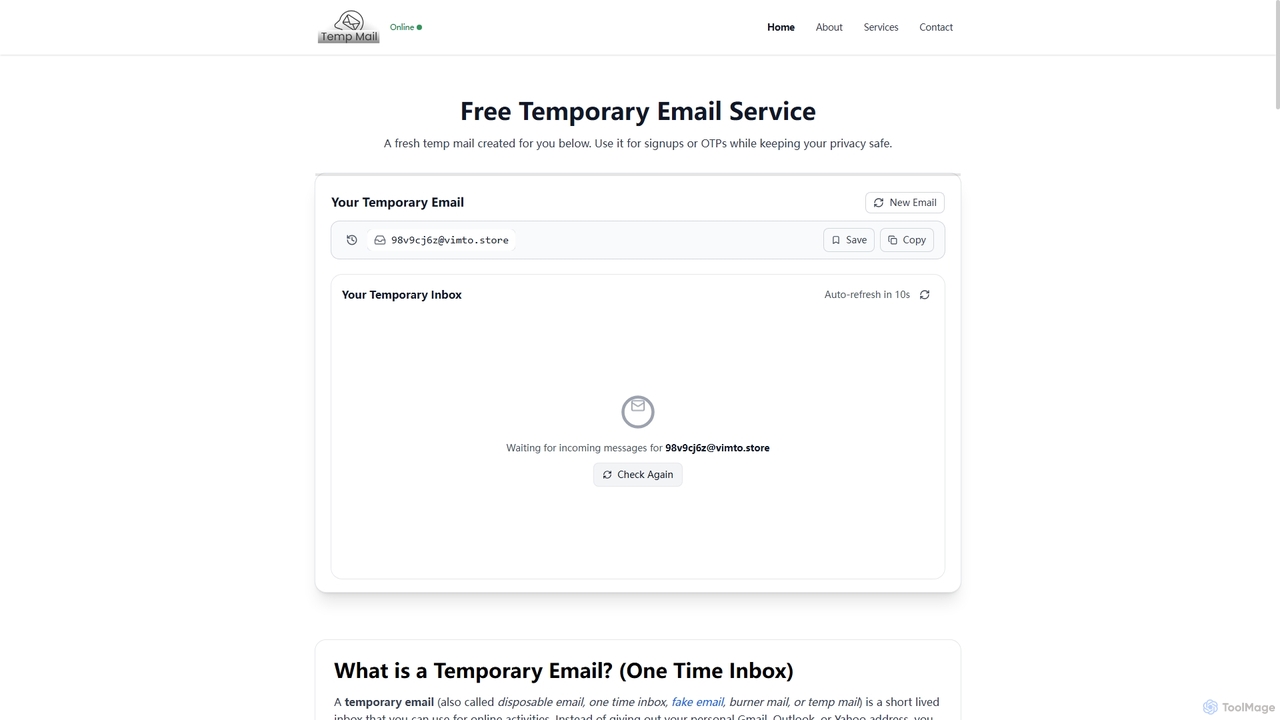
TempMail4U is a free, privacy-focused temporary email service that provides instant, disposable email addresses. It allows users to …
TempMail4U is a free, privacy-focused temporary email service that provides instant, disposable email addresses. It allows users to receive verification codes and messages without exposing their personal inbox to spam, ads, or potential data leaks, offering various durations from 10 minutes to 7 days.
About Spam Prevention
Spam Prevention tools are a class of AI-powered solutions designed to automatically detect and block unwanted and malicious submissions on websites and applications. These tools utilize machine learning algorithms to analyze user behavior, content patterns, and technical data in real-time, distinguishing between genuine users and automated bots. Their primary value in marketing is to protect lead generation forms, comment sections, and registration pages, ensuring data integrity and improving the quality of marketing intelligence. This proactive defense helps maintain a clean and secure digital environment for user engagement.
Core Features
- Behavioral Analysis: Analyzes user interaction patterns like typing speed and mouse movements to identify non-human behavior without intrusive challenges.
- Content & IP Intelligence: Scans submitted text for spam keywords and malicious links while checking the user's IP address against global threat databases.
- Invisible CAPTCHA/Honeypots: Implements security measures that are invisible to human users but effectively trap and block automated bots.
- Real-time Threat Adaptation: Continuously learns from new spam tactics across a global network to update its detection models automatically.
Applicable Scenarios
These tools are essential for any business with an online presence, particularly in digital marketing, e-commerce, and online communities. They are used to secure contact forms on corporate websites, prevent spam in blog comments, block fake account registrations on e-commerce platforms, and ensure the integrity of newsletter sign-ups.
Selection Criteria
When choosing a Spam Prevention tool, consider its integration capabilities with your existing platforms (like WordPress or marketing automation systems). Evaluate its detection accuracy and the rate of false positives to ensure legitimate users are not blocked. Also, assess its impact on website performance and whether its user experience is seamless and unobtrusive.
Spam PreventionUse Cases
Protecting Lead Generation Forms
A B2B technology company uses an AI spam prevention tool on its 'Request a Demo' form. Previously, their sales team wasted hours each week sifting through hundreds of bot-generated submissions with fake contact information. By implementing the tool, it now silently analyzes each submission in the background. It blocks over 99% of automated spam without requiring legitimate prospects to solve a CAPTCHA, ensuring a smooth user experience. This results in a cleaner CRM, higher quality leads, and allows the sales team to focus their efforts on genuine potential customers.
Securing Blog Comment Sections
A popular online publisher struggled with comment spam on their articles, which damaged their brand's credibility and user engagement. Manual moderation was time-consuming and inefficient. After integrating an AI spam prevention service, the system automatically analyzes each new comment for spammy links, irrelevant text, and bot-like patterns. It quarantines suspicious comments for review while allowing genuine discussions to appear instantly. This has reduced the moderation workload by over 90% and fostered a healthier, more engaging community around their content.
Preventing Fake User Registrations
An e-commerce platform faced a surge in fake account creations, which were used to post fraudulent reviews and abuse promotional offers. This skewed their user analytics and increased operational costs. They deployed an AI spam prevention solution on their sign-up page. The tool uses a combination of IP reputation checks, behavioral analysis, and disposable email address detection to block automated registrations in real-time. As a result, new account fraud dropped by 98%, improving the integrity of their user base and protecting their platform's reputation.
Maintaining Email List Hygiene
A digital marketing agency manages newsletter sign-ups for multiple clients. They noticed that many lists were being polluted with bot sign-ups, leading to high bounce rates and damaging sender reputations. By integrating a spam prevention API with their sign-up forms, they can now validate each new subscriber in real-time. The system flags and blocks submissions from known spam sources and temporary email providers. This ensures that their clients' email lists are composed of genuine, engaged subscribers, which directly improves email deliverability and campaign ROI.
Safeguarding Online Polls and Surveys
A market research firm conducts online surveys to gather consumer insights. The integrity of their data is paramount. To prevent bots from skewing results with automated responses, they protect their surveys with an AI spam prevention tool. The tool verifies that each submission is from a unique, human-like source by analyzing behavioral signals. This ensures that the collected data is reliable and accurately reflects genuine public opinion, allowing the firm to provide its clients with trustworthy and actionable market intelligence.
Blocking Malicious Login Attempts
A SaaS application provider identified a high volume of automated login attempts on its user portal, a common tactic for credential stuffing attacks. To protect user accounts, they implemented an AI-driven spam and bot prevention system. The system monitors login activity for suspicious patterns, such as rapid attempts from a single IP or logins from unusual geographic locations. It can then challenge or block these attempts before they compromise an account. This enhances platform security, protects sensitive user data, and builds trust with their customer base.