Storly
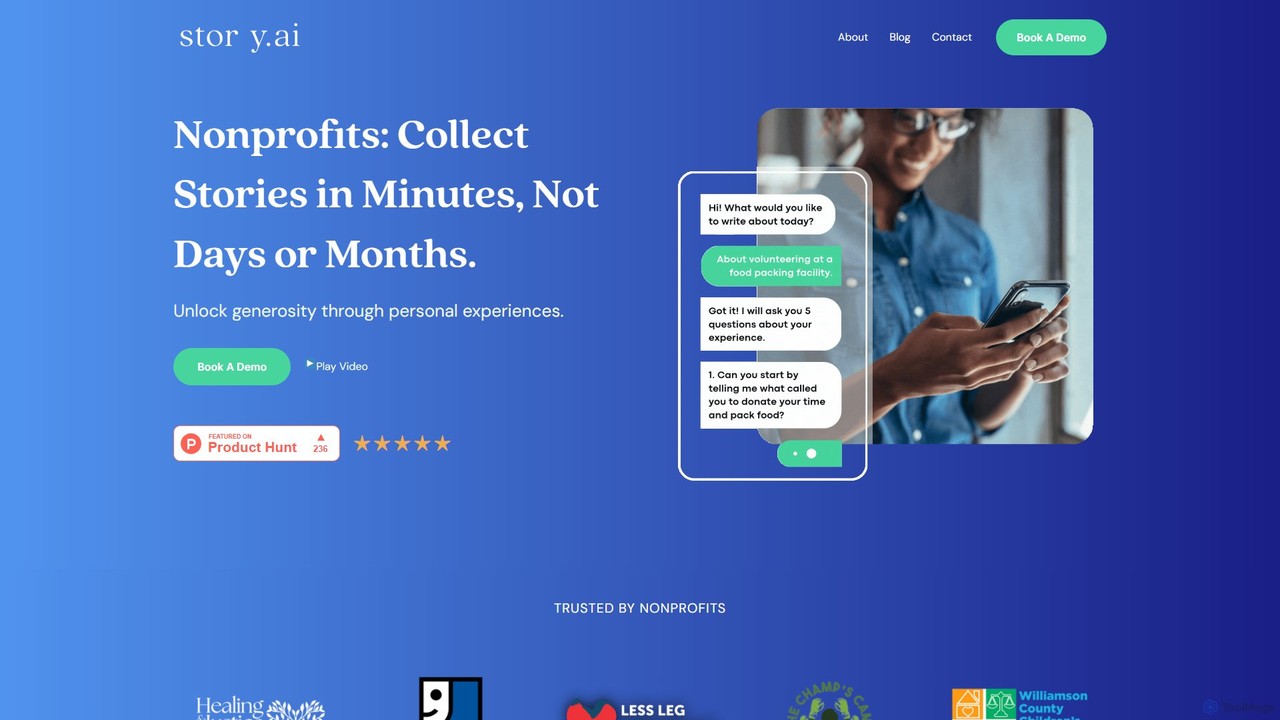
Storly is an AI-powered platform designed for non-profit organizations to effortlessly collect and generate compelling personal stories from …
Storly is an AI-powered platform designed for non-profit organizations to effortlessly collect and generate compelling personal stories from their communities. It automates the interview process, transforming responses into well-crafted narratives, social media content, and video testimonials in minutes, saving significant time and resources while boosting donor engagement and brand exposure.
About Storytelling
AI Storytelling tools are a specialized class of software that uses artificial intelligence to generate, structure, and enhance compelling narratives for marketing purposes. These tools leverage natural language generation (NLG), plot algorithms, and emotional analysis to transform data and brand messages into engaging stories. Their primary value lies in their ability to create emotionally resonant content at scale, ensuring brand communications are not just informative but also memorable and persuasive. This helps build a stronger connection with the target audience.
Core Features
- Narrative Arc Generation: Automatically creates classic story structures (e.g., hero's journey, problem-solution) tailored to a brand or product.
- Character & Persona Development: Generates relatable characters or customer personas to act as protagonists in brand stories.
- Emotional Tone Analysis: Analyzes and adjusts text to evoke specific emotions, ensuring the narrative aligns with campaign goals.
- Multi-format Scripting: Produces scripts and outlines for various media, including videos, podcasts, social media series, and presentations.
- Brand Voice Consistency: Learns and applies a specific brand's tone and style across all generated story content.
Use Cases
AI Storytelling tools are primarily used by marketing teams, brand managers, and content creators. They are ideal for developing comprehensive brand narratives, planning multi-channel advertising campaigns with a cohesive story, creating engaging scripts for product launch videos, and crafting personalized customer journey stories for email marketing.
How to Choose
When selecting an AI Storytelling tool, consider the depth of narrative control it offers—can you guide the plot and characters? Evaluate its supported output formats (text, script, storyboard). Check its ability to integrate with your existing marketing platforms and analyze its capacity for learning and maintaining your unique brand voice. Finally, assess the complexity of the user interface against your team's technical skills.

StorytellingUse Cases
Crafting a Compelling Brand Origin Story
A startup founder needs to create a powerful narrative for their 'About Us' page and investor pitches. Using an AI Storytelling tool, they input key milestones, company values, and the initial problem they aimed to solve. The AI generates several story arcs, including a 'Hero's Journey' and a 'Rags to Riches' narrative. The founder selects the most fitting structure and the tool helps flesh it out with engaging language, ensuring a consistent and emotionally resonant tone. This process transforms a simple timeline into a memorable story that connects with customers and stakeholders on a human level.
Developing a Social Media Campaign Narrative
A marketing manager is planning a month-long social media campaign for a new product. Instead of creating disconnected daily posts, they use an AI Storytelling tool to build a cohesive narrative arc. They define the campaign's theme, key messages, and target audience. The AI then outlines a four-week story structure: Week 1 introduces a problem, Week 2 presents the new product as the hero, Week 3 showcases user success stories, and Week 4 calls to action. The tool also suggests post formats (video, carousel, poll) and drafts captions for each stage, ensuring the entire campaign tells a single, compelling story.
Generating Video Scripts for Product Demos
A product marketing team needs to create a series of short demo videos. To ensure the videos are engaging and not just a feature list, they use an AI Storytelling tool. They input the target user's pain points and how specific features solve them. The AI generates a script following a 'Problem-Agitate-Solve' structure. It crafts a relatable opening, builds tension by describing the consequences of the problem, and then presents the product feature as the ideal solution. This narrative approach makes the demo more persuasive and helps viewers understand the product's value in a real-world context, increasing engagement and conversion rates.
Personalizing Customer Onboarding Narratives
An e-commerce brand wants to improve its customer retention rate. They use an AI Storytelling tool integrated with their CRM to create personalized onboarding email sequences. Based on a customer's first purchase, the AI crafts a unique story. For example, a customer who bought running shoes receives a series of emails telling the story of 'their running journey,' with tips, encouragement, and product recommendations framed as chapters in their story. This transforms generic onboarding emails into a personal narrative, making the customer feel valued and understood, which fosters loyalty and encourages repeat purchases.
Transforming Data into Case Study Narratives
A B2B software company has collected performance data and a client testimonial for a case study. To make it more impactful than a dry report, a content marketer inputs the raw data (e.g., '25% increase in efficiency') and the client's quotes into an AI Storytelling tool. The tool structures this information into a compelling narrative, identifying the client as the hero, their business challenge as the conflict, and the software as the magical guide. It generates a story with a clear beginning (the problem), middle (the implementation and struggle), and end (the successful outcome), making the case study more relatable and persuasive for potential leads.
Outlining an Educational Content Series
An online course creator wants to structure a new video series on a complex topic. To maintain student engagement, they use an AI Storytelling tool to outline the entire course as a narrative journey. They input the learning objectives and key concepts. The AI organizes these into a logical sequence of 'episodes' or modules, each building on the last. It suggests cliffhangers for the end of each video to encourage viewers to continue to the next one and frames quizzes as 'challenges' to overcome. This narrative framework turns a potentially dry educational series into an engaging adventure, improving completion rates and student satisfaction.