ToolMage
Sign in

Best 2 Tool Aggregator AI tools for Marketing

Popular Tool Aggregator AI tools in Marketing include nextool.ai and riseofmachine, helping you work more efficiently.

nextool.ai
Free

nextool.ai

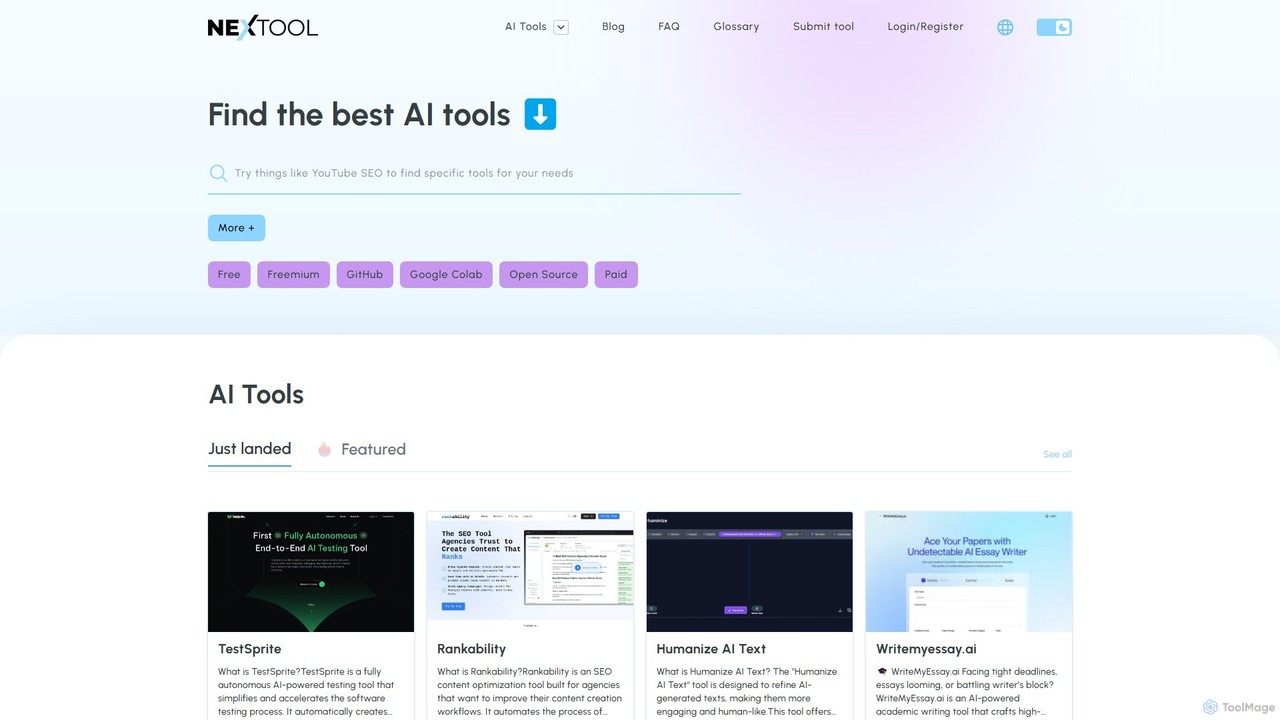
Nextool.ai is a comprehensive AI tool directory and discovery platform. It offers a curated list of the latest AI tools across various categories, helping users find the perfect solution for their marketing, productivity, writing, and creative needs.

Tool Aggregator
Visits 26.8KFavorites 111Likes 95
riseofmachine
Free

riseofmachine

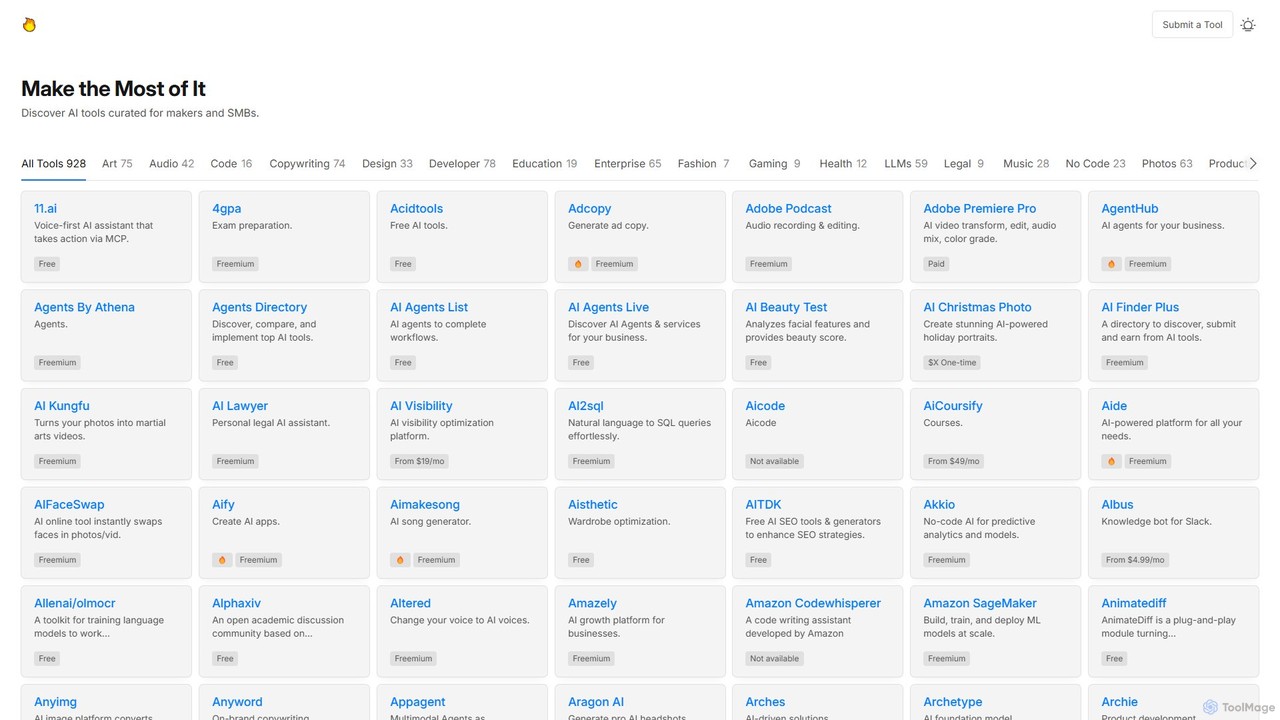
Rise of Machine is a comprehensive, curated directory of AI tools designed specifically for makers, entrepreneurs, and small to medium-sized businesses (SMBs). It simplifies the process of discovering the right AI solutions by organizing a vast collection of tools into intuitive categories, complete with pricing information and brief descriptions.

Smb Tools
Visits 13.5KFavorites 120Likes 122

About Tool Aggregator

Tool Aggregators are AI-powered platforms that consolidate various marketing tools and functionalities into a single, unified interface. They leverage artificial intelligence to streamline workflows, automate tasks, and provide comprehensive analytics across different marketing channels. These platforms significantly enhance efficiency and strategic decision-making for marketing professionals by centralizing operations.

Core Features

  • Unified Dashboard: Provides a centralized view for managing multiple marketing tools, campaigns, and data points from one place.
  • Cross-Tool Automation: Enables the automation of tasks, data synchronization, and workflow triggers between integrated marketing applications.
  • AI-driven Insights: Analyzes aggregated data from diverse sources to offer actionable recommendations and predictive analytics for campaign optimization.
  • Resource Management: Facilitates the allocation and tracking of marketing budgets, team tasks, and content assets across various tools and projects.
  • Content Syndication: Automates the distribution and scheduling of marketing content across multiple social media platforms, blogs, and email channels.

Applicable Scenarios

Marketing teams utilize tool aggregators to manage complex multi-channel campaigns across social media, email, SEO, and advertising platforms. Digital agencies leverage them to efficiently oversee numerous client projects and report consolidated performance. Small businesses benefit from consolidating essential marketing functions, avoiding the complexity of juggling multiple separate subscriptions and interfaces.

How to Choose

When selecting a tool aggregator, evaluate the breadth and depth of its integrations with your existing marketing stack and essential platforms. Consider the sophistication of its AI capabilities for automation, analytics, and personalization. Assess the pricing model based on features, user count, and scalability. Finally, prioritize an intuitive user interface, robust customer support, and a platform that aligns with your specific marketing goals and technical requirements.

Tool Aggregator use cases

1

Streamlining Multi-Channel Campaign Management

A marketing manager uses a tool aggregator to plan, execute, and monitor campaigns across social media, email marketing, and paid ads from one centralized dashboard. The aggregator automates content scheduling, tracks performance metrics across platforms, and provides consolidated reports, saving hours of manual data collection and platform switching, leading to more cohesive and effective campaigns.

2

Automating Content Distribution and Scheduling

A content creator leverages an AI tool aggregator to automatically publish blog posts to their website, syndicate them across various social media platforms, and schedule email newsletters. The aggregator uses AI to optimize posting times for maximum engagement and ensures consistent brand messaging across all channels, significantly reducing manual effort and improving content reach.

3

Consolidating Customer Data for Personalized Marketing

An e-commerce business integrates its CRM, email marketing, and analytics tools into an aggregator. This allows them to unify customer data, segment audiences based on purchase history and behavior, and launch highly personalized marketing campaigns. The AI within the aggregator identifies optimal personalization strategies, leading to higher conversion rates and improved customer loyalty.

4

Unified Performance Tracking and Reporting

A digital marketing agency uses a tool aggregator to monitor the performance of all client campaigns in real-time. The platform pulls data from various ad platforms, SEO tools, and analytics dashboards, generating comprehensive, customizable reports. This enables quick identification of underperforming areas and data-driven adjustments, significantly improving client ROI and agency efficiency.

5

Optimizing Ad Spend Across Multiple Platforms

An advertising specialist utilizes an AI tool aggregator to manage budgets and bids across Google Ads, Facebook Ads, and other programmatic platforms. The aggregator's AI analyzes performance data from all channels, identifies the most effective ad placements, and automatically adjusts spending to maximize ROI, ensuring efficient budget allocation and improved campaign results.

6

Enhancing Team Collaboration and Workflow Efficiency

A large marketing department employs a tool aggregator to centralize project management, task assignments, and communication related to marketing initiatives. The platform integrates with internal communication tools and project trackers, providing a single source of truth for all team members, reducing miscommunication, accelerating project delivery, and fostering a more collaborative environment.

Tool Aggregator FAQ

What are Tool Aggregators in marketing?

Tool Aggregators in marketing are AI-powered platforms that integrate and centralize various marketing software and functionalities into a single interface. They aim to simplify complex marketing operations by providing a unified dashboard for managing campaigns, automating tasks, and analyzing data across different channels like social media, email, SEO, and advertising. This consolidation helps marketing teams work more efficiently and make informed decisions.

How do Tool Aggregators differ from individual marketing tools?

Individual marketing tools typically specialize in one specific function, such as email marketing or social media scheduling. Tool Aggregators, on the other hand, integrate multiple such tools, offering a holistic view and cross-functional automation. While individual tools provide deep functionality in their niche, aggregators focus on streamlining workflows between different tools, providing unified analytics, and reducing the need to switch between multiple platforms, thereby enhancing overall operational efficiency.

What are the key benefits of using a Tool Aggregator for marketing?

The primary benefits of using a Tool Aggregator for marketing include enhanced efficiency through centralized management and automation, improved decision-making with unified data insights, and potential cost savings by reducing redundant subscriptions. They also foster better team collaboration, ensure consistent brand messaging across channels, and allow for more agile campaign adjustments based on real-time, aggregated performance data, leading to a more strategic and effective marketing approach.

What features should I look for when choosing a Tool Aggregator?

When selecting a tool aggregator, prioritize platforms that offer robust integrations with your existing marketing stack and essential platforms. Look for comprehensive automation capabilities, AI-driven analytics for actionable insights, and an intuitive user interface. Also, consider scalability options for future growth, the quality of customer support, and a transparent pricing structure that aligns with your budget and specific feature needs. Ensure it supports your key marketing channels.

Can Tool Aggregators help with SEO and content marketing?

Yes, many tool aggregators offer significant benefits for SEO and content marketing. They can integrate with SEO analysis tools to track keyword performance, backlink profiles, and competitor analysis. Simultaneously, they facilitate content planning, creation, and distribution across various channels. By centralizing these functions, they help ensure content is optimized for search engines and reaches the target audience effectively, improving overall content strategy and online visibility.