Convo
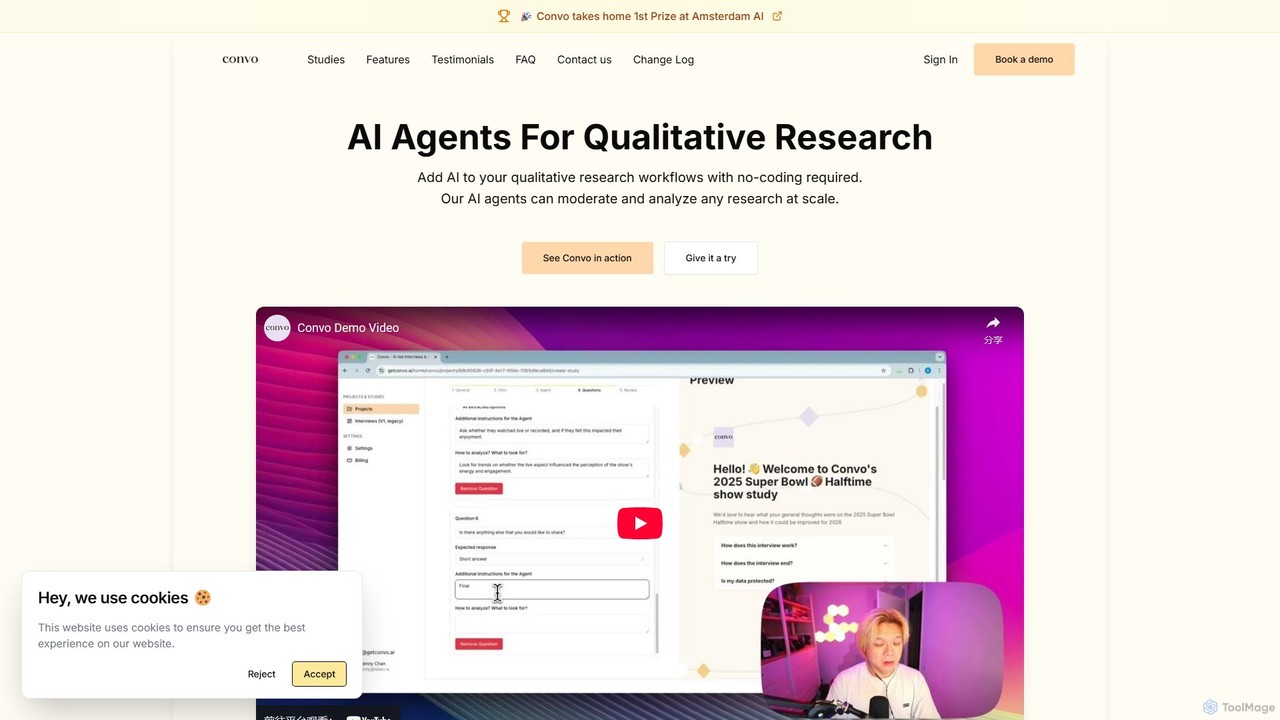
Convo is an AI-powered platform designed to automate and scale qualitative research. It utilizes customizable AI voice agents …
Convo is an AI-powered platform designed to automate and scale qualitative research. It utilizes customizable AI voice agents to conduct natural, in-depth interviews with users, providing instant analysis, theme synthesis, and user persona generation. This accelerates the research process, enabling teams to gather deep user insights quickly and cost-effectively without extensive manual effort.
Ballpark
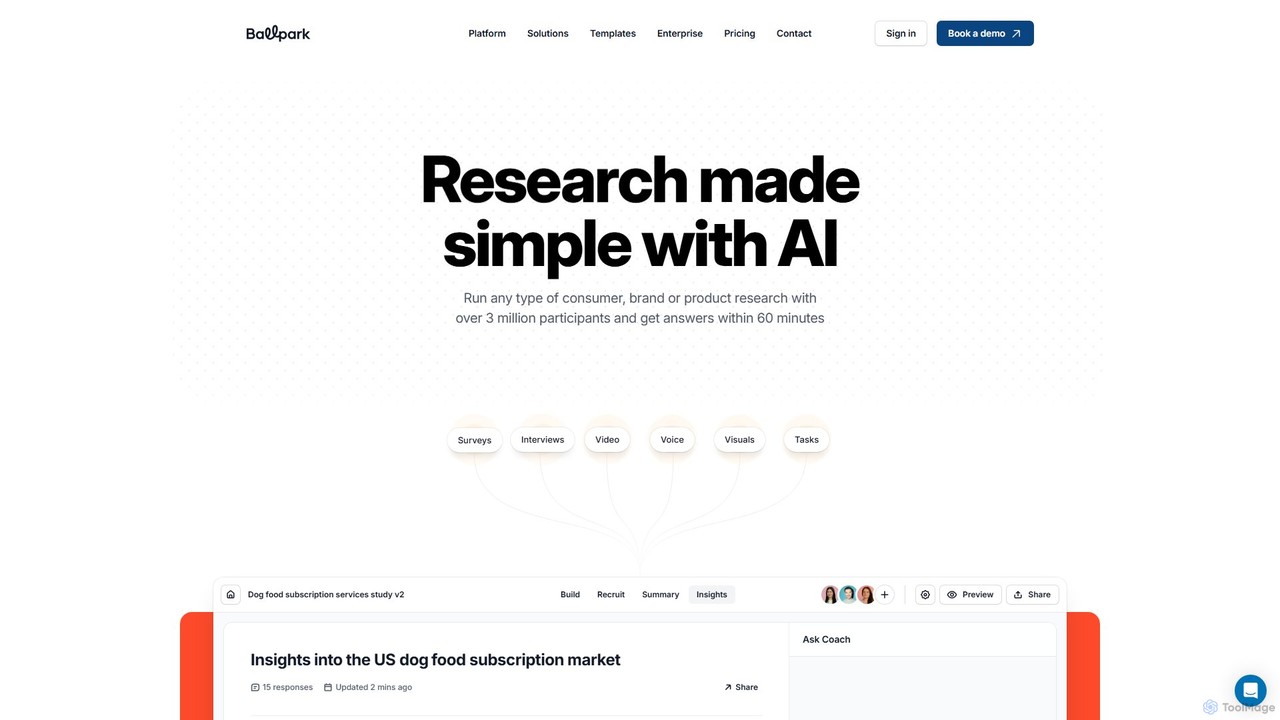
Ballpark is an all-in-one, AI-powered research platform that simplifies consumer, brand, and product research. Conduct surveys, usability tests, …
Ballpark is an all-in-one, AI-powered research platform that simplifies consumer, brand, and product research. Conduct surveys, usability tests, and live interviews with access to over 3 million global participants. Get actionable insights, AI-generated reports, and video highlight reels within minutes, making it easy for any team to make data-driven decisions.
AskMore
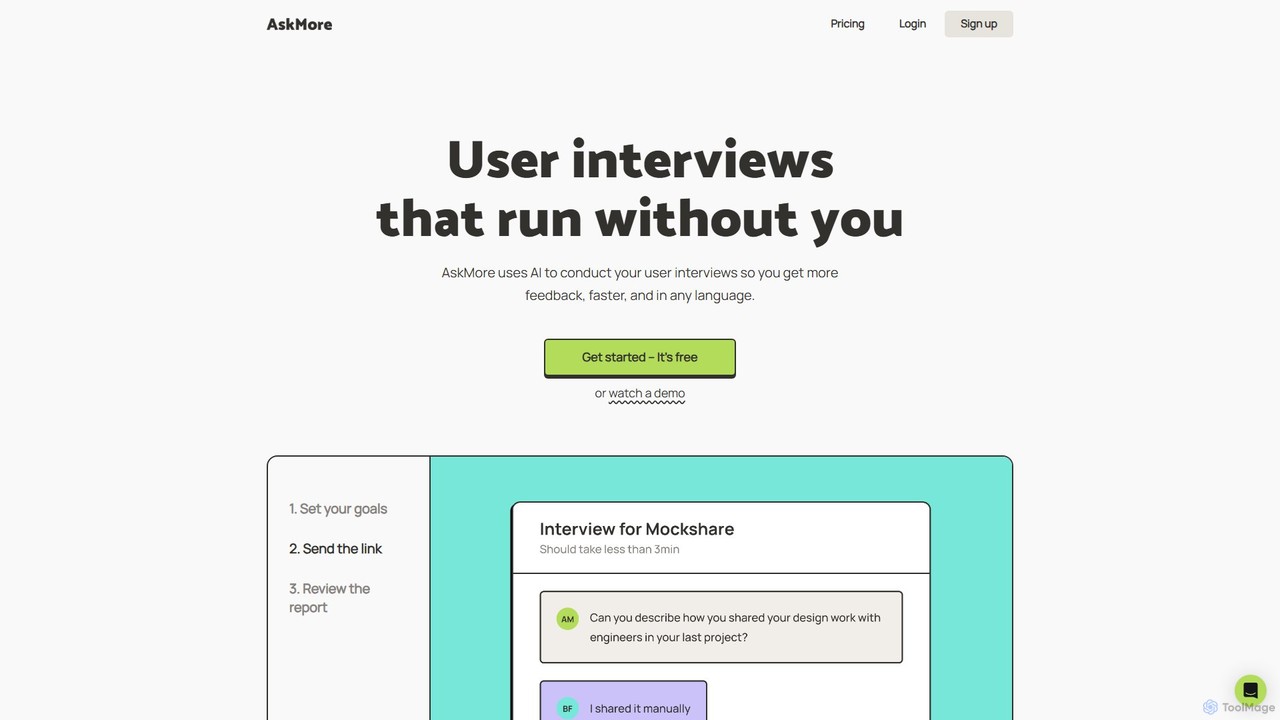
AskMore is an AI-powered platform that automates user interviews and product research. It enables you to gather in-depth …
AskMore is an AI-powered platform that automates user interviews and product research. It enables you to gather in-depth feedback from a large number of users, faster and in any language. The tool conducts interviews asynchronously, generates automated reports with key insights, and helps eliminate scheduling hassles and interviewer bias.
About User Feedback
AI User Feedback tools are a specialized category of software designed to automatically collect, analyze, and manage customer opinions from various channels. These tools leverage Natural Language Processing (NLP) to perform sentiment analysis, topic modeling, and trend identification on large volumes of unstructured text. Their primary value lies in transforming raw, qualitative feedback from sources like reviews, surveys, and support tickets into structured, actionable insights for product improvement and marketing strategy. This allows teams to understand the 'why' behind user behavior without manual analysis.
Core Features
- Sentiment Analysis: Automatically determines the emotional tone (positive, negative, neutral) behind user comments.
- Feedback Aggregation: Gathers feedback from multiple sources like app stores, social media, and helpdesks into a single dashboard.
- Automated Tagging & Clustering: Groups similar feedback into themes or topics, such as 'bug report' or 'feature request'.
- Trend Identification: Detects emerging issues or popular requests by analyzing feedback data over time.
Use Cases
These tools are frequently used by product managers, UX researchers, and customer success teams in SaaS, e-commerce, and mobile app development. For instance, a product team can use them to prioritize their development roadmap based on the most frequent feature requests, while a marketing team can gauge public reaction to a new campaign by analyzing social media comments.
How to Choose
When selecting a User Feedback tool, consider the range of integrations with your existing data sources (e.g., Zendesk, App Store, Intercom). Evaluate the accuracy of its AI-driven analysis and the clarity of its reporting dashboards. Also, assess its ability to export insights or integrate with project management tools like Jira or Slack to close the feedback loop effectively.

User FeedbackUse Cases
Prioritizing Product Features with User Data
A SaaS product manager uses an AI feedback tool to analyze thousands of feature requests from sources like Intercom, support tickets, and surveys. The tool automatically clusters requests into themes like 'reporting improvements' or 'mobile app functionality'. By identifying the most frequently requested and highest-impact features, the manager can create a data-driven product roadmap, ensuring development efforts align directly with customer needs and reducing the risk of building unwanted features.
Monitoring App Store Review Sentiment
A mobile app developer connects their App Store and Google Play accounts to an AI feedback platform. The tool automatically aggregates all new reviews, performs sentiment analysis, and tags them by topic (e.g., 'UI/UX', 'Performance', 'Pricing'). The developer sets up alerts for reviews mentioning 'crash' or 'bug' with a negative sentiment, allowing the support team to respond quickly. This continuous monitoring helps track user satisfaction after new releases and identify critical issues before they impact a wider user base.
Improving Customer Support Documentation
A customer support manager analyzes thousands of support ticket transcripts using an AI feedback tool. The AI identifies recurring questions and areas of confusion for users, such as 'password reset process' or 'billing information update'. By pinpointing these common friction points, the manager can direct the content team to create or improve specific help articles and tutorials. This proactive approach reduces ticket volume, empowers users to self-serve, and frees up support agents to handle more complex issues.
Gauging Reaction to a Marketing Campaign
After launching a new advertising campaign, a marketing team uses an AI tool to monitor brand mentions on social media and news sites. The tool analyzes the sentiment of public comments, identifying whether the campaign is perceived positively or negatively. It also surfaces key themes in the conversation, such as feedback on the messaging, visuals, or the offer itself. This allows the team to quickly assess campaign performance in real-time and make adjustments to messaging or targeting if needed.
Identifying Customer Churn Risks
A customer success team integrates their helpdesk software with an AI feedback tool to monitor interactions with high-value clients. The system flags conversations with consistently negative sentiment or recurring mentions of unresolved issues. By identifying these at-risk accounts early, the success team can proactively reach out with solutions or extra support, mitigating dissatisfaction before it leads to churn. This transforms the team from a reactive support function to a proactive retention engine.
Analyzing Competitor Strengths and Weaknesses
A market research analyst uses an AI feedback tool to aggregate public reviews for competitor products from sites like G2, Capterra, and Trustpilot. The AI processes thousands of reviews, summarizing the most praised features (strengths) and the most common complaints (weaknesses) for each competitor. This provides a clear, unbiased view of the competitive landscape, helping the product team identify market gaps and opportunities to differentiate their own product offering.