Metaverse Best in category 1 results Content Creation AI Tool

Popular AI tools in the Content Creation field of Metaverse include Throughwalls, etc., helping you quickly improve efficiency.

Throughwalls

Throughwalls

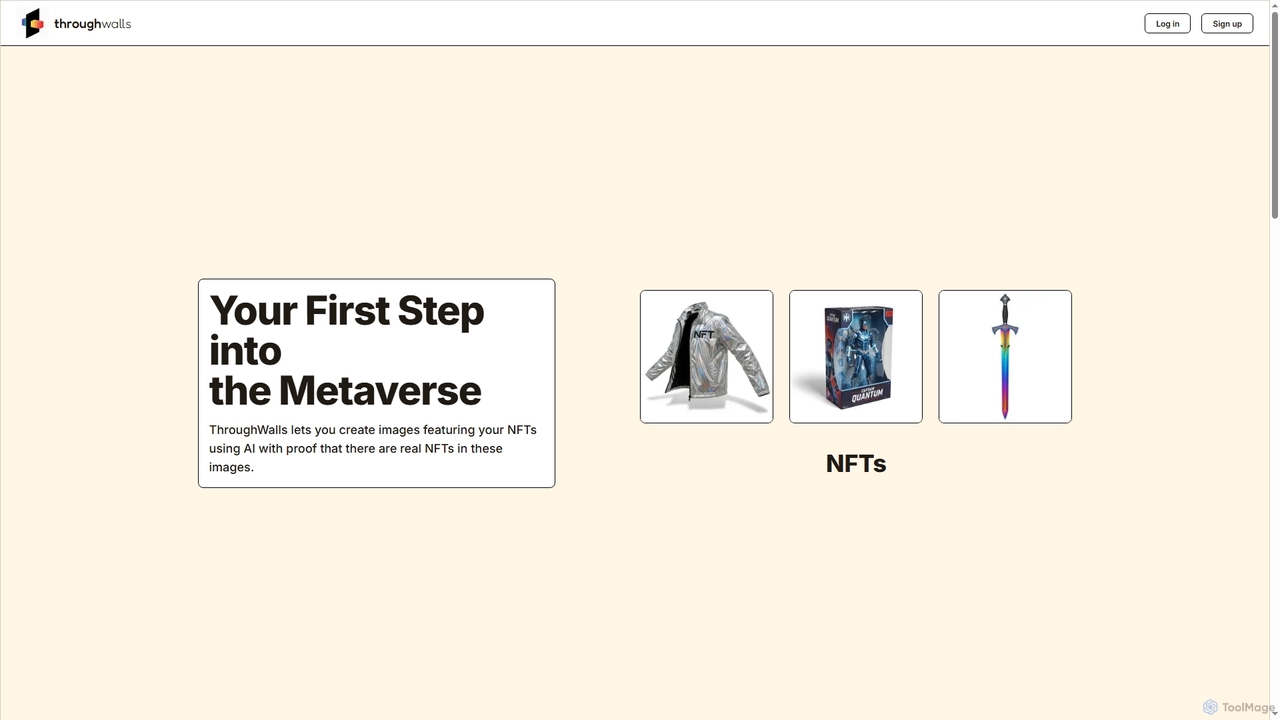
Throughwalls is an innovative AI tool that empowers users to create unique images by integrating their NFTs or …

2.9K

About Content Creation

Metaverse Content Creation tools are a class of AI-powered software for generating, modifying, and managing digital assets and experiences within virtual worlds. These tools utilize generative AI and procedural algorithms to automate the creation of 3D models, environments, avatars, and interactive elements. They significantly lower the technical barrier for creators and developers, enabling the rapid construction of immersive and scalable metaverse content without extensive coding or 3D design expertise. Unlike traditional modeling software, these AI tools prioritize speed and accessibility for populating vast virtual spaces.

Core Features

  • Procedural 3D Asset Generation: Creates a wide range of 3D models, such as buildings, vehicles, and props, from text prompts or defined parameters.
  • Virtual World Building: Generates entire landscapes, cityscapes, or interior scenes with specific architectural styles and environmental layouts.
  • AI-Powered Avatar Customization: Designs and personalizes unique avatars, including their facial features, clothing, and basic animations.
  • Interactive Element Scripting: Assists in generating logic for object interactions, NPC behaviors, and simple in-world events to enhance user experience.
  • Generative Texture Synthesis: Creates seamless and realistic or stylized textures for 3D objects based on image inputs or descriptive text.

Use Cases

These tools are primarily used in industries like gaming, virtual real estate, online education, and digital marketing. They are essential for game developers populating worlds, virtual architects designing digital properties, brands creating immersive showrooms, and educators building interactive virtual classrooms for platforms like Roblox, Decentraland, or VRChat.

How to Choose

When selecting a tool, consider its primary asset focus (e.g., environments, avatars, or props). Evaluate its compatibility and export formats (glTF, FBX, USD) for your target metaverse platform. Assess the balance between ease of use (prompt-based) and granular control (parameter-based). Also, check for collaboration features for team projects and review the pricing model, whether it's subscription-based or pay-per-asset.

Content CreationUse Cases

1

Designing a Virtual Brand Showroom

A marketing team for a fashion brand uses a metaverse content creation tool to build an immersive virtual showroom. They import 3D models of their latest clothing line, design an elegant virtual space with custom lighting and textures, and add interactive elements like clickable product information displays. This allows customers worldwide to explore the collection via their avatars, providing an engaging shopping experience that transcends physical location and boosts brand presence in the digital realm.

2

Rapid Prototyping for Game Developers

A small indie game development team needs to build a prototype for a new open-world game set in a fantasy realm. Instead of spending weeks manually modeling every tree, rock, and building, they use an AI content creation tool. By inputting stylistic prompts like 'ancient elven architecture' or 'mossy, enchanted forest,' the tool generates hundreds of unique, game-ready 3D assets in minutes. This allows the team to quickly assemble and test different level layouts, iterate on the world's visual style, and present a compelling prototype to potential publishers, reducing development time by over 70% in the initial phase.

3

Creating Custom Avatars for Social VR

A digital artist specializes in creating personalized avatars for users on social VR platforms. Using a metaverse content creation tool, they sculpt unique character models, design custom clothing and accessories, and rig the models with advanced animations and expressions. Clients can then import these bespoke avatars into platforms like VRChat, allowing them to express their individuality and stand out in the virtual community. This provides a valuable service for users seeking a unique digital identity.

4

Creating a Branded Virtual Store

A fashion retail brand wants to establish a presence in the metaverse to engage with a younger audience. Their marketing team, with no 3D modeling experience, uses an AI world-building tool. They upload their brand logo, color palette, and product images. The AI generates a virtual showroom that reflects their brand identity, complete with 3D models of their latest clothing line displayed on mannequins. It also creates interactive elements, like information points and a virtual checkout, allowing users to explore and shop in an immersive 3D environment, launching their virtual store in a fraction of the time and cost of traditional development.

5

Building an Interactive Virtual Art Gallery

An independent artist wants to showcase their digital paintings and sculptures in an interactive way. They use a no-code world-building tool to construct a multi-room virtual gallery. They place their 2D art on walls and 3D sculptures on pedestals, adding interactive plaques that display information when a user approaches. They also script a simple guided tour. This allows them to host virtual exhibitions accessible to a global audience, creating a more memorable experience than a standard online portfolio.

6

Personalized Avatar Creation for Social VR

A user of a social VR platform wants a digital identity that truly represents them, beyond the platform's limited default options. They use an integrated AI avatar creation tool. By uploading a single photograph and providing a few descriptive keywords like 'cyberpunk style' or 'fantasy adventurer,' the AI generates a high-fidelity 3D avatar that captures their likeness but is styled according to their preference. They can further fine-tune details like hairstyle, clothing, and accessories. This process empowers users to create deeply personal and unique digital personas, enhancing social interaction and self-expression in the metaverse.

7

Developing a Mini-Game for a Metaverse Event

An event organizer wants to increase engagement at their virtual conference. Using a metaverse creation platform with a visual scripting interface, they design a simple scavenger hunt mini-game within the event's virtual venue. Attendees can explore the space to find hidden objects and earn points. This gamified experience encourages exploration, facilitates networking among players, and makes the event more dynamic and memorable, leading to higher attendee satisfaction and longer participation times.

8

Building Educational Virtual Labs

An educational institution aims to provide students with safe, accessible science labs. An educator uses an AI content creation tool to design a virtual chemistry lab. They specify the required equipment ('beakers,' 'Bunsen burners,' 'test tubes') and the AI generates accurate 3D models. The educator then uses a simple scripting feature to define interactions, such as simulating a chemical reaction when two substances are mixed. This allows students to conduct experiments remotely in a risk-free, immersive environment, making complex scientific concepts more engaging and understandable without the need for expensive physical resources.

9

Prototyping Virtual Real Estate

An architectural firm uses a metaverse content creation tool to build realistic, to-scale virtual prototypes of their building designs. Clients can put on a VR headset and walk through the virtual property, experiencing the space, layout, and lighting before construction begins. This immersive visualization helps clients make more informed decisions, allows for easy design iterations, and serves as a powerful marketing tool to sell properties off-plan. It significantly reduces misunderstandings compared to traditional 2D blueprints.

10

Scalable Virtual Real Estate Development

A virtual real estate developer plans to build a large residential district in a popular metaverse platform. To populate the area efficiently, they use a procedural generation tool. They set high-level parameters such as architectural style ('modern minimalist'), road network density, and percentage of green space. The AI then generates an entire district with hundreds of unique, yet stylistically coherent, buildings, parks, and streets. The developer can then select specific properties to refine manually, while the bulk of the environment is created automatically. This approach makes large-scale world-building feasible for smaller teams and accelerates the time-to-market for virtual land sales.

11

Generating 3D Assets for a Metaverse World

A solo developer is building a large, open-world environment for a metaverse platform but lacks the time to model every asset manually. They use an AI-powered content creation tool to generate a wide variety of 3D assets, such as trees, rocks, and furniture, based on text prompts or simple sketches. This allows them to rapidly populate their world with diverse and unique objects, saving hundreds of hours of manual modeling work and enabling them to focus on level design and gameplay mechanics.

12

Designing Immersive Art Installations

A digital artist wants to create a surreal, interactive art gallery in the metaverse. They use an AI tool to generate otherworldly sculptures and environments that would be nearly impossible to model by hand. By combining abstract prompts like 'liquid crystal forest' and 'geometric nebula,' the artist generates a series of unique 3D forms and textures. They then arrange these assets into a virtual space and use the tool's simple scripting functions to add interactive elements, such as sculptures that change shape as a user approaches. This empowers artists to explore new creative frontiers and build complex, dynamic virtual experiences for a global audience.

Content CreationFrequently Asked Questions