Futureverse
Futureverse is an all-in-one technology platform that combines AI and blockchain to build the open metaverse. It provides …
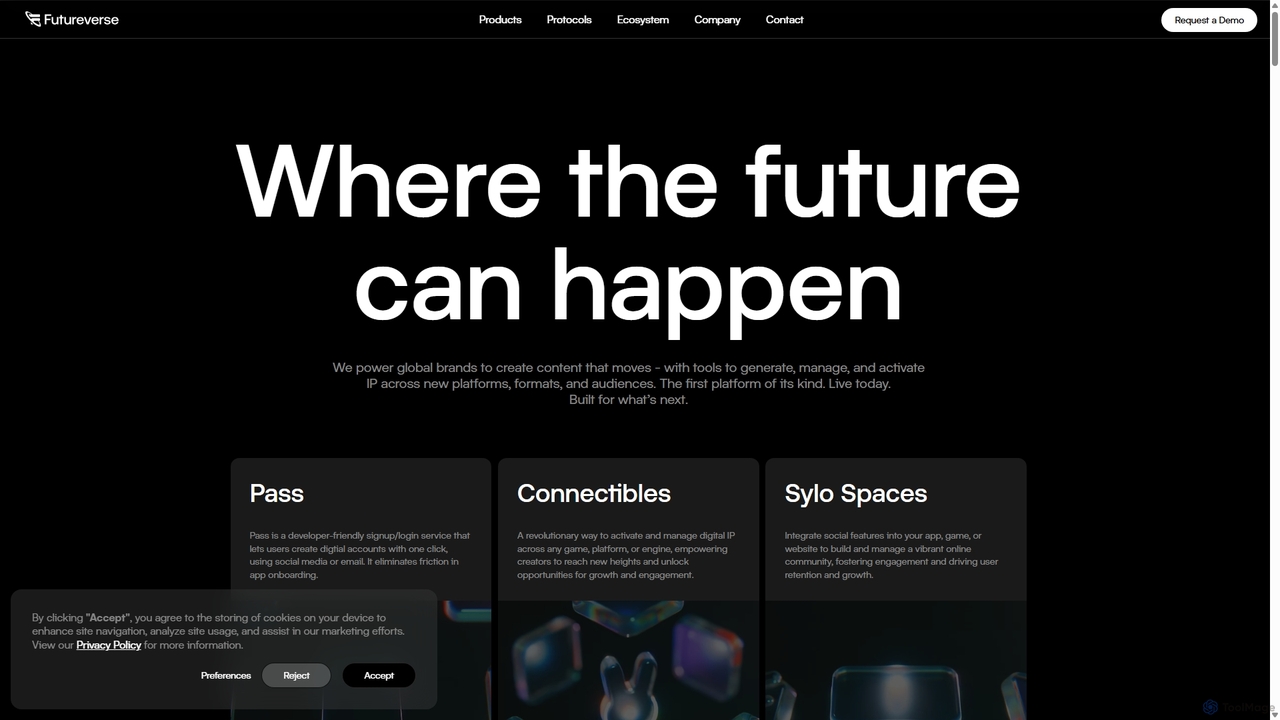
Futureverse is an all-in-one technology platform that combines AI and blockchain to build the open metaverse. It provides developers, brands, and creators with a comprehensive suite of tools for creating immersive games, intelligent applications, and interoperable digital experiences, fostering true digital ownership and engagement.
About Platform
Metaverse Platforms are foundational digital environments that enable the creation, interaction, and experience of virtual worlds and digital assets. These platforms provide the core infrastructure, tools, and protocols for users and developers to build, host, and participate in immersive virtual ecosystems. They facilitate social interaction, digital commerce, and content generation within the broader metaverse, offering a persistent and interconnected digital space.
Core Features
- Virtual World Creation Tools: Provide SDKs and editors for building custom environments, objects, and interactive experiences.
- Avatar & Identity Management: Allow users to create, customize, and manage their digital representations and virtual presence.
- Digital Asset Integration: Support NFTs and other digital collectibles for ownership, trading, and interoperability within the platform.
- Social Interaction & Communication: Enable real-time chat, voice, and spatial presence for engaging user interactions.
- Monetization & Economy: Offer mechanisms for creators to earn from their content and for users to trade digital goods and services.
Applicable Scenarios
Metaverse Platforms are utilized across various sectors for immersive experiences. Businesses host virtual events and product launches, offering engaging alternatives to physical gatherings. Educational institutions create interactive learning environments for remote education and skill development. Brands build virtual storefronts and experiences to connect with consumers in innovative ways.
How to Choose
When selecting a Metaverse Platform, consider its ecosystem and community size, as a vibrant user and developer base is crucial. Evaluate the robustness and ease of use of its development tools and SDKs for content creation. Assess its commitment to interoperability and open standards for future integration. Finally, understand the monetization and ownership models for creators and users.
PlatformUse Cases
Hosting Immersive Corporate Events
Companies leverage metaverse platforms to conduct virtual conferences, product launches, and team-building activities, offering a more engaging and interactive experience than traditional video calls. Event planners can design custom 3D venues, integrate interactive presentations, and facilitate networking opportunities through spatial audio and avatar interactions, significantly reducing travel costs and expanding global reach.
Developing Educational & Training Simulations
Educators and training organizations build interactive 3D learning environments where students can explore historical sites, conduct virtual lab experiments, or practice complex procedures in a safe, simulated space. This allows for hands-on learning experiences that might be too costly, dangerous, or geographically inaccessible in the real world, enhancing engagement and knowledge retention.
Creating Brand Virtual Storefronts & Experiences
Retail brands establish persistent virtual shops or showrooms within a metaverse platform, allowing customers to browse digital products, try on virtual apparel, and interact with brand representatives in a novel way. This extends brand reach beyond physical locations, offers unique marketing opportunities, and creates immersive shopping experiences that can drive engagement and sales of both digital and physical goods.
Designing User-Generated Games & Experiences
Independent developers and creators utilize the platform's SDKs and tools to design and publish their own games, art installations, or social hubs, monetizing their creations through in-platform economies. This empowers a diverse community of creators to contribute to the metaverse's content, fostering innovation and offering a wide array of unique experiences for users to explore and enjoy.
Facilitating Digital Art Galleries & Exhibitions
Artists and curators host virtual art galleries, showcasing NFT art and digital sculptures in a dynamic 3D environment, accessible to a global audience without physical limitations. Metaverse platforms provide the infrastructure for creating immersive exhibition spaces, enabling artists to reach new collectors, experiment with interactive art forms, and participate in a burgeoning digital art market.
Building Collaborative Virtual Workspaces
Teams use metaverse platforms to create shared virtual offices or meeting rooms, enabling more natural and immersive collaboration for remote work, brainstorming sessions, and project reviews. Features like spatial audio, shared 3D whiteboards, and interactive objects enhance communication and foster a sense of co-presence, making remote collaboration feel more engaging and productive than traditional video conferencing.