Best of the Year 2 results Mlops AI Tools

Popular AI tools in the Mlops field include LastMile AI、PloyD, etc., helping you quickly improve efficiency.

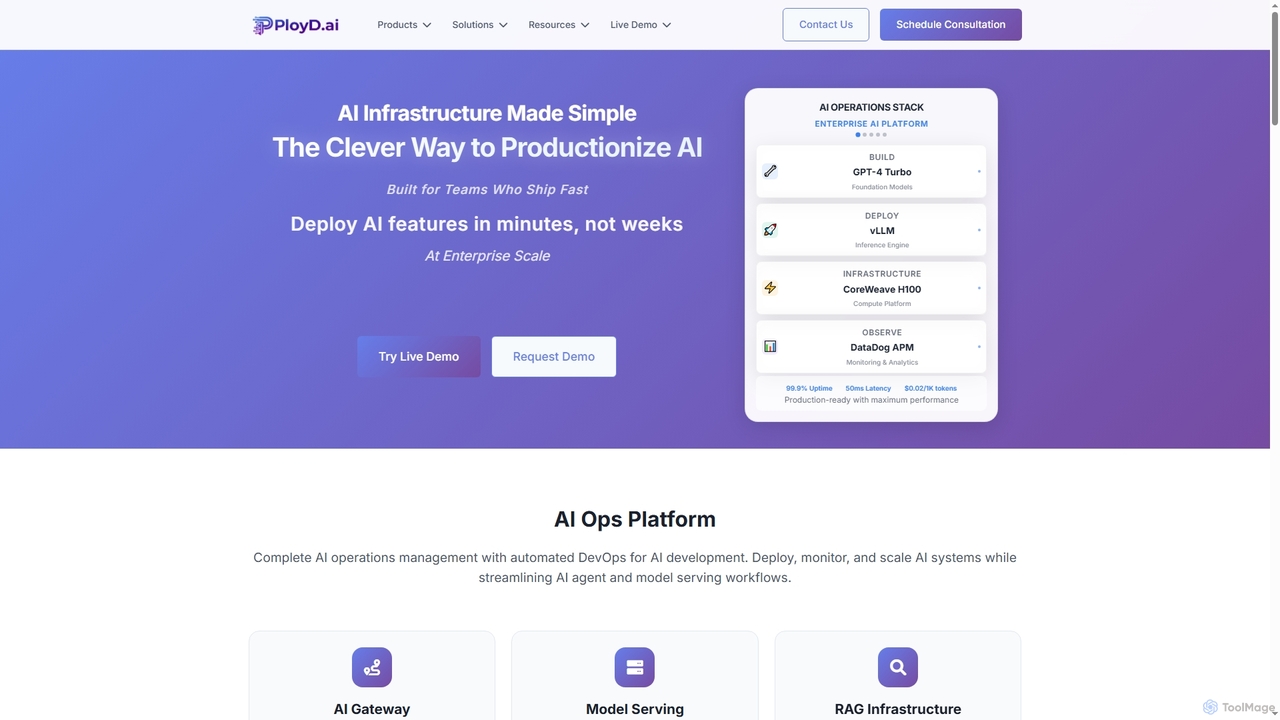
PloyD

PloyD

PloyD is an enterprise AI operations platform designed to streamline the productionization of AI models and applications. It …

111
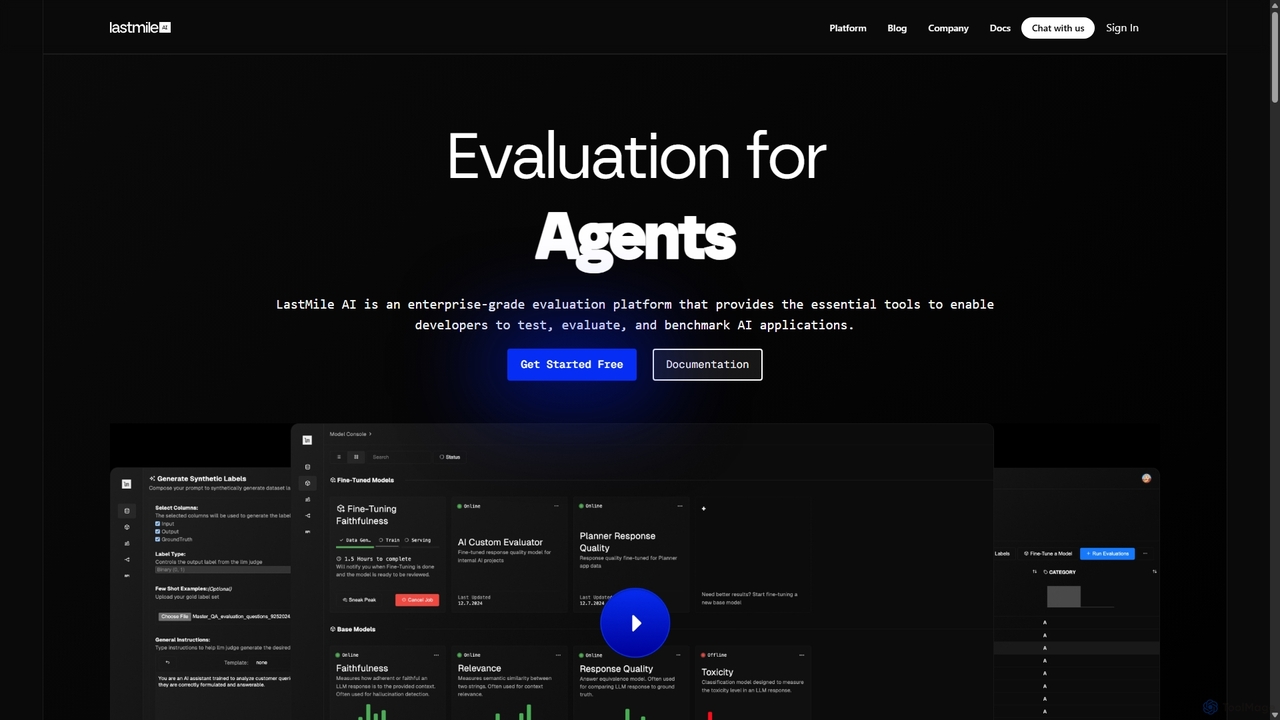
LastMile AI

LastMile AI

LastMile AI is an enterprise-grade developer platform for testing, evaluating, and monitoring generative AI applications. It provides tools …

1.9K

About Mlops

MLOps are AI-powered tools and practices that streamline the entire machine learning lifecycle, from experimentation to deployment and ongoing management. These platforms integrate principles from DevOps, Data Engineering, and Machine Learning to ensure robust, scalable, and reliable operation of ML models in production environments. They enable teams to automate workflows, manage model versions, and continuously monitor performance, accelerating innovation and reducing operational overhead for AI-driven applications.

Core Features

  • Automated Model Deployment: Facilitates the seamless and consistent deployment of trained ML models into production environments.
  • Model Versioning & Governance: Manages different iterations of models and their associated data, ensuring reproducibility and compliance.
  • Performance Monitoring: Continuously tracks model predictions, latency, and resource utilization to detect degradation or anomalies.
  • Data & Model Drift Detection: Identifies shifts in input data or model performance over time, triggering alerts for retraining.
  • Experiment Tracking & Management: Organizes and logs all aspects of ML experiments, including parameters, metrics, and artifacts.

Applicable Scenarios

MLOps tools are essential for enterprises and teams developing and deploying AI solutions at scale. They are used by data scientists, ML engineers, and operations teams in industries like finance for fraud detection, healthcare for diagnostic models, and e-commerce for recommendation systems, ensuring models remain effective and reliable in dynamic real-world conditions.

How to Choose

When selecting MLOps tools, consider their integration capabilities with existing ML frameworks and cloud platforms, scalability to handle growing data and model complexity, and comprehensive monitoring features. Evaluate the ease of use, automation capabilities for various stages of the ML lifecycle, and the level of support for model governance and compliance requirements.

MlopsUse Cases

1

Automated Deployment of Recommendation Models

E-commerce data science teams utilize MLOps platforms to automatically deploy new recommendation models based on updated user behavior data. This ensures that customers always receive the most relevant product suggestions, improving conversion rates and user experience. The platform handles model packaging, environment setup, and A/B testing, reducing manual effort and deployment time from days to hours.

2

Continuous Monitoring of Fraud Detection Models

Financial institutions leverage MLOps tools to continuously monitor the performance of their fraud detection models in real-time. This includes tracking prediction accuracy, false positive rates, and data drift. When performance degrades or new fraud patterns emerge, the MLOps system automatically alerts ML engineers, enabling rapid investigation and retraining to maintain model effectiveness and minimize financial losses.

3

Automated Retraining for Healthcare Diagnostic Models

Healthcare providers use MLOps to manage diagnostic AI models that require frequent retraining due to evolving patient data or new medical guidelines. The MLOps pipeline automates the data ingestion, model retraining, validation, and redeployment process. This ensures that diagnostic tools remain accurate and up-to-date, improving patient outcomes and operational efficiency without extensive manual intervention.

4

Version Control and Collaboration for ML Projects

Large enterprise ML teams use MLOps platforms to implement robust version control for models, datasets, and code. This enables multiple data scientists and engineers to collaborate effectively on complex ML projects, tracking changes, reverting to previous versions, and ensuring reproducibility across different development stages. It streamlines auditing and compliance for regulated industries.

5

Managing Data Drift in Predictive Maintenance

Manufacturing companies employ MLOps to manage predictive maintenance models that forecast equipment failures. As sensor data patterns evolve over time due to wear and tear or environmental changes, MLOps tools automatically detect data drift. This triggers alerts for ML engineers to investigate and retrain models with fresh data, ensuring the predictive accuracy remains high and preventing costly unplanned downtime.

6

Experiment Tracking for Research and Development

AI research and development teams use MLOps platforms to meticulously track and manage hundreds of machine learning experiments. This includes logging hyperparameters, model architectures, dataset versions, and performance metrics for each run. MLOps provides a centralized repository for experiment results, enabling researchers to compare different approaches, reproduce findings, and accelerate the discovery of optimal models for new AI applications.

MlopsFrequently Asked Questions