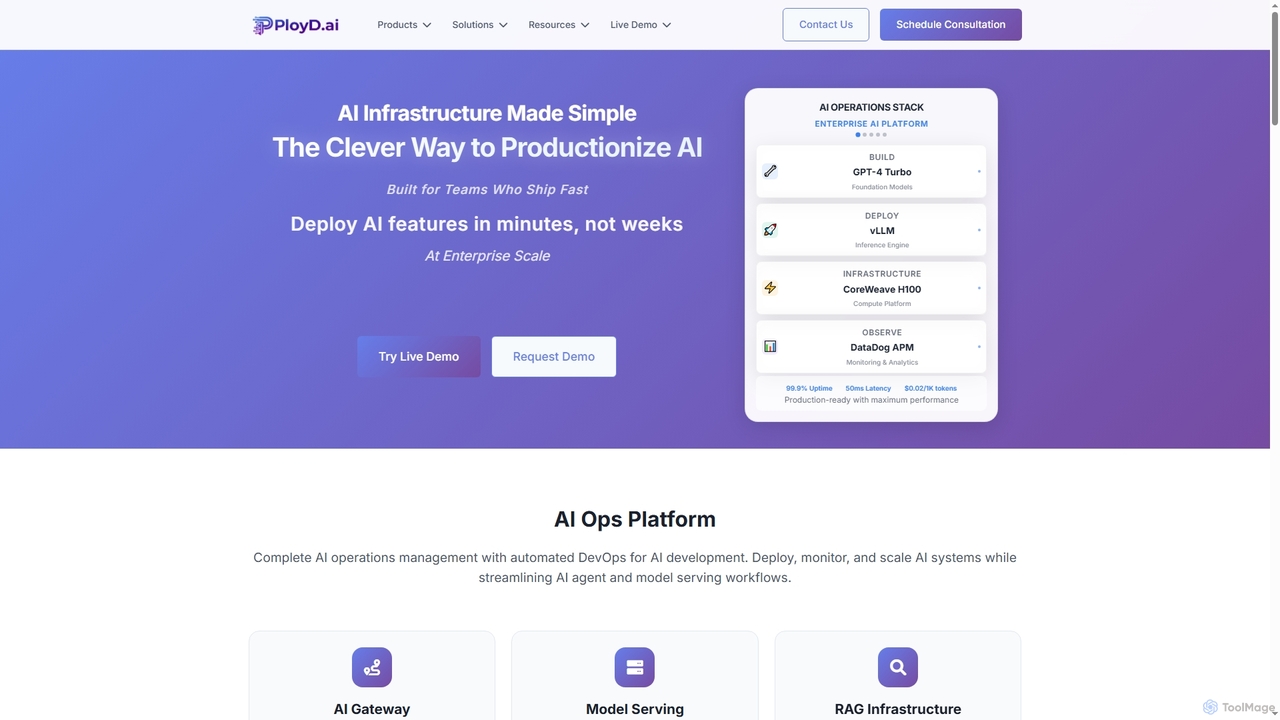
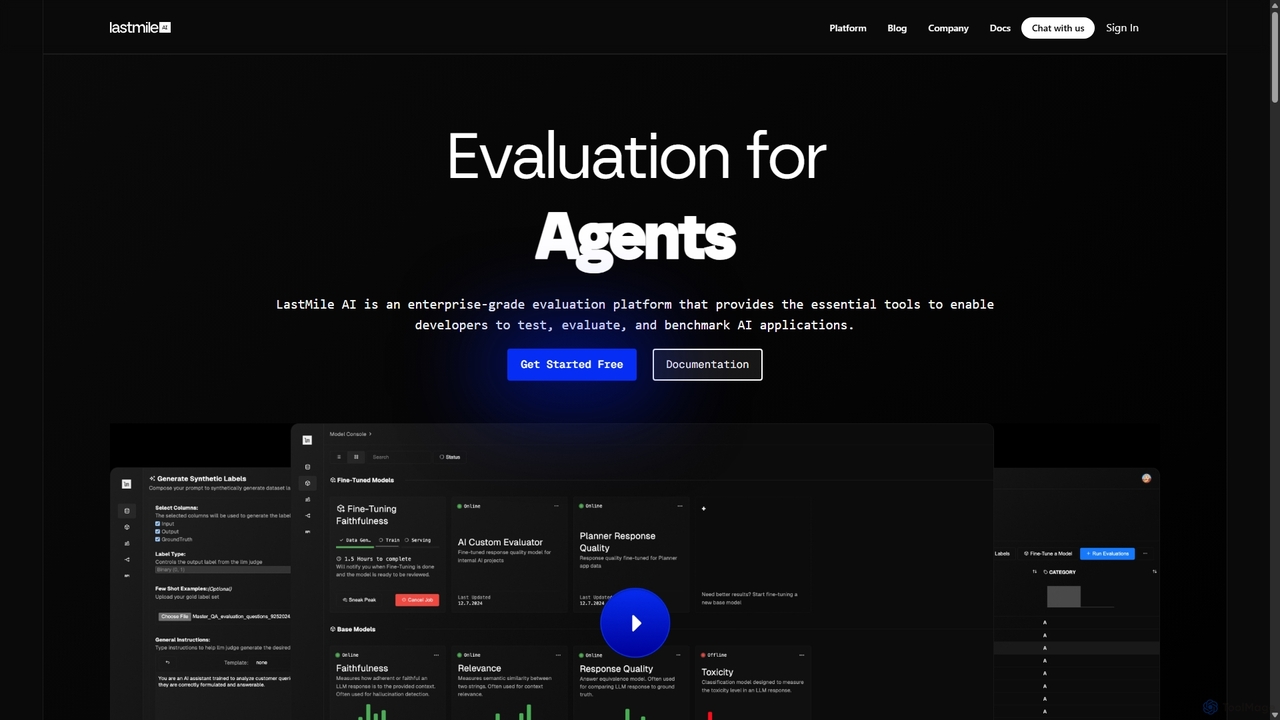
MLOps are AI-powered tools and practices that streamline the entire machine learning lifecycle, from experimentation to deployment and ongoing management. These platforms integrate principles from DevOps, Data Engineering, and Machine Learning to ensure robust, scalable, and reliable operation of ML models in production environments. They enable teams to automate workflows, manage model versions, and continuously monitor performance, accelerating innovation and reducing operational overhead for AI-driven applications.
Core Features
- Automated Model Deployment: Facilitates the seamless and consistent deployment of trained ML models into production environments.
- Model Versioning & Governance: Manages different iterations of models and their associated data, ensuring reproducibility and compliance.
- Performance Monitoring: Continuously tracks model predictions, latency, and resource utilization to detect degradation or anomalies.
- Data & Model Drift Detection: Identifies shifts in input data or model performance over time, triggering alerts for retraining.
- Experiment Tracking & Management: Organizes and logs all aspects of ML experiments, including parameters, metrics, and artifacts.
Applicable Scenarios
MLOps tools are essential for enterprises and teams developing and deploying AI solutions at scale. They are used by data scientists, ML engineers, and operations teams in industries like finance for fraud detection, healthcare for diagnostic models, and e-commerce for recommendation systems, ensuring models remain effective and reliable in dynamic real-world conditions.
How to Choose
When selecting MLOps tools, consider their integration capabilities with existing ML frameworks and cloud platforms, scalability to handle growing data and model complexity, and comprehensive monitoring features. Evaluate the ease of use, automation capabilities for various stages of the ML lifecycle, and the level of support for model governance and compliance requirements.