
ToolMage
Sign in

Best 1 Fiat On Ramp AI tools for Payments

Popular Fiat On Ramp AI tools in Payments include Baltex, helping you work more efficiently.

Baltex

Baltex

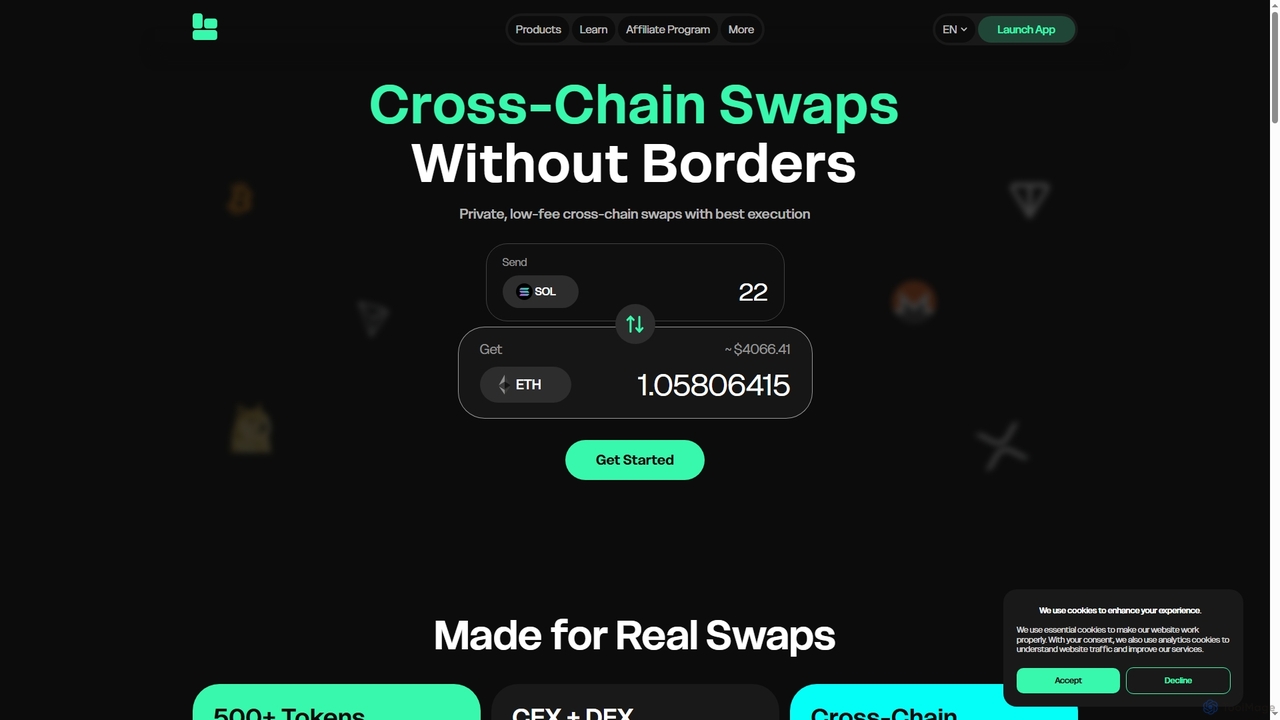
Baltex is a leading cross-chain terminal for instant, secure, and private cryptocurrency swaps. It integrates CEX and DEX routes, supporting over 500 tokens across 20+ networks, including fiat-to-crypto conversions without KYC for decentralized trades.

Exchange
Visits 21.8KFavorites 135Likes 114

About Fiat On Ramp

Fiat On Ramp tools are specialized services that enable users to convert traditional fiat currencies, such as USD or EUR, directly into cryptocurrencies. These platforms act as a crucial bridge, facilitating the entry of new users and capital into the blockchain and decentralized finance (DeFi) ecosystems. They typically integrate various payment methods and robust security protocols to ensure a smooth and compliant conversion process.

Core Features

  • Multiple Fiat Currencies: Support for a wide range of global fiat currencies for conversion.
  • Diverse Payment Methods: Acceptance of bank transfers, credit/debit cards, and e-wallets for funding.
  • Cryptocurrency Conversion: Direct exchange into popular cryptocurrencies like Bitcoin, Ethereum, and stablecoins.
  • KYC/AML Compliance: Adherence to Know Your Customer and Anti-Money Laundering regulations for secure transactions.
  • API Integration: Tools for developers to embed on-ramp functionality into their dApps, exchanges, or platforms.

Applicable Scenarios

Individuals new to cryptocurrency can easily purchase their first digital assets using their local currency. DeFi users can fund their decentralized wallets to participate in staking, lending, or yield farming. Gaming platforms and NFT marketplaces utilize these services to allow users to buy in-game tokens or digital collectibles directly with fiat, broadening accessibility beyond crypto-native users.

How to Choose

When selecting a Fiat On Ramp service, consider the supported fiat currencies and cryptocurrencies, available payment methods, and associated fees. Evaluate the speed of transactions, the robustness of security measures, and the clarity of KYC requirements. Integration capabilities and customer support quality are also vital for developers and businesses.

Fiat On Ramp use cases

1

First-Time Cryptocurrency Purchase

A new investor, unfamiliar with crypto exchanges, wants to buy Bitcoin. They use a Fiat On Ramp service integrated into a user-friendly platform, linking their bank account or using a debit card to directly convert USD into BTC, simplifying their initial entry into the crypto market without needing complex trading knowledge.

2

Funding a DeFi Wallet for Staking

A DeFi enthusiast needs to add stablecoins to their decentralized wallet to participate in a new staking pool. They use a Fiat On Ramp to convert EUR from their bank account directly into USDC or USDT, enabling them to quickly engage with DeFi protocols and earn yield without first going through a centralized exchange.

3

Buying In-Game Crypto Assets

A player in a blockchain-based game wants to purchase a rare in-game item that costs a specific amount of the game's native cryptocurrency. The game integrates a Fiat On Ramp, allowing the player to pay with their credit card in their local currency, and the service automatically converts it to the required crypto, making the purchase seamless.

4

Acquiring NFTs on a Marketplace

An art collector wants to buy an NFT listed on a marketplace but only has fiat currency. The marketplace uses a Fiat On Ramp solution, enabling the collector to pay with their credit card. The service handles the fiat-to-crypto conversion and the subsequent NFT purchase, broadening the market for digital art beyond existing crypto holders.

5

Integrating Crypto Purchase into a dApp

A decentralized application (dApp) developer wants to onboard new users who don't yet own cryptocurrency. By integrating a Fiat On Ramp API, the dApp allows users to directly purchase the necessary utility tokens or stablecoins within the application using fiat, significantly reducing friction and improving user acquisition.

6

Businesses Accepting Fiat for Crypto Services

A blockchain consulting firm offers services priced in cryptocurrency but wants to cater to traditional businesses. They use a Fiat On Ramp service to allow clients to pay for consulting fees in USD or EUR, which is then automatically converted to the firm's preferred cryptocurrency, streamlining invoicing and payment collection for both parties.

Fiat On Ramp FAQ

What are Fiat On Ramp services?

Fiat On Ramp services are platforms that allow individuals and businesses to convert traditional government-issued currencies (fiat) into cryptocurrencies. They serve as essential gateways for entering the digital asset economy, bridging the gap between conventional banking systems and the blockchain world. These services typically support various payment methods like bank transfers and card payments.

How do Fiat On Ramp services work?

When you use a Fiat On Ramp, you typically select the fiat currency you want to spend and the cryptocurrency you want to receive. You then choose a payment method (e.g., bank transfer, credit card). After verifying your identity (KYC), the service processes your fiat payment, converts it to the chosen cryptocurrency, and sends it to your specified crypto wallet address. The entire process is designed to be secure and compliant with financial regulations.

What payment methods are commonly supported by Fiat On Ramp services?

Fiat On Ramp services generally support a wide array of payment methods to maximize accessibility. Common options include direct bank transfers (ACH, SEPA, SWIFT), credit and debit card payments (Visa, Mastercard), and various e-wallets (e.g., PayPal, Apple Pay, Google Pay) in certain regions. The availability of specific methods can vary depending on the provider and your geographical location.

What are the typical fees associated with using a Fiat On Ramp?

Fees for Fiat On Ramp services can vary significantly between providers. They often include a percentage-based transaction fee, which might be higher for credit/debit card payments compared to bank transfers due to processing costs. Some services may also charge a fixed fee or incorporate a spread into the exchange rate. It's crucial to check the fee structure before initiating a transaction to understand the total cost.

What is the difference between Fiat On Ramp and Fiat Off Ramp?

Fiat On Ramp refers to the process of converting fiat currency into cryptocurrency, serving as the entry point into the crypto ecosystem. Conversely, Fiat Off Ramp is the process of converting cryptocurrency back into fiat currency, allowing users to cash out their digital assets into their bank accounts. Both are crucial components of the broader payment infrastructure within the digital asset space, facilitating movement between traditional and crypto economies.