ToolMage
Sign in

Best 1 Emergency Preparedness AI tools for Personal

Popular Emergency Preparedness AI tools in Personal include PlanBowl, helping you work more efficiently.

PlanBowl
Paid

PlanBowl

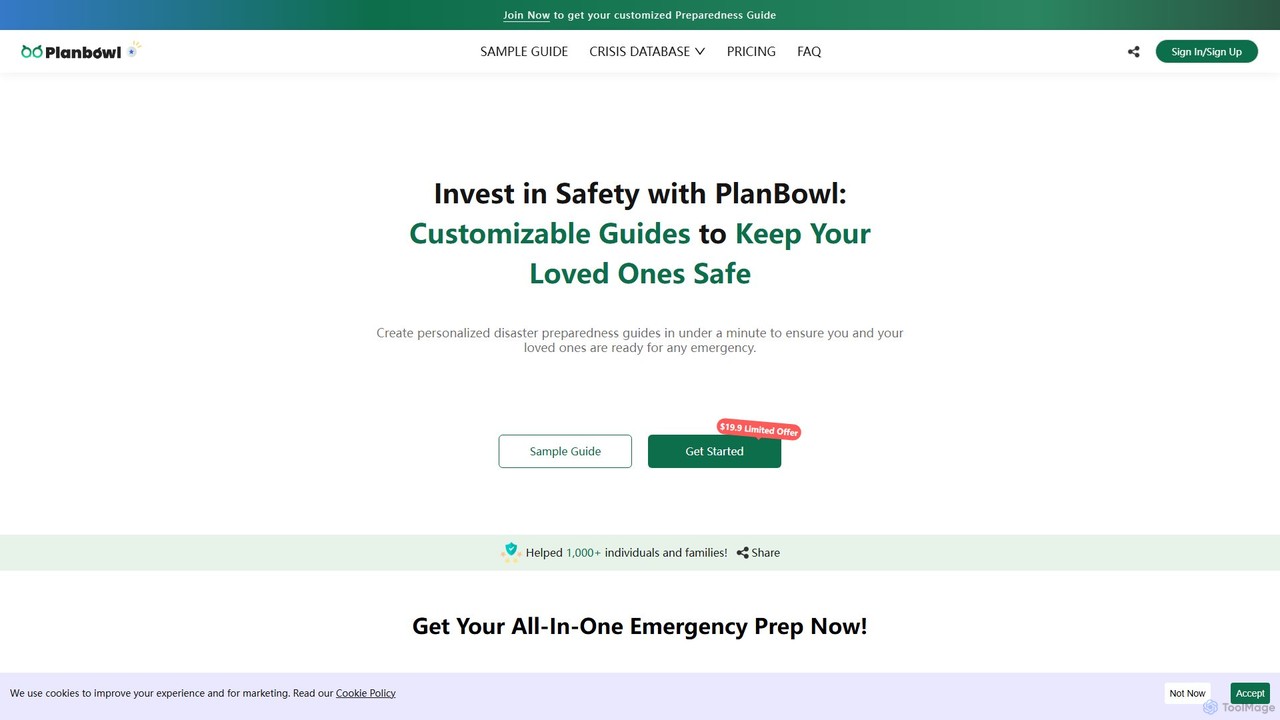
PlanBowl is an AI-powered tool that creates personalized emergency preparedness guides in under a minute. By analyzing your location and family details, it generates a comprehensive, customized plan for various disasters and emergencies, including natural calamities, accidents, and even war. The guide includes checklists, SOPs, and pet care modules, ensuring you and your loved ones are ready for any situation.

Safety
Visits 6KFavorites 161Likes 154

About Emergency Preparedness

Emergency Preparedness AI tools are designed to help individuals and families proactively plan for, respond to, and recover from various crises. These tools leverage artificial intelligence to analyze risks, provide personalized guidance, and automate critical tasks. They empower users to build resilience and ensure safety by offering intelligent support before, during, and after unexpected events.

Core Features

  • Personalized Risk Assessment: AI analyzes location, demographics, and local data to identify specific threats and recommend tailored preparedness actions.
  • Automated Alert Systems: Provides real-time notifications for weather events, natural disasters, health advisories, or other local emergencies.
  • Digital Emergency Plan Creation: Guides users through building comprehensive digital plans, including contact lists, evacuation routes, and supply checklists.
  • Resource Tracking & Management: Helps inventory emergency supplies, track expiry dates, and manage important documents securely.
  • Crisis Communication Support: Facilitates rapid communication with emergency contacts and provides pre-drafted messages for status updates.

Applicable Scenarios

These tools are invaluable for individuals and families living in disaster-prone areas, those with specific health needs requiring careful planning, or anyone seeking to enhance their personal safety and resilience. They are used for preparing for natural disasters like hurricanes or earthquakes, managing personal health crises, and ensuring family safety during unexpected events.

How to Choose

When selecting an Emergency Preparedness AI tool, consider the scope of emergency types it covers, the customization options for alerts and plans, and the ease of use for all family members. Evaluate its data privacy and security measures, as well as its ability to integrate with local emergency services information and provide reliable, up-to-time guidance.

Emergency Preparedness use cases

1

Family Natural Disaster Planning

A family living in a hurricane-prone area uses an AI emergency preparedness tool to create a comprehensive disaster plan. The AI analyzes their home's location, local evacuation routes, and family members' specific needs (e.g., elderly, children, pets) to generate a customized checklist for emergency kits, communication protocols, and shelter-in-place instructions. This ensures all family members know their roles and actions, significantly reducing panic and improving response time during an actual event.

2

Personal Health Crisis Management

An individual with a chronic medical condition utilizes an AI emergency tool to manage their health crisis preparedness. The tool securely stores their medical history, medication list, emergency contacts, and doctor's information. In case of a sudden health event, the AI can guide them through initial self-care steps, alert designated contacts with relevant medical details, and even provide directions to the nearest appropriate medical facility, ensuring timely and informed assistance.

3

Travel Safety & Risk Alerts

A frequent traveler uses an AI-powered emergency preparedness app to stay informed and safe during international trips. The app monitors real-time news, weather patterns, and local advisories for their destination, providing proactive alerts about potential political unrest, health risks, or natural disasters. It can also suggest safe zones, local emergency numbers, and even offer basic phrase translations for critical communication, significantly enhancing personal safety and peace of mind while abroad.

4

Smart Home Incident Response

Homeowners integrate an AI emergency preparedness tool with their smart home system to enhance incident response. If a smart sensor detects a fire, water leak, or unauthorized entry, the AI not only triggers alarms but also sends immediate alerts to the homeowner and designated emergency contacts. It can then provide step-by-step guidance on what to do next, such as shutting off water mains or evacuating safely, ensuring a swift and coordinated response even when the homeowner is away.

5

Critical Digital Asset Backup & Recovery

An individual uses an AI emergency preparedness tool to securely manage and ensure access to vital digital documents during a crisis. The AI helps categorize and encrypt important files like insurance policies, property deeds, medical records, and identification documents, storing them in a secure, cloud-based vault. In an emergency where physical documents might be lost or inaccessible, the AI facilitates quick, authenticated retrieval of these critical assets, providing peace of mind and aiding in recovery efforts.

6

Emergency Supply Kit Optimization & Tracking

A household uses an AI emergency preparedness tool to optimize and maintain their emergency supply kit. The AI assesses local risks, family size, and specific dietary or medical needs to recommend an ideal list of items, from food and water to first-aid supplies and communication devices. It then tracks expiry dates for perishable goods and sends reminders for replenishment, ensuring the kit is always up-to-date and ready for use, eliminating the guesswork from emergency provisioning.

Emergency Preparedness FAQ

What are AI Emergency Preparedness tools?

AI Emergency Preparedness tools are software applications or platforms that leverage artificial intelligence to help individuals and families prepare for, respond to, and recover from various emergencies. They typically feature personalized risk assessments, automated alert systems, and digital plan creation. These tools aim to enhance personal safety and resilience by providing intelligent, data-driven guidance and support during critical situations.

How to choose the right AI tool for emergency preparedness?

Choosing the right AI emergency preparedness tool involves several key considerations. First, assess its coverage for various emergency types relevant to your location and lifestyle. Look for robust, customizable alert systems and intuitive interfaces for creating and managing digital plans. Data privacy and security are paramount, so verify encryption and access controls. Finally, consider its integration capabilities with local emergency services or smart home devices, and ensure it provides reliable, up-to-date information and guidance.

What are the main benefits of using AI for emergency preparedness?

The main benefits of using AI for emergency preparedness include enhanced personalization, proactive threat detection, and streamlined response. AI tools can analyze vast amounts of data to offer tailored plans and risk assessments specific to an individual's circumstances. They provide real-time alerts and guidance, automating critical communication and decision-making processes. This leads to more informed actions, reduced panic, and ultimately, improved safety and faster recovery during unexpected events, making preparedness more accessible and effective.

What types of emergencies can AI preparedness tools help with?

AI emergency preparedness tools can assist with a wide range of personal emergencies. This includes natural disasters such as hurricanes, earthquakes, floods, and wildfires, by providing location-specific alerts and evacuation routes. They also support health crises by managing medical information and guiding immediate actions. Furthermore, these tools can aid in personal safety incidents, travel emergencies, and even home security breaches, offering tailored advice and communication support for various unexpected events.

How secure are personal data and plans stored in these AI tools?

The security of personal data and emergency plans in AI preparedness tools is a critical concern. Reputable tools employ robust encryption protocols for data at rest and in transit, multi-factor authentication, and strict access controls to protect sensitive information. They often adhere to industry-standard security certifications and privacy regulations. Users should always review the tool's privacy policy and security features, ensuring their data is not shared without consent and is protected against unauthorized access or breaches, providing peace of mind during vulnerable times.