
ToolMage
Sign in

Best 1 Event Planning AI tools for Personal

Popular Event Planning AI tools in Personal include Myproposal.love, helping you work more efficiently.

Myproposal.love
Freemium

Myproposal.love

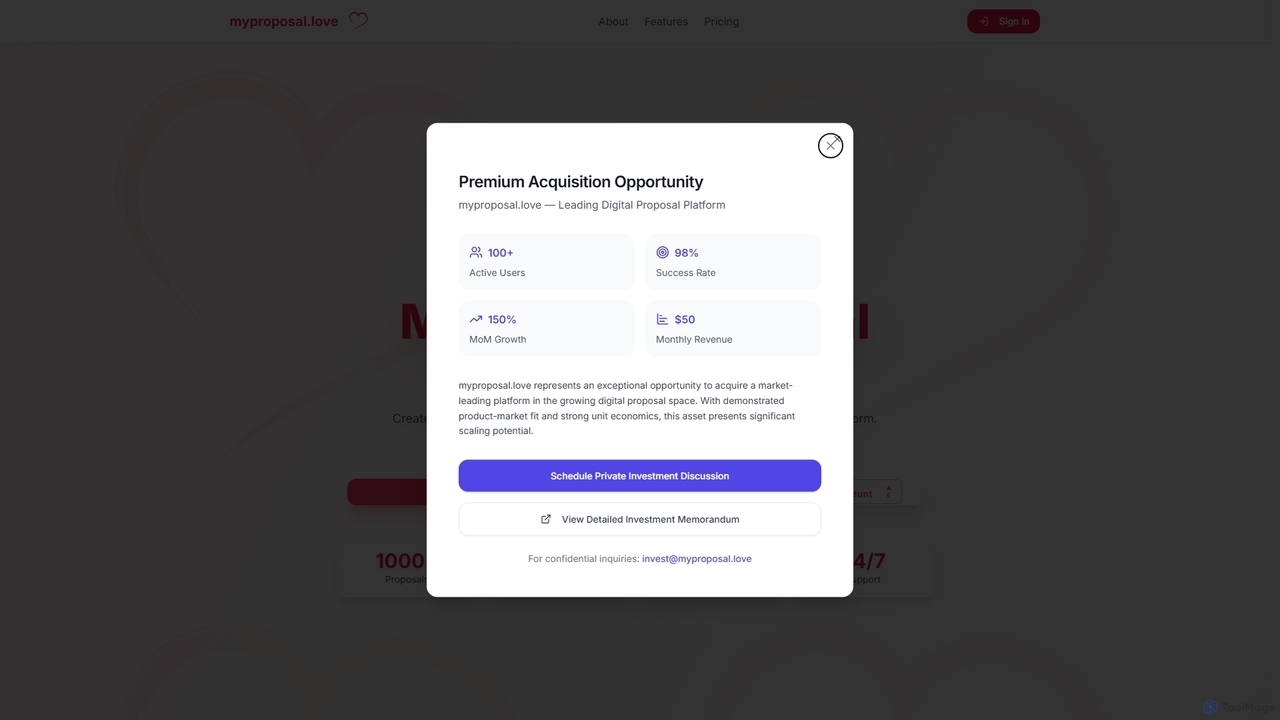
Myproposal.love is an AI-powered platform designed to help you create the perfect, unforgettable marriage or Valentine's Day proposal. It transforms your unique love story into a beautifully crafted, emotionally resonant proposal, offering personalized suggestions for planning, writing, and delivery to ensure your special moment is magical.

Relationship
Visits 5.3KFavorites 143Likes 140

About Event Planning

Event Planning AI tools are specialized software solutions that leverage artificial intelligence to streamline and enhance various aspects of event organization. These tools utilize machine learning, natural language processing, and predictive analytics to automate repetitive tasks, personalize attendee experiences, and optimize resource allocation. They empower individuals and professionals to manage everything from small personal gatherings to large-scale corporate conferences more efficiently and effectively.

Core Features

  • Automated Scheduling: Intelligently suggests optimal dates, times, and task sequences based on availability and dependencies.
  • Budget Optimization: Analyzes spending patterns and provides recommendations to maximize value and minimize costs.
  • Personalized Recommendations: Curates content, networking opportunities, and agenda items tailored to individual attendee preferences.
  • Vendor & Venue Matching: Uses AI to identify and compare suitable suppliers and locations based on specific event requirements and budget.
  • Real-time Analytics: Monitors attendee engagement, registration trends, and feedback to provide actionable insights during and after the event.

Use Cases

These AI tools are invaluable for a diverse range of users, from individuals organizing a family reunion to professional event agencies managing international conferences. They are particularly useful for marketing teams planning product launches, HR departments coordinating company-wide training, or wedding planners seeking to personalize guest experiences and streamline vendor communications.

How to Choose

When selecting an AI event planning tool, consider its core functionalities, such as scheduling automation, budget management, and personalization capabilities. Evaluate its integration potential with existing CRM or marketing platforms, assess its scalability for different event sizes, and review user-friendliness for your team's technical proficiency. Finally, compare pricing models and customer support options to ensure long-term value.

Event Planning use cases

1

Personalized Conference Agenda Creation

A conference organizer uses an AI event planning tool to generate highly personalized agendas for thousands of attendees. By analyzing registration data, professional interests, and past session attendance, the AI suggests relevant tracks, speakers, and networking opportunities, ensuring each participant receives a tailored experience and maximizing engagement.

2

Automated Vendor Sourcing and Comparison

A corporate event manager needs to find caterers, AV suppliers, and decorators for an upcoming gala. The AI tool allows them to input specific requirements, budget constraints, and preferred styles. It then scours databases, compares proposals, checks reviews, and presents a shortlist of the most suitable vendors, significantly reducing research time and ensuring best-fit selections.

3

Optimized Guest List Management for Weddings

A couple planning their wedding utilizes AI to manage their guest list, seating arrangements, and communication. The tool helps categorize guests, track RSVPs, manage dietary restrictions, and even suggest optimal seating charts to foster better interactions, while automating personalized invitation follow-ups and thank-you notes.

4

Real-time Budget Tracking and Expense Optimization

An event finance coordinator oversees multiple projects simultaneously. An AI-powered tool continuously tracks all expenditures against the budget, identifies potential overspends before they occur, and suggests cost-saving alternatives or reallocations. This proactive approach ensures financial discipline and maximizes the return on investment for each event.

5

AI-powered Venue Selection and Layout Design

A professional planner is tasked with finding a venue for a product launch that accommodates specific technical needs and attendee flow. The AI tool analyzes venue databases, virtual tours, and floor plans, suggesting optimal locations based on capacity, amenities, and accessibility. It can even generate 3D layout simulations to visualize different setups and optimize space utilization.

6

Predictive Attendee Engagement Analysis

A marketing team running a virtual summit wants to understand and improve attendee engagement. The AI tool monitors real-time interactions, session attendance, chat activity, and survey responses. It identifies patterns, predicts potential drop-offs, and provides actionable insights to adjust content, send targeted reminders, or offer personalized support, boosting overall participation.

Event Planning FAQ

What are AI Event Planning tools?

AI Event Planning tools are software applications that integrate artificial intelligence technologies like machine learning and natural language processing to automate, optimize, and personalize various tasks involved in organizing events. They go beyond traditional event management software by offering predictive insights, intelligent recommendations, and adaptive automation to enhance efficiency and attendee experience.

How do AI Event Planning tools differ from traditional event management software?

Traditional event management software primarily provides organizational frameworks for tasks like registration, ticketing, and basic scheduling. AI Event Planning tools, however, leverage data analysis to offer proactive solutions: they can predict attendance, recommend optimal vendors, personalize agendas for attendees, and automate complex decision-making processes, offering a more intelligent and adaptive approach to event orchestration.

What specific tasks can AI Event Planning tools automate?

AI Event Planning tools can automate a wide range of tasks, including:

  • Scheduling: Optimizing timelines and task assignments.
  • Budgeting: Tracking expenses and suggesting cost-saving measures.
  • Vendor Sourcing: Identifying and comparing suppliers.
  • Personalization: Tailoring content and recommendations for attendees.
  • Communication: Automating reminders and follow-ups.
  • Analytics: Providing real-time insights into event performance.

Who can benefit most from using AI in event planning?

Both individuals and professional organizations can significantly benefit. Individuals planning personal events like weddings or parties can streamline complex logistics. Professional event planners, corporate marketing teams, HR departments, and educational institutions can leverage AI to manage large-scale conferences, product launches, training sessions, and virtual events, improving efficiency, reducing costs, and enhancing attendee satisfaction.

What are the key considerations when choosing an AI Event Planning tool?

When selecting an AI Event Planning tool, consider the following:

  • Feature Set: Does it offer the specific AI-powered automation you need (e.g., scheduling, personalization, analytics)?
  • Scalability: Can it handle events of varying sizes and complexities?
  • Integration: Does it integrate with your existing CRM, marketing, or communication platforms?
  • User Experience: Is the interface intuitive and easy for your team to learn and use?
  • Support & Pricing: Evaluate the level of customer support and the pricing model against your budget and long-term needs.