DecisionMakerPro
DecisionMakerPro is an AI-powered suite of tools designed to help you make better, faster, and more rational decisions. …
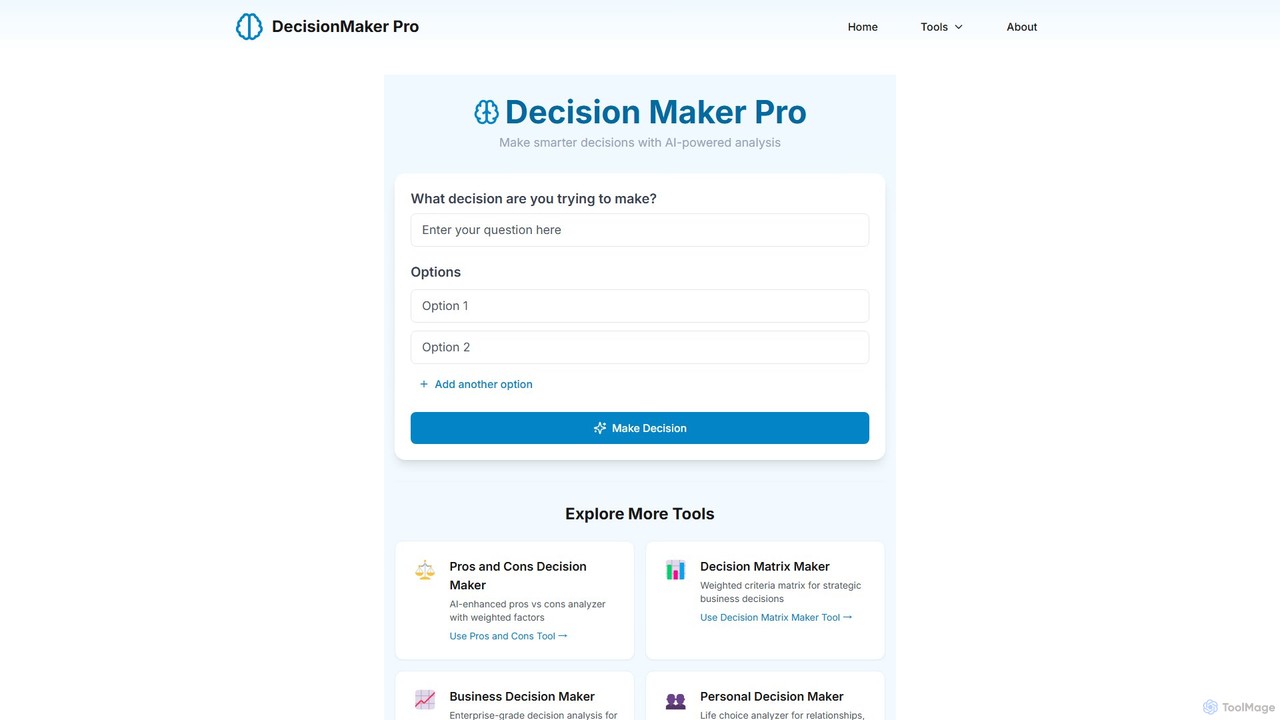
DecisionMakerPro is an AI-powered suite of tools designed to help you make better, faster, and more rational decisions. It offers a variety of frameworks, from pros and cons lists to weighted decision matrices, to eliminate analysis paralysis and emotional bias for personal, career, and business choices.
About Life Management
AI Life Management tools are applications that use artificial intelligence to help users organize, track, and optimize various aspects of their personal lives. These tools leverage machine learning to analyze personal data, identify patterns in habits or spending, and provide personalized recommendations. They are designed to assist with goal setting, habit formation, financial budgeting, and overall well-being, acting as an intelligent personal assistant. Unlike simple planners, AI-driven life management tools offer proactive insights and automated adjustments to help users stay on track with their personal development goals.
Core Features
- Personalized Goal Setting: Suggests achievable milestones based on user history and stated ambitions.
- Intelligent Habit Tracking: Monitors consistency and provides analysis on what helps or hinders habit formation.
- Automated Financial Management: Categorizes expenses, tracks spending patterns, and offers data-driven savings advice.
- Wellness & Mental Health Support: Offers mood tracking, guided meditations, and personalized wellness tips based on user input.
- Proactive Scheduling: Optimizes daily schedules by prioritizing tasks based on long-term goals and energy levels.
Use Cases
These tools are ideal for individuals focused on self-improvement, busy professionals managing work-life balance, and anyone seeking to gain control over their finances or health routines. For example, a user can build a consistent workout routine with adaptive planning, manage a household budget with automated expense tracking, or improve sleep quality through AI-driven recommendations.
How to Choose
When selecting a tool, consider its specific focus—whether it's an all-in-one solution or specializes in finance, habits, or wellness. Evaluate its data privacy and security policies, especially if connecting sensitive accounts. Check for integration capabilities with your existing calendar, health, or banking apps. Finally, assess the level of personalization and the quality of the AI-driven insights provided.

Life ManagementUse Cases
Building a Consistent Fitness Routine
For individuals struggling to adhere to exercise goals, a Life Management AI can act as a personal trainer. The user inputs their fitness objectives, such as 'run 5k three times a week'. The AI then analyzes their calendar to suggest optimal workout times, avoiding conflicts. It tracks completed sessions via connected health apps or manual input, monitors progress, and sends motivational nudges. If a session is missed, the AI can suggest a rescheduled time or adjust the weekly plan to ensure the user stays on track without feeling discouraged.
Automating Personal Budgeting and Savings
For users aiming for financial discipline, these tools connect securely to bank accounts and credit cards. The AI automatically categorizes transactions, providing a clear overview of spending habits (e.g., 'You spent 20% more on dining out this month'). It helps users set savings goals, like saving for a vacation, and creates a personalized budget. The tool then tracks progress in real-time and sends alerts if the user is close to exceeding a budget category, offering actionable advice to stay on track.
Improving Sleep Quality and Wellness
A user focused on well-being can use a Life Management tool to improve their sleep. By integrating with a smartwatch or fitness tracker, the AI analyzes sleep stages, duration, and interruptions. It correlates this data with daily activities logged in the app, such as caffeine intake, exercise times, or stress levels from calendar events. Based on this analysis, it provides personalized recommendations, like 'Try avoiding caffeine after 3 PM' or suggests a guided meditation from its library before bedtime to improve sleep quality.
Mastering a New Skill with Structured Learning
For a lifelong learner aiming to acquire a new skill, such as a programming language, a Life Management AI can create a structured learning path. The user sets the goal and a target completion date. The AI breaks down the large goal into manageable daily or weekly tasks, such as 'Read Chapter 1' or 'Complete coding exercise'. It schedules these learning blocks into the user's calendar, sends reminders, and can even link to learning resources. Progress is tracked, and the AI adjusts the schedule if the user falls behind or progresses faster than expected.
Managing Work-Life Balance for Professionals
A busy professional can use a Life Management AI to prevent burnout. By integrating work and personal calendars, the tool gets a holistic view of the user's commitments. It can identify patterns of overworking, such as consistently skipping lunch breaks or working late. The AI can then proactively block out 'focus time' for deep work and 'personal time' for family or hobbies. It sends alerts like, 'You've worked 10 hours today. Consider taking a break,' helping the user maintain a healthier balance.
Cultivating Positive Mental Health Habits
For users focusing on mental wellness, a Life Management tool can serve as a supportive companion. It can prompt daily journaling with AI-generated questions tailored to the user's recent mood entries. The AI can track mood fluctuations over time and identify potential triggers or positive influences. Based on these patterns, it might suggest a 5-minute mindfulness exercise during a particularly stressful part of the day or recommend activities that have historically correlated with a positive mood for that user, fostering self-awareness and proactive self-care.