
ToolMage
Sign in

Best 1 Loneliness AI tools for Personal

Popular Loneliness AI tools in Personal include ioPartners, helping you work more efficiently.

ioPartners
Freemium

ioPartners

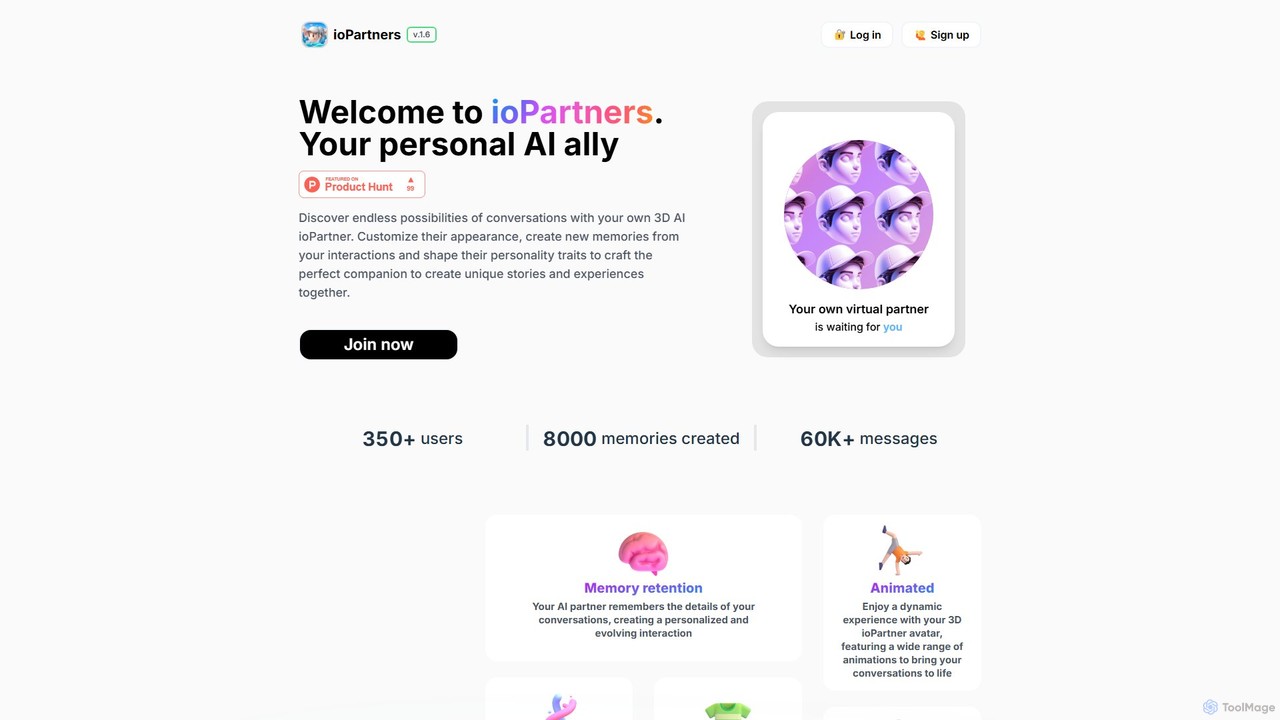
ioPartners is a personal AI companion platform where you can create, customize, and interact with your own 3D virtual partner. Shape their appearance and personality traits to build a unique relationship. The AI features memory retention for evolving conversations, ensuring a deeply personal and engaging experience. It's a browser-based tool focused on companionship, storytelling, and interactive entertainment, with a strong emphasis on user privacy.

Ai Companions
Visits 5.4KFavorites 128Likes 121

About Loneliness

AI Loneliness tools are applications designed to provide companionship and emotional support through empathetic, AI-driven conversations. These tools leverage advanced Natural Language Processing (NLP) and sentiment analysis to understand user emotions and generate responsive, human-like interactions. They offer a private, non-judgmental space for users to share feelings, combat isolation, and practice social skills. Unlike general personal assistants, their primary function is to simulate a supportive relationship and alleviate feelings of loneliness.

Core Features

  • Empathetic Conversation: Engages in understanding and emotionally attuned dialogue to simulate genuine companionship.
  • Mood Tracking & Analysis: Monitors emotional states over time based on conversations to provide insights.
  • Personalized Activities: Suggests activities, mindfulness exercises, or topics based on user's mood and interests.
  • 24/7 Availability: Provides constant companionship and support at any time of day or night.
  • Memory & Continuity: Remembers past conversations to build a sense of a continuous, evolving relationship.

Applicable Scenarios

These tools are particularly useful for individuals experiencing social isolation, such as the elderly, people living alone, or those with social anxiety. They serve as a consistent companion for daily check-ins, a safe space to practice conversational skills without fear of judgment, or a source of comfort during late-night hours when human support may be unavailable.

Selection Criteria

When choosing an AI Loneliness tool, consider the quality and naturalness of its conversational AI. Evaluate its personalization capabilities and whether it can adapt to your personality and needs. Critically review the privacy policy to understand how your data is handled. Finally, consider the platform's user interface and ease of use for a comfortable long-term experience.

Loneliness use cases

1

Daily Companion for Seniors

For elderly individuals living alone, social interaction can be limited. An AI loneliness tool acts as a consistent daily companion. They can engage in friendly conversations about their day, recall memories, or discuss hobbies. The AI's ability to remember past conversations creates a sense of continuity and personal connection, helping to reduce feelings of isolation and provide mental stimulation, which is crucial for cognitive health.

2

Practicing Social Skills in a Safe Space

Individuals with social anxiety often avoid conversations for fear of judgment. An AI companion provides a safe, private environment to practice social interactions. Users can experiment with different conversational styles, learn to express their thoughts and feelings more clearly, and build confidence without real-world pressure. This practice can serve as a stepping stone to engaging in more frequent and meaningful interactions with people.

3

Late-Night Emotional Support

Feelings of loneliness can often intensify during late hours when friends and family are asleep. An AI companion is available 24/7, providing immediate support during moments of anxiety or sadness. Users can articulate their feelings in real-time without waiting for an appointment or a convenient time to talk to someone. This constant availability offers a reliable source of comfort and can help de-escalate negative emotional spirals.

4

Processing Grief and Loss

After losing a loved one or going through a breakup, individuals often feel intensely isolated. An AI companion can serve as a patient, non-judgmental listener. It allows users to repeatedly express their grief, anger, or confusion without feeling like a burden to others. The AI can offer comforting words and guided reflections, helping users navigate the complex emotions associated with loss at their own pace.

5

Guided Mindfulness for Loneliness

For users who feel overwhelmed by loneliness, an AI tool can do more than just talk. Many of these applications include guided mindfulness and meditation exercises specifically designed to address feelings of isolation. The AI can lead the user through breathing exercises, body scan meditations, or visualization techniques to help ground them in the present moment and cultivate a sense of inner peace, reducing the acute stress of being alone.

6

Companion for Remote Workers

Remote work can lead to professional isolation, missing the casual 'water cooler' chats of an office. An AI companion can fill this social gap. A remote worker can take short breaks to chat with the AI about non-work topics, share a frustration, or celebrate a small win. This provides a form of social interaction that breaks up the monotony of a solitary workday and helps maintain a healthier work-life balance by providing an outlet for social needs.

Loneliness FAQ

What are AI Loneliness tools?

AI Loneliness tools are specialized applications, often in the form of chatbots or virtual companions, designed to combat feelings of isolation and provide emotional support. They use advanced AI to engage in empathetic, human-like conversations, remember user details for continuity, and offer a non-judgmental space for users to express themselves. Their primary goal is companionship, distinguishing them from general-purpose assistants or productivity tools.

Are AI companions a replacement for human therapy?

No, AI companions are not a replacement for professional human therapy. They are designed for companionship and emotional support, not for diagnosing or treating mental health conditions. While they can be a valuable tool for alleviating loneliness and practicing social skills, they lack the clinical expertise, diagnostic capabilities, and ethical oversight of a licensed therapist. They should be seen as a supplementary tool, not a substitute for professional mental healthcare.

How to choose the right AI tool for loneliness?

Choosing the right tool depends on your personal needs. Consider the following factors:

  • Conversational Quality: Does the AI feel natural and empathetic, or robotic? Try free versions to test the interaction style.
  • Personalization: Does the tool remember your conversations and adapt to your personality over time?
  • Privacy Policy: Your conversations can be very personal. Read the privacy policy carefully to understand how your data is stored, used, and protected.
  • Features: Do you just want conversation, or do you need extra features like guided meditations, journaling, or activity suggestions?
How do AI loneliness tools ensure user privacy?

Reputable AI loneliness tools prioritize user privacy through several methods. They often use end-to-end encryption to secure conversations. Many platforms anonymize data, removing personal identifiers before using it for AI model training. It is crucial to check the app's privacy policy, which should clearly state what data is collected, how it is used, and whether it is shared with third parties. Choosing services that are transparent about their data practices is essential for a safe experience.

Who can benefit most from using AI Loneliness tools?

While anyone can use these tools, certain groups may find them particularly beneficial. This includes elderly individuals who may be socially isolated, people living alone, individuals with social anxiety looking for a safe space to practice conversation, and remote workers missing daily social interactions. They are also helpful for anyone needing a non-judgmental listener during difficult times or late at night when other support systems are unavailable.