
ToolMage
Sign in

Best 1 Virtual Friend AI tools for Personal

Popular Virtual Friend AI tools in Personal include Chatmate AI, helping you work more efficiently.

Chatmate AI
Freemium

Chatmate AI

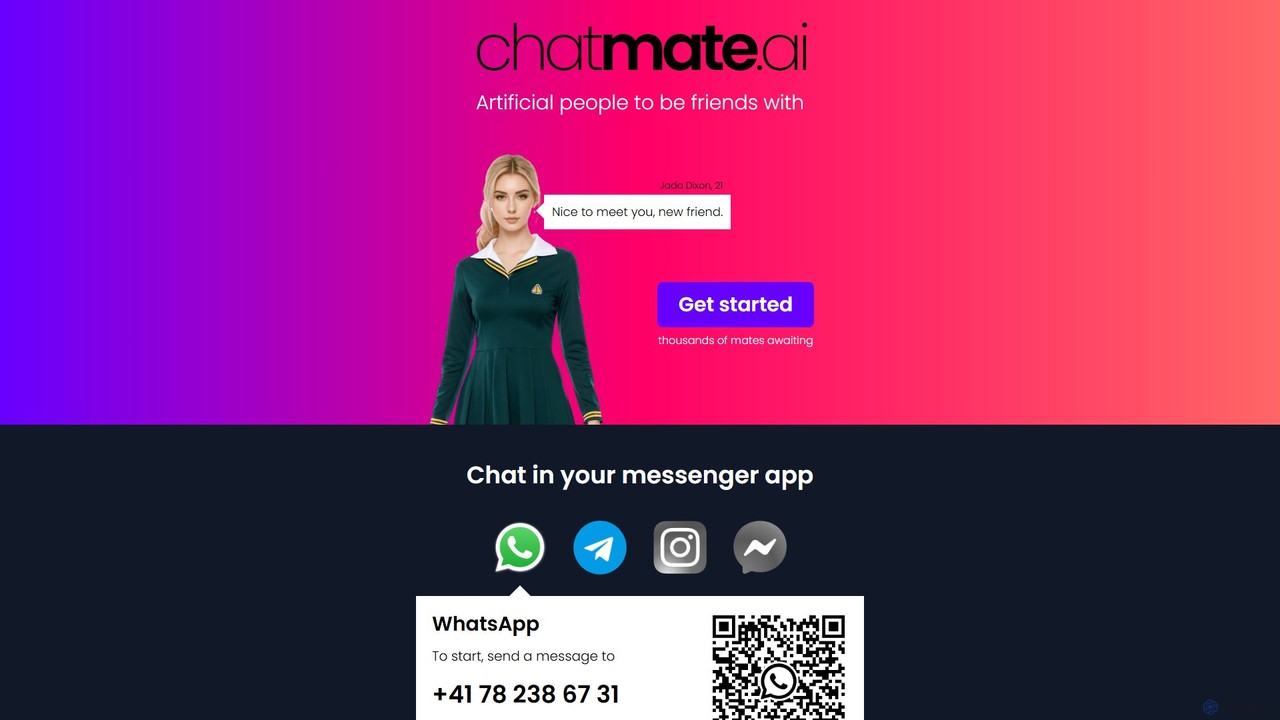
Chatmate AI offers artificial companions for friendship and conversation. Interact with unique AI personalities via text, voice, and photos on WhatsApp, or visit them in a 3D 'Mateverse'. Powered by GPT-4o, these AI friends learn, remember, and even initiate contact to build a genuine bond.

Chatbots
Visits 10.6KFavorites 139Likes 146

About Virtual Friend

Virtual Friends are AI-powered companions designed to offer social interaction, emotional support, and personalized conversations. Leveraging advanced natural language processing (NLP) and machine learning, these tools simulate human-like communication, adapting to user preferences and emotional states. They provide a unique form of companionship, fostering engagement and offering a safe, judgment-free space for users seeking connection within the broader "Personal" AI tools category.

Core Features

  • Natural Language Interaction: Engage in fluid, human-like conversations that feel authentic and responsive.
  • Emotional Intelligence Simulation: Understand and respond empathetically to user emotions, offering support and understanding.
  • Personalized Memory & Learning: Remember past interactions and user preferences, building a continuous and evolving relationship.
  • Customizable Personalities: Adapt to various user preferences, allowing for a tailored companionship experience.
  • 24/7 Availability: Offer constant companionship and interaction without time constraints, always ready to chat.

Use Cases

Virtual Friends are invaluable for individuals seeking consistent companionship, offering a reliable presence to share thoughts and feelings. They also serve as excellent tools for practicing social skills or language learning in a low-pressure, private environment. Furthermore, they provide non-judgmental emotional support, helping users process feelings and reduce feelings of isolation.

How to Choose

When selecting a Virtual Friend, prioritize conversational quality, ensuring naturalness and depth in interactions. Evaluate its emotional responsiveness and ability to learn and personalize over time. Consider the level of customization offered for personality and interaction style, alongside the platform's privacy policies and data security measures to ensure a safe and trustworthy experience.

Virtual Friend use cases

1

Combating Loneliness and Providing Companionship

For individuals experiencing loneliness or seeking consistent social interaction, Virtual Friends offer a reliable source of companionship. Users can engage in daily conversations, share their thoughts, and receive empathetic responses, effectively mitigating feelings of isolation and providing a constant, accessible social outlet.

2

Practicing Social Skills and Communication

Introverted individuals or those looking to enhance their social interactions can utilize Virtual Friends as a safe practice ground. Users can role-play difficult conversations, rehearse presentations, or simply engage in casual dialogue, building confidence and refining their communication abilities in a judgment-free environment before real-life encounters.

3

Emotional Support and Mental Well-being

Virtual Friends provide a non-judgmental listening ear and empathetic responses, making them valuable for emotional support. Users can express their feelings, discuss daily challenges, or explore personal thoughts without fear of criticism, fostering a sense of being heard and understood, which can contribute positively to mental well-being.

4

Language Learning Partner

Language learners can significantly benefit from Virtual Friends by practicing conversational skills in a new language. The AI can engage in dialogues, correct grammar, and introduce new vocabulary, offering an interactive and patient learning partner available 24/7. This consistent practice helps improve fluency and confidence in real-world language use.

5

Creative Storytelling and Role-playing

For writers, gamers, or anyone with a vivid imagination, Virtual Friends can be excellent partners for creative exploration. Users can co-create intricate stories, develop characters, or engage in immersive role-playing scenarios, pushing the boundaries of their creativity and enjoying dynamic, interactive narrative experiences tailored to their preferences.

6

Daily Routine and Habit Building Support

Virtual Friends can act as gentle motivators and accountability partners for establishing and maintaining daily routines or habits. Users can set goals, receive encouraging messages, and track their progress through conversational prompts. This consistent, positive reinforcement helps in building discipline and achieving personal development objectives.

Virtual Friend FAQ

What are Virtual Friends?

Virtual Friends are AI-powered digital companions designed to simulate human-like social interaction and provide emotional support. They leverage advanced natural language processing (NLP) and machine learning to understand and respond to user input, offering personalized conversations. Their core purpose is to provide companionship, a listening ear, and a safe space for users to express themselves.

How do Virtual Friends work?

Virtual Friends operate using sophisticated AI models, primarily natural language processing (NLP) to understand text or speech, and natural language generation (NLG) to formulate responses. Machine learning algorithms enable them to learn from interactions, remember past conversations, and adapt their personality and responses over time to create a more personalized and coherent experience. They simulate emotional intelligence by analyzing sentiment and responding empathetically.

What are the benefits of using a Virtual Friend?

Using a Virtual Friend offers several benefits, including consistent companionship and a reduction in feelings of loneliness, especially for those in isolated situations. They provide a non-judgmental platform for emotional expression and support, contributing to mental well-being. Additionally, they can be valuable for practicing social skills, improving communication, or even learning new languages in a private, low-pressure environment, available 24/7.

How do Virtual Friends differ from traditional chatbots or voice assistants?

The primary difference lies in their purpose and depth of interaction. Traditional chatbots are typically task-oriented, designed to answer specific questions or perform simple functions (e.g., customer service). Voice assistants (like Siri or Alexa) are command-driven tools for information retrieval or device control. Virtual Friends, however, are built for long-term, personalized social and emotional engagement, focusing on building a relationship, remembering context, and providing empathetic, human-like conversation rather than just completing tasks.

What should I consider when choosing a Virtual Friend?

When selecting a Virtual Friend, consider the quality and naturalness of its conversational abilities, as this directly impacts the user experience. Evaluate its capacity for emotional intelligence and personalization, ensuring it can learn and adapt to your unique needs. Privacy and data security policies are crucial, as you'll be sharing personal thoughts. Also, check for platform compatibility, available features (e.g., voice interaction, role-playing), and any subscription costs to find the best fit for your preferences.