
ToolMage
Sign in

Best 1 Talent Sourcing AI tools for Recruiting

Popular Talent Sourcing AI tools in Recruiting include crustdata, helping you work more efficiently.

crustdata
Freemium

crustdata

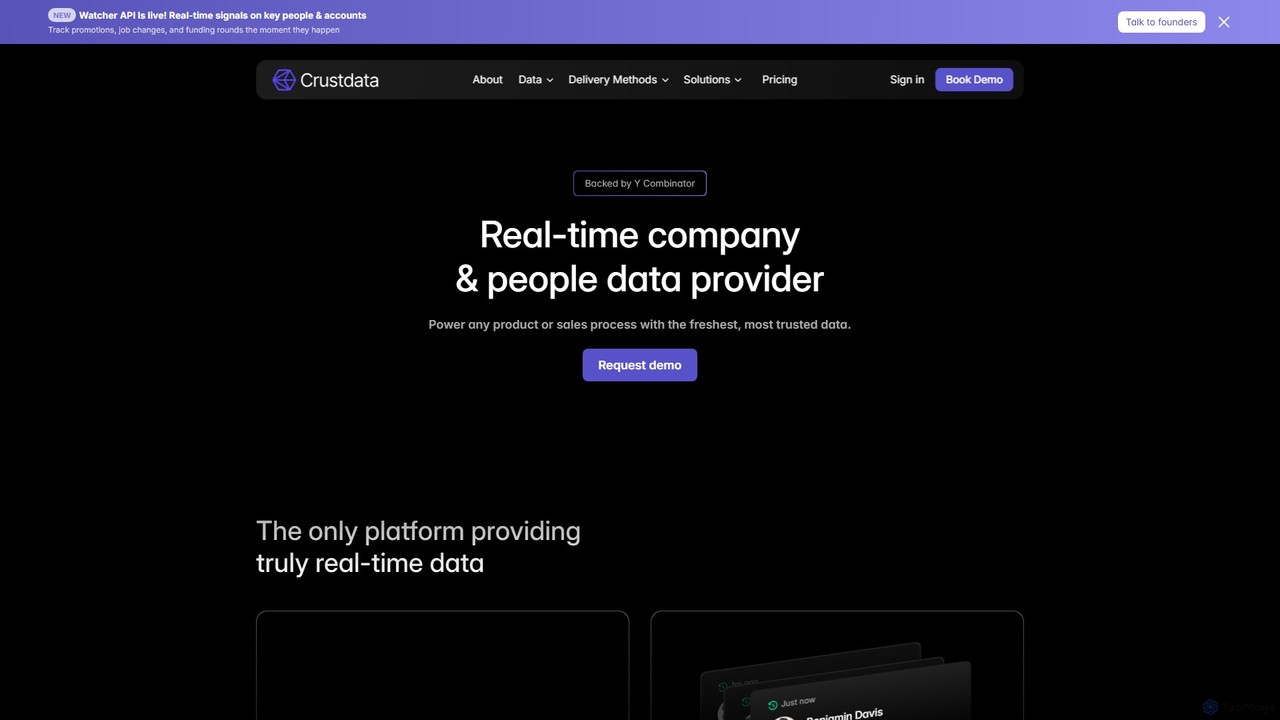
Crustdata is a real-time B2B data provider, offering fresh and accurate company and people data through a flexible REST API and bulk data feeds. Backed by Y Combinator, it's designed to power AI applications, sales platforms, recruiting systems, and investment analysis by delivering live signals on job changes, funding rounds, new hires, and more.

Business Intelligence
Visits 91.4KFavorites 132Likes 128

About Talent Sourcing

AI Talent Sourcing tools are a specialized category of recruiting software that automates the proactive search for qualified candidates. These platforms leverage artificial intelligence to scan diverse sources like professional networks, social media, and open-web data to identify potential hires, including passive talent not actively seeking jobs. They significantly accelerate the initial stage of the hiring process by building a rich pipeline of relevant candidates. This technology allows recruiters to move beyond traditional job boards and inbound applications, focusing on strategic engagement with top-tier talent.

Core Features

  • Automated Candidate Search: Utilizes AI to search across multiple platforms (e.g., LinkedIn, GitHub, academic sites) based on job requirements.
  • AI-Powered Matching: Analyzes candidate profiles and resumes to score their suitability for a specific role, going beyond simple keyword matching.
  • Contact Information Enrichment: Finds and verifies professional contact details like email addresses and phone numbers for outreach.
  • Talent Pool Building: Creates and maintains a dynamic database of potential candidates for current and future hiring needs.

Use Cases

These tools are essential for corporate recruiters, talent acquisition specialists, and recruiting agencies. They are particularly effective for filling niche or senior-level positions where the ideal candidates are often passive. Startups and high-growth companies use them to rapidly scale their teams, while large enterprises leverage them for succession planning and building strategic talent pipelines.

How to Choose

When selecting an AI Talent Sourcing tool, consider the breadth and quality of its data sources. Evaluate the sophistication of its AI matching algorithm and its ability to understand nuanced job requirements. Assess its integration capabilities with your existing Applicant Tracking System (ATS) and other HR software. Finally, consider the user interface's ease of use and the platform's compliance with data privacy regulations like GDPR.

Talent Sourcing use cases

1

Sourcing for Niche Technical Roles

A tech recruiter is tasked with finding a Senior Machine Learning Engineer with experience in natural language processing. Instead of relying on job postings that attract many unqualified applicants, the recruiter uses an AI Talent Sourcing tool. They input specific skills, required programming languages (Python, TensorFlow), and experience level. The AI scans platforms like GitHub, Kaggle, and academic research papers to identify individuals who demonstrate expertise through their projects and publications, even if they aren't actively looking for a job. This results in a highly targeted list of passive candidates, increasing the quality of the talent pipeline and reducing time-to-hire.

2

Building a Proactive Talent Pipeline

A fast-growing company anticipates needing to hire multiple sales executives over the next year. Instead of waiting for positions to open, the Head of Talent Acquisition uses an AI sourcing tool to build a talent pipeline. The tool continuously scans professional networks for profiles matching the ideal sales executive persona—individuals with a proven track record in B2B SaaS sales and experience in a specific industry. The system automatically adds qualified candidates to a talent pool, enriches their profiles with contact data, and can even initiate a light-touch, automated outreach sequence. When a new position opens, the recruiting team has a warm, pre-vetted list of candidates to engage immediately.

3

Enhancing Diversity and Inclusion Sourcing

A company's Diversity & Inclusion (D&I) team wants to increase representation from underrepresented groups in their tech department. They use an AI Talent Sourcing tool configured to reduce unconscious bias. The tool can anonymize profiles by hiding names and photos, and it can be directed to search for talent from specific diversity-focused professional groups, universities, or conferences. By broadening the search beyond traditional networks and focusing on skills and qualifications, the D&I team can identify a more diverse pool of qualified candidates, helping the company meet its representation goals in a fair and effective manner.

4

Competitive Talent Mapping

A strategic HR business partner needs to understand the talent landscape at key competitor companies for future planning. They use an AI sourcing platform not for immediate hiring, but for intelligence gathering. The tool is set to map out employees at specific companies who hold roles like 'Product Manager' or 'Data Scientist'. It analyzes public data to provide insights on team structures, common skill sets, and potential talent hubs. This information is invaluable for benchmarking the company's own talent, identifying potential future leaders to watch, and making strategic decisions about where to open new offices or focus recruiting efforts.

5

Automating Outreach for High-Volume Recruiting

A recruiting agency has a contract to fill 50 similar software developer roles for a large client. Manually sourcing and contacting each candidate would be incredibly time-consuming. The agency uses an AI Talent Sourcing tool to first identify a large pool of several hundred qualified developers. Then, they leverage the tool's built-in outreach automation feature. They create a personalized multi-step email sequence that references the candidate's specific skills or projects. The system sends the initial emails and automated follow-ups, tracking open and reply rates. This allows a small team of recruiters to manage a massive sourcing campaign efficiently, focusing their time on engaging with candidates who respond positively.

6

Rediscovering Past Applicants for New Roles

An enterprise company has a large Applicant Tracking System (ATS) with hundreds of thousands of past applicants. Many of these are 'silver medalists'—great candidates who were not hired for a previous role but could be perfect for a new one. A recruiter uses an AI Talent Sourcing tool that integrates with their ATS. When a new 'Marketing Manager' role opens, the tool re-scans the entire ATS database, using its advanced matching algorithm to surface past applicants who are a strong fit for the new requirements. This allows the company to leverage its existing talent pool, reduce sourcing costs, and re-engage with candidates who are already familiar with the brand.

Talent Sourcing FAQ

What are AI Talent Sourcing tools?

AI Talent Sourcing tools are specialized software that automates the process of finding and identifying potential job candidates. Unlike traditional recruiting methods that rely on inbound applications, these tools proactively search the web, professional networks, and internal databases to find qualified individuals, including passive candidates who aren't actively looking for a new job. They use artificial intelligence to match people's skills and experience against job requirements, significantly speeding up the top-of-funnel recruiting process.

How is AI Talent Sourcing different from an Applicant Tracking System (ATS)?

The key difference lies in their primary function: proactive vs. reactive.

  • AI Talent Sourcing is proactive. Its main job is to go out and find potential candidates across various external and internal sources, building a talent pipeline before a role is even filled. It focuses on the 'search' and 'identification' phase.
  • An Applicant Tracking System (ATS) is reactive. Its main job is to manage candidates who have already applied for a job. It helps organize applications, track candidate progress through the hiring stages, and manage communication.
While some modern systems combine features of both, their core purposes are distinct. Sourcing tools fill the pipeline; ATS tools manage the applicants within it.

How do you choose the right AI Talent Sourcing tool?

Choosing the right tool depends on your specific needs. Consider these factors:

  • Data Sources: Does the tool search the platforms where your ideal candidates are most active (e.g., GitHub for developers, LinkedIn for sales)?
  • Integration: How well does it integrate with your existing ATS, CRM, or email systems? Seamless integration prevents data silos and manual work.
  • AI Quality: Evaluate the sophistication of its matching algorithm. Does it understand context and skills, or just match keywords? Ask for a demo with a real job description.
  • User Experience: Is the platform intuitive for your recruiting team? A complex tool with a steep learning curve can hinder adoption and efficiency.
  • Compliance: Ensure the tool complies with data privacy regulations like GDPR and CCPA, especially regarding how it finds and stores candidate data.

Can AI Talent Sourcing tools reduce bias in recruiting?

Yes, they can help reduce bias, but it's not automatic. AI sourcing tools can be configured to focus on objective criteria like skills, experience, and qualifications while ignoring demographic information like name, gender, or age, which can trigger unconscious biases. Some platforms offer features to anonymize profiles during the initial screening. However, it's crucial to ensure the AI itself is not trained on biased historical data, which could perpetuate existing inequalities. When used thoughtfully, these tools can broaden the talent pool and promote more equitable hiring practices by presenting a more diverse slate of qualified candidates to human recruiters.

Who benefits most from using AI Talent Sourcing tools?

While many can benefit, certain groups see the most significant impact:

  • Recruiters for Hard-to-Fill Roles: For positions in tech, healthcare, or executive leadership, where top talent is passive, these tools are invaluable for finding and engaging candidates.
  • High-Growth Companies: Startups and scale-ups that need to hire many people quickly can use these tools to rapidly build a candidate pipeline without a large recruiting team.
  • Recruiting Agencies: Agencies can serve more clients and fill roles faster by automating the time-consuming top-of-funnel sourcing activities.
  • Enterprise Talent Acquisition Teams: Large companies use them for strategic initiatives like building talent pipelines for future needs, diversity sourcing, and competitive intelligence.