Best of the Year 6 results Religion AI Tools

Popular AI tools in the Religion field include SermonAI、Ignaria、PrayBible、divinescribe、Church Loom、bibletherapy.xyz, etc., helping you quickly improve efficiency.

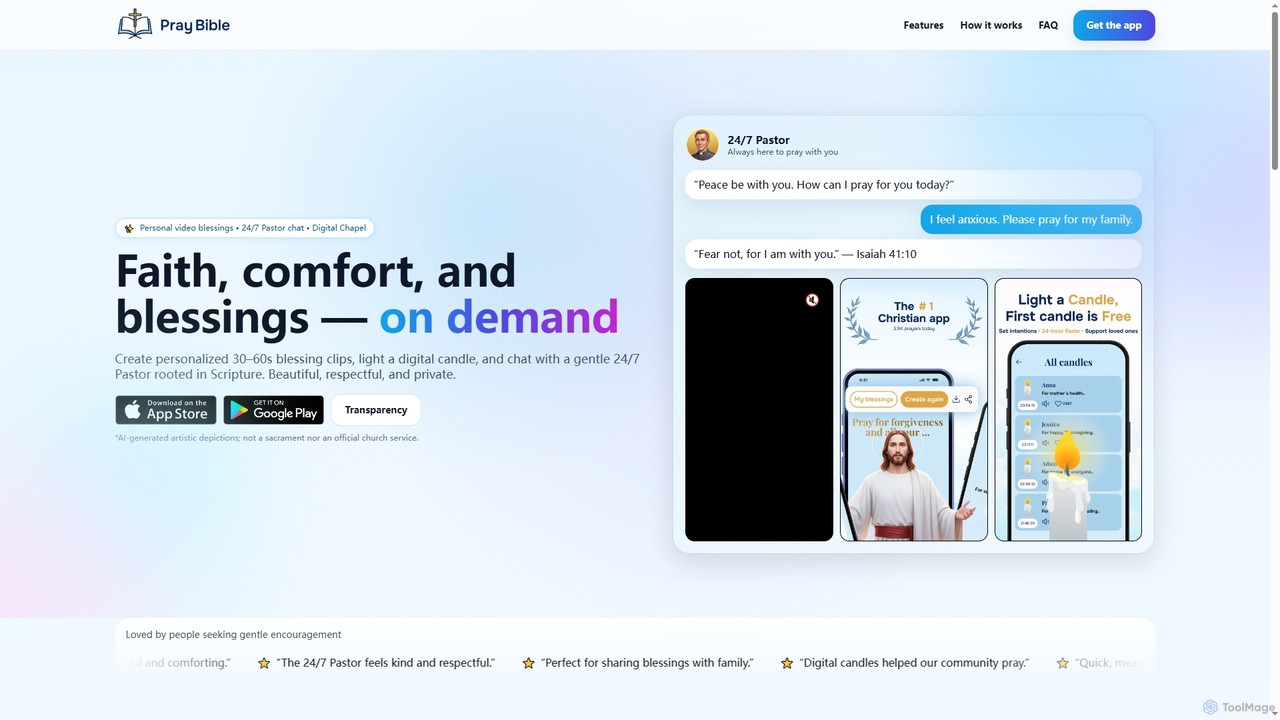
PrayBible

PrayBible

PrayBible is an AI-powered platform offering daily spiritual guidance, personalized video blessings, and 24/7 access to an AI …

3.9K
Ignaria

Ignaria

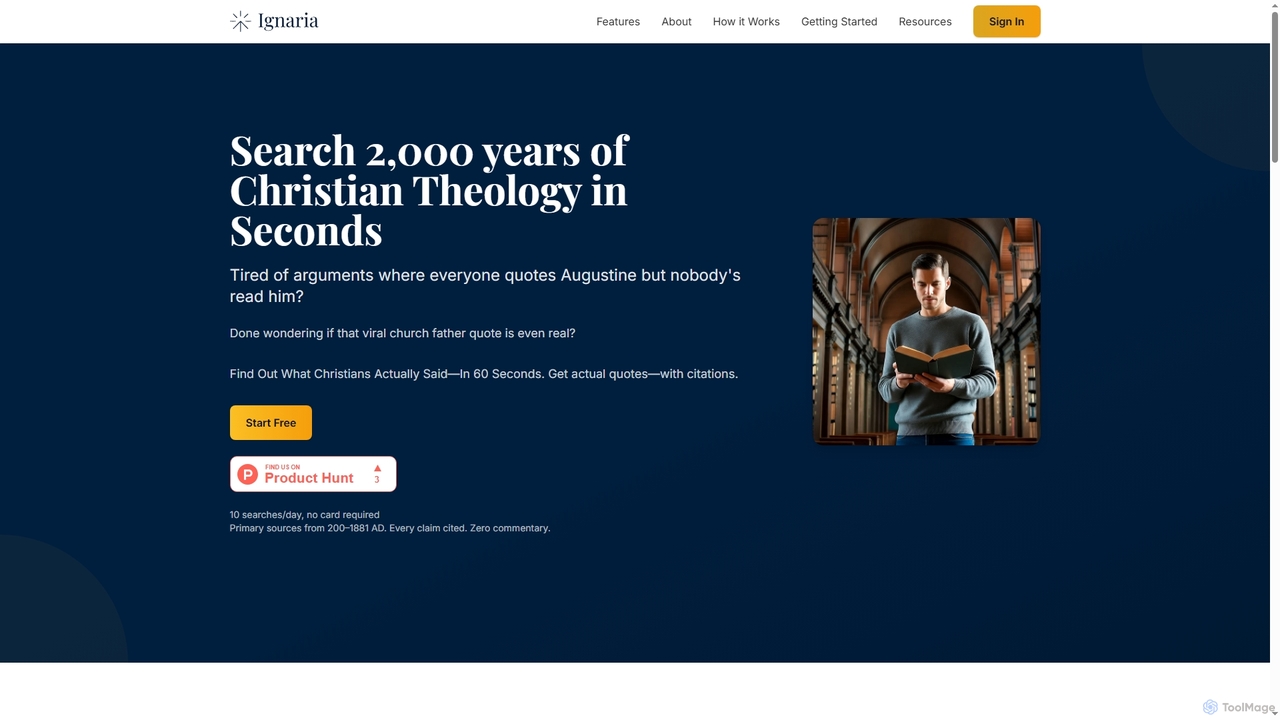
Ignaria is a specialized search engine for Christian theology, allowing users to explore 2,000 years of primary sources …

7.0K
SermonAI

SermonAI

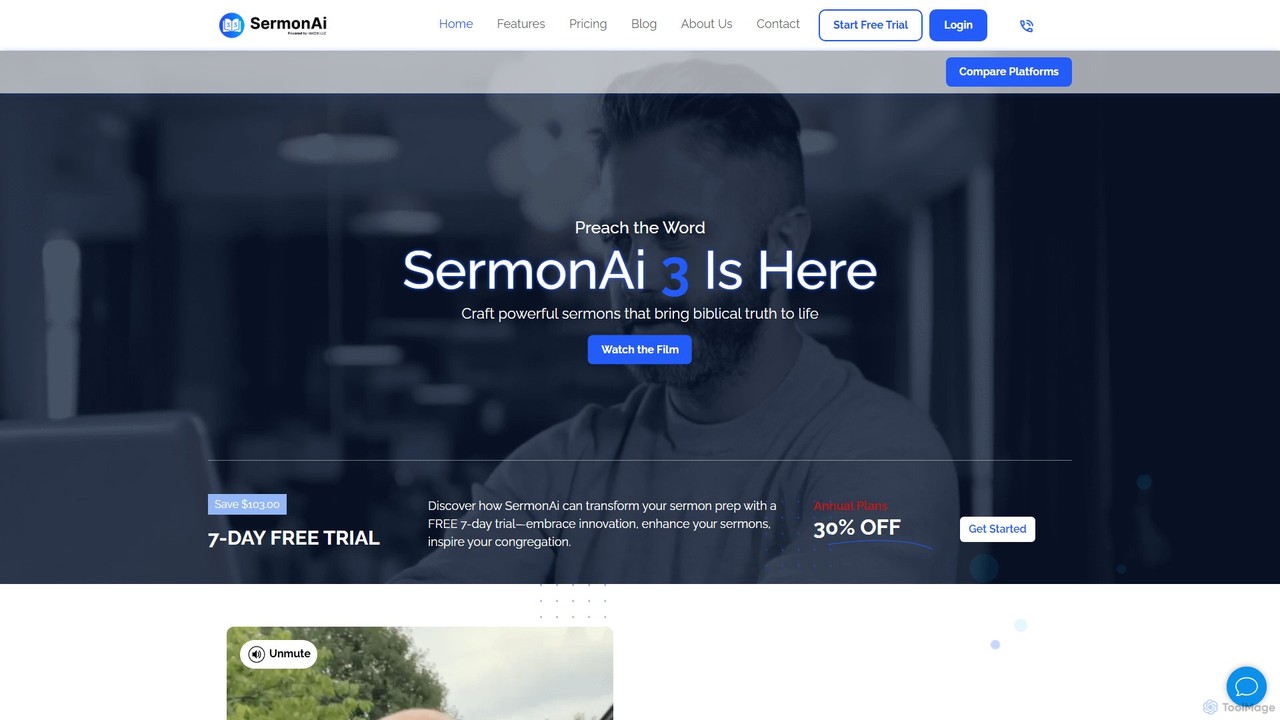
SermonAI is a comprehensive AI-powered suite designed for pastors and ministry leaders to streamline sermon preparation. It integrates …

8.3K
bibletherapy.xyz

bibletherapy.xyz

An AI-powered spiritual companion designed to provide guidance, comfort, and insight from the Bible. Engage in a conversation …

2.5K
divinescribe

divinescribe

An AI-powered writing assistant designed for pastors, theologians, and faith-based content creators. It specializes in generating sermons, Bible …

2.6K
Church Loom

Church Loom

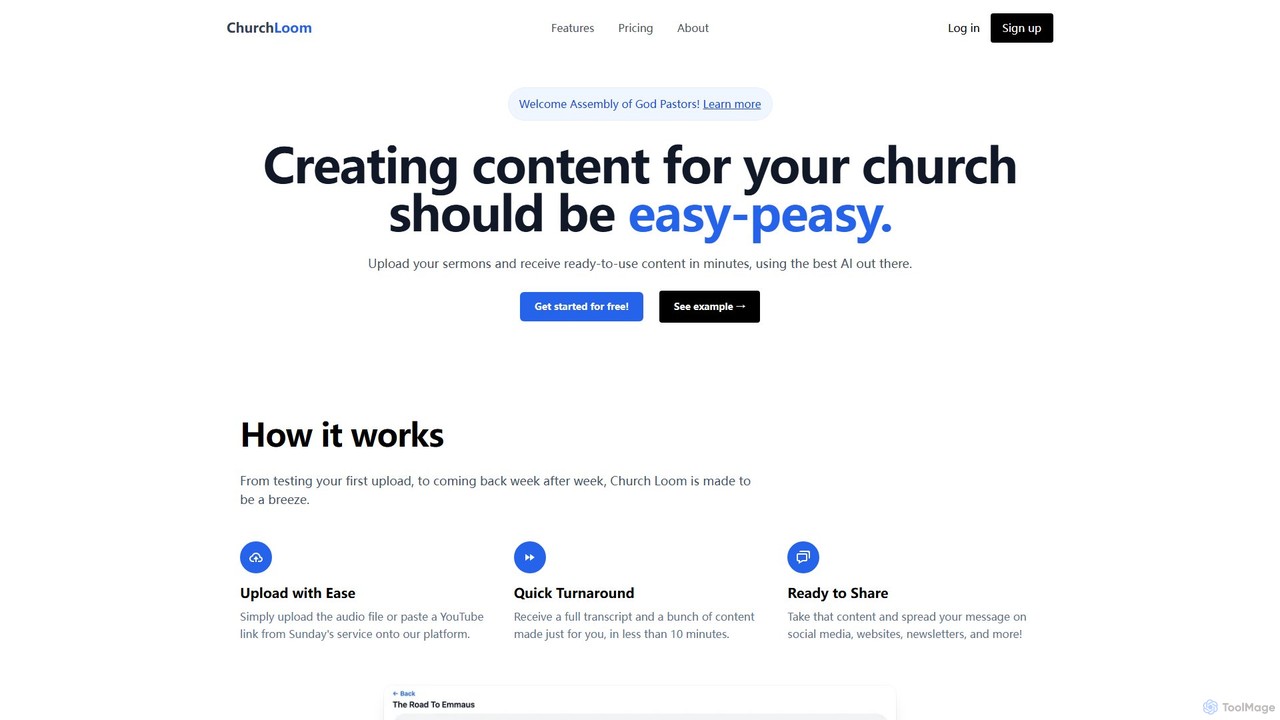
Church Loom is an AI-powered content creation platform designed for churches and pastors. It effortlessly transforms sermon recordings …

2.6K

About Religion

AI Religion tools are a class of applications that leverage artificial intelligence to assist users in studying, understanding, and engaging with religious texts and concepts. These tools utilize Natural Language Processing (NLP) to analyze scriptures, generate commentary, and answer theological questions. They serve as digital aids for deepening personal faith, preparing educational materials, or conducting theological research, making complex spiritual knowledge more accessible. By offering features like text analysis and personalized study plans, they provide modern methods for exploring ancient wisdom.

Core Features

  • Scriptural Analysis: Provides in-depth analysis of religious texts, including cross-references, thematic connections, and historical context.
  • Sermon & Content Generation: Assists religious leaders and educators in drafting sermons, lesson plans, and discussion prompts.
  • Theological Q&A: Offers answers to questions about doctrines, beliefs, and practices based on established religious sources.
  • Personalized Study Plans: Creates customized reading and reflection schedules tailored to a user's spiritual goals and interests.
  • Text Translation & Comparison: Translates sacred texts and allows for side-by-side comparison of different versions or interpretations.

Use Cases

These tools are valuable for clergy, pastors, and imams preparing weekly sermons or lectures. Theology students and academic researchers use them to accelerate textual analysis and literature review. Individual believers and study groups also utilize them for personal devotion, to deepen their understanding of scriptures, or to facilitate group discussions.

How to Choose

When selecting an AI Religion tool, first consider its theological alignment and the specific faith traditions it supports. Evaluate the depth and accuracy of its scriptural database and analytical capabilities. Assess the user interface for ease of use, especially for study or content creation workflows. Finally, review the privacy policy to understand how your personal data and inquiries are handled.

ReligionUse Cases

1

Preparing a Weekly Sermon

A pastor preparing for their Sunday service uses an AI tool to deepen their understanding of a specific biblical passage. They input the scripture, and the AI provides historical context, cross-references to other relevant verses, and summaries of theological interpretations from various scholars. The tool helps generate a sermon outline with key themes, talking points, and illustrative analogies. This process reduces research time by several hours and enriches the sermon with well-researched, diverse perspectives, allowing the pastor to focus more on crafting a compelling message for their congregation.

2

Personalized Daily Devotional Study

An individual seeking to deepen their spiritual practice uses an AI religion app for their daily devotionals. Based on their stated interests, such as 'understanding grace' or 'studying the prophets,' the app curates a daily reading plan. Each day, it presents a relevant scripture passage, an AI-generated commentary explaining its meaning, and a few reflection questions to prompt personal journaling. This personalized approach helps the user stay engaged and consistently explore their faith in a structured way that fits their unique spiritual journey, making complex texts more accessible for personal growth.

3

Academic Theological Research

A theology student writing a research paper on a specific doctrine uses an AI tool to accelerate their work. They use the tool to scan hundreds of scholarly articles and historical texts, identifying and summarizing arguments related to their topic. The AI helps trace the development of the doctrine through different historical periods by analyzing linguistic patterns and thematic shifts in key texts. This allows the student to quickly gather a comprehensive body of evidence and focus on critical analysis and synthesis, rather than spending weeks on manual literature review, ultimately producing a more thorough and well-supported paper.

4

Answering Faith Questions for Newcomers

A religious organization embeds an AI-powered chatbot on its website to help newcomers and curious individuals. The chatbot is trained on the organization's core texts and doctrinal statements. It can answer common questions like 'What are the core beliefs?', 'How are services conducted?', or 'What is the significance of a specific holiday?'. This provides instant, 24/7 support in a non-judgmental environment, allowing people to explore the faith at their own pace. It also frees up staff time from answering repetitive inquiries, enabling them to focus on more in-depth, personal engagement.

5

Creating Study Guides for a Religious Class

An educator preparing a course on the Quran uses an AI tool to create comprehensive study guides. For each surah, they use the AI to generate a summary, identify key themes, list important figures and places mentioned, and create a set of discussion questions. The tool also helps find relevant hadith and scholarly commentary related to specific verses. This automates the content curation process, allowing the educator to produce detailed, well-structured materials for their students much faster. The resulting guides help students engage more deeply with the text and facilitate more productive classroom discussions.

6

Facilitating Interfaith Dialogue

A scholar preparing for an interfaith dialogue event uses an AI tool to understand different religious perspectives on a shared topic, such as 'justice' or 'compassion'. The tool analyzes the sacred texts of Christianity, Islam, and Judaism to identify and compare relevant passages. It generates a comparative summary highlighting common principles, nuanced differences, and key theological terms in each tradition. This provides the scholar with a solid, unbiased foundation for discussion, enabling them to foster a more informed and respectful conversation by accurately representing each faith's teachings and identifying common ground.

ReligionFrequently Asked Questions