Saas Best in category 1 results Platform AI Tool

Popular AI tools in the Platform field of Saas include Kibu, etc., helping you quickly improve efficiency.

Kibu

Kibu

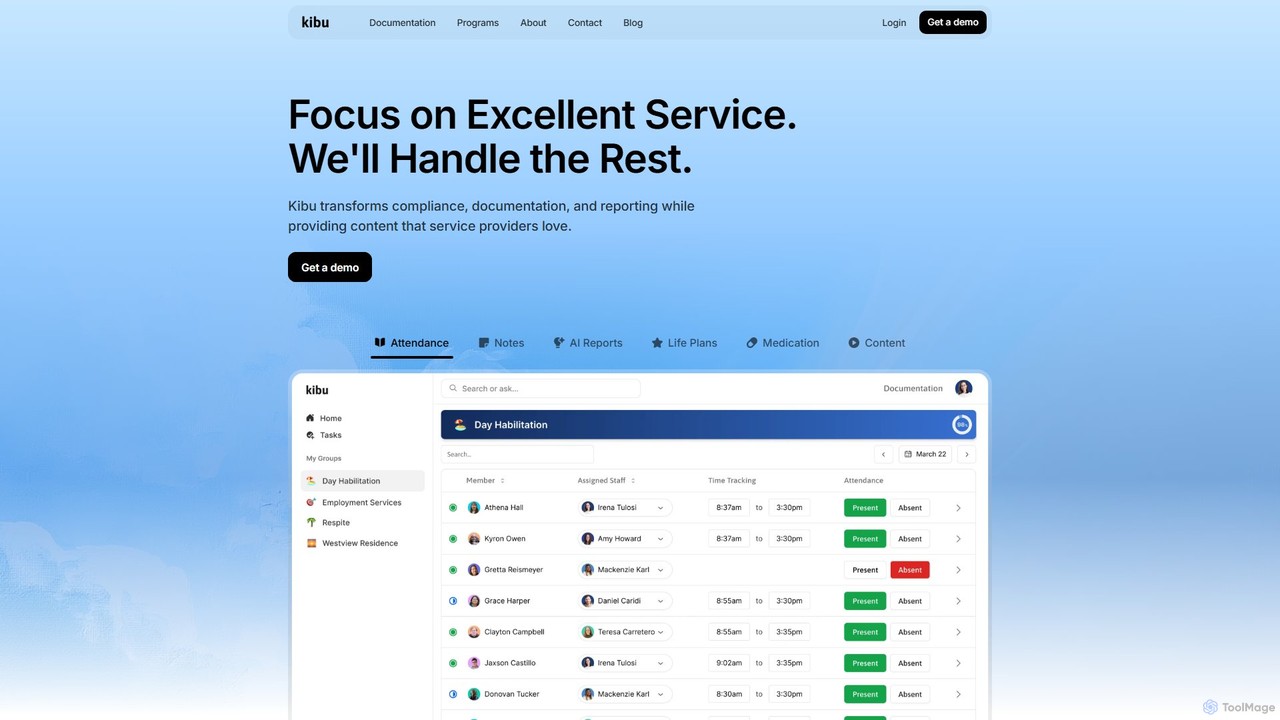
Kibu is an AI-powered, HIPAA-compliant platform designed for disability service providers. It streamlines operations by simplifying documentation, ensuring …

23.4K

About Platform

AI Platforms are integrated environments designed for building, deploying, and managing custom artificial intelligence applications. They provide a comprehensive suite of tools, APIs, and infrastructure that covers the entire AI development lifecycle, from data preparation to model monitoring. This end-to-end approach allows developers and data scientists to accelerate the creation of scalable, production-ready AI solutions without managing the underlying complexity. AI Platforms are distinct from single-purpose tools by offering a foundational layer for creating new AI-powered products and services.

Core Features

  • Integrated Toolchain: Offers a unified set of tools for data processing, model training, evaluation, and deployment.
  • API Access & SDKs: Provides programmatic access to pre-trained models and services for building custom applications.
  • Scalable Infrastructure: Manages the underlying cloud computing resources needed for large-scale training and inference.
  • Model Management (MLOps): Includes features for versioning, monitoring, and maintaining machine learning models in production.
  • Customization & Fine-Tuning: Allows users to adapt pre-trained models with their own data for specific tasks.

Use Cases

AI Platforms are primarily used by technology teams, including developers, data scientists, and machine learning engineers. They are essential for enterprises building proprietary AI systems like fraud detection engines or personalized recommendation systems. Startups also leverage these platforms to rapidly develop and launch new AI-powered products, using the platform's infrastructure as their backend.

How to Choose

When selecting an AI Platform, evaluate the breadth of its toolset and whether it covers your entire workflow. Assess the quality and variety of its pre-trained models and APIs. Consider its scalability, pricing structure, and the level of MLOps support for managing models post-deployment. Finally, check its integration capabilities with your existing data sources and applications.

PlatformUse Cases

1

Develop a Custom Customer Service Chatbot

A retail company's development team uses an AI Platform to build a chatbot that understands their specific product catalog and return policies. They use the platform's Natural Language Processing (NLP) APIs to analyze customer queries, fine-tune a pre-trained language model with their internal knowledge base, and deploy the final chatbot on their website. This provides customers with instant, accurate answers 24/7, reducing the workload on human agents by an estimated 40% and improving response times.

2

Build a Real-Time Fraud Detection System

A fintech company leverages an AI Platform to create a machine learning model that detects fraudulent transactions. Their data scientists use the platform's data processing tools to clean and prepare historical transaction data. They then train several models using the platform's managed infrastructure, select the best-performing one, and deploy it as a real-time API. This API integrates with their payment processing system, flagging suspicious activities instantly and significantly reducing financial losses due to fraud.

3

Create a Personalized Product Recommendation Engine

An e-commerce business uses an AI Platform to develop a system that suggests relevant products to shoppers. The platform ingests user browsing history and purchase data. A machine learning engineer then uses the platform's tools to build and train a collaborative filtering model. The trained model is deployed via an API, which the e-commerce website calls to display personalized recommendations on product pages and during checkout, leading to a measurable increase in average order value and customer engagement.

4

Automate Document Analysis and Data Extraction

A law firm uses an AI Platform to build a custom tool for reviewing contracts. A developer uses the platform's Optical Character Recognition (OCR) and NLP models to create a workflow that automatically extracts key clauses, dates, and party names from scanned legal documents. This solution is integrated into their document management system. It reduces the manual review time for a standard contract from hours to minutes, ensuring consistency and minimizing the risk of human error in data entry.

5

Launch a New AI-Powered SaaS Application

A startup aims to launch a new application that summarizes research papers for academics. Instead of building the entire AI backend from scratch, they use an AI Platform. They leverage its advanced summarization models via API, build their user interface on top of it, and use the platform's scalable infrastructure to handle user traffic. This approach allows them to go from concept to a market-ready product in a few months, significantly reducing initial development costs and infrastructure management overhead.

6

Manage the MLOps Lifecycle for an AI Team

An enterprise's data science team uses an AI Platform to standardize their model development process. The platform provides a central repository for datasets and models, enabling version control and collaboration. MLOps features allow them to automate the deployment pipeline, monitor model performance in production, and trigger retraining when performance degrades. This creates a systematic, repeatable process for managing dozens of machine learning models, ensuring reliability and simplifying governance.

PlatformFrequently Asked Questions