Sales Best in category 1 results Communication AI Tool

Popular AI tools in the Communication field of Sales include MailGenerator.ai, etc., helping you quickly improve efficiency.

Free
MailGenerator.ai

MailGenerator.ai

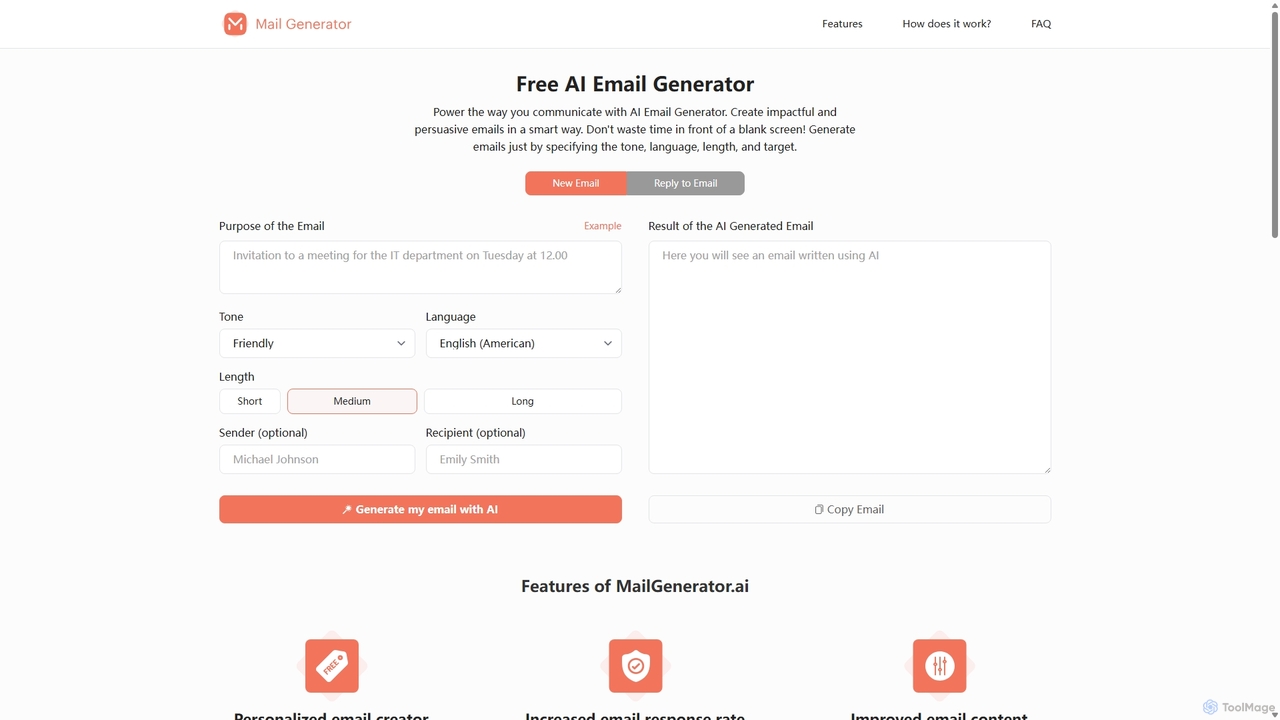
MailGenerator.ai is a free, AI-powered email generator designed to create impactful and persuasive emails instantly. Users can define …

2.9K

About Communication

AI Communication tools for sales are a class of software that uses artificial intelligence to analyze, automate, and optimize interactions between sales teams and potential customers. These tools leverage technologies like Natural Language Processing (NLP) and sentiment analysis to interpret conversations and generate human-like responses. They are designed to increase sales efficiency, improve the quality of customer engagement, and provide data-driven insights for coaching and strategy. By handling repetitive tasks and offering real-time guidance, they empower sales professionals to focus on building relationships and closing deals.

Core Features

  • Conversation Intelligence: Automatically transcribes, summarizes, and analyzes sales calls and meetings to identify key topics, talk patterns, and customer sentiment.
  • Automated Outreach: Generates and sends personalized email sequences and follow-ups at scale, adapting based on prospect engagement.
  • Real-time Sales Coaching: Provides live, on-screen suggestions and talking points to sales reps during calls to help handle objections and highlight key benefits.
  • AI-Powered Chatbots: Engage website visitors to qualify leads, answer initial questions, and schedule meetings with the appropriate sales representative.
  • Sentiment Analysis: Gauges a prospect's emotional tone in emails or calls to help sales reps tailor their communication style and strategy.

Applicable Scenarios

These tools are widely used by Sales Development Representatives (SDRs), Account Executives (AEs), and Sales Managers in sectors like B2B SaaS, financial services, and real estate. They are integral for teams focused on high-volume outreach, complex enterprise sales cycles, and continuous performance improvement through coaching.

Selection Criteria

When choosing a tool, consider its integration capabilities with your existing CRM (e.g., Salesforce, HubSpot). Evaluate the accuracy of its transcription and analysis features. Assess the scope of its automation and coaching functionalities, and ensure its pricing model aligns with your team's size and sales volume.

CommunicationUse Cases

1

Automating Personalized Email Outreach

A Sales Development Representative (SDR) at a B2B software company needs to contact 100 new leads per day. Instead of manually writing each email, they use an AI communication tool. The tool scans each lead's LinkedIn profile and company website to identify personal details and business needs. It then generates unique, personalized first-touch emails that reference the lead's recent projects or company news. This results in a 30% higher reply rate compared to generic templates and saves the SDR over two hours of work daily.

2

Analyzing Sales Calls for Team Coaching

A sales manager wants to improve their team's performance. They use an AI conversation intelligence tool that records, transcribes, and analyzes all sales calls. The manager can quickly access a dashboard showing metrics like talk-to-listen ratio, competitor mentions, and key questions asked by prospects. The AI highlights moments in calls where reps successfully handled objections. The manager uses these specific, data-backed examples in weekly coaching sessions to provide actionable feedback, leading to a 15% increase in the team's average deal size.

3

Providing Real-time Assistance During Demos

An Account Executive (AE) is conducting a live product demo for a high-value prospect. An AI communication tool runs in the background of the video call. When the prospect asks a complex technical question, the AI instantly displays a concise, accurate answer on the AE's screen, visible only to them. Later, when the conversation drifts, the AI provides a subtle prompt to bring the discussion back to the prospect's key pain points identified in earlier emails. This real-time support helps the AE appear more knowledgeable and stay on track, increasing the demo-to-trial conversion rate.

4

Qualifying Website Leads with an AI Chatbot

A real estate agency's website receives traffic 24/7, but sales agents are only available during business hours. They implement an AI chatbot to engage every visitor. The chatbot asks qualifying questions like 'Are you looking to buy or sell?', 'What is your budget?', and 'What is your ideal timeline?'. For high-intent leads, the chatbot automatically books a consultation on the appropriate agent's calendar. This process ensures no lead is missed and that agents spend their time on pre-qualified, high-value prospects, increasing overall lead conversion by 20%.

5

Optimizing Follow-up Cadences Based on Engagement

An account executive struggles with when and how to follow up with dozens of prospects in their pipeline. They connect their email to an AI communication platform. The AI tracks when prospects open emails, click links, or view attachments. Based on this data, the tool suggests the optimal time to send the next follow-up and even recommends which content (e.g., a case study vs. a pricing sheet) would be most relevant. This data-driven approach replaces guesswork, prevents leads from going cold, and helps the AE prioritize their efforts on the most engaged prospects, shortening the average sales cycle.

6

Gauging Prospect Sentiment in Negotiations

A sales director is in the final stages of negotiating a large enterprise deal via email. The communication is complex, and it's difficult to read the client's tone. They use an AI tool that analyzes the text of the client's emails for sentiment. The AI detects subtle language indicating hesitation around pricing but positive sentiment towards the product features. Armed with this insight, the director proactively offers a slightly adjusted payment plan instead of a discount, addressing the hesitation without devaluing the product. This targeted approach helps close the deal successfully.

CommunicationFrequently Asked Questions