DiscoveryOutcomes
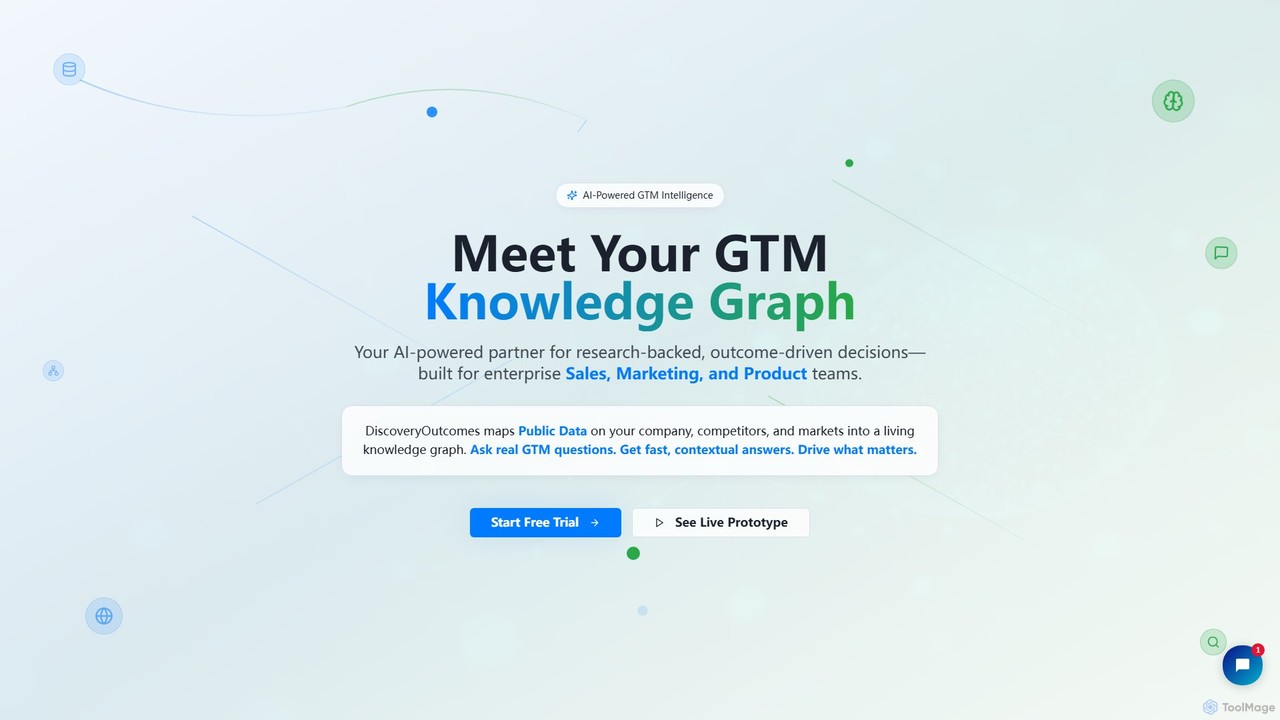
DiscoveryOutcomes is an AI-powered Go-To-Market (GTM) intelligence platform that transforms public data into a dynamic knowledge graph. It …
DiscoveryOutcomes is an AI-powered Go-To-Market (GTM) intelligence platform that transforms public data into a dynamic knowledge graph. It provides enterprise Sales, Marketing, and Product teams with research-backed, contextual answers to drive outcome-driven decisions and gain a competitive edge.
About Competitive Analysis
AI Competitive Analysis tools are specialized platforms designed to automate the gathering, processing, and analysis of competitor data to inform sales and marketing strategies. These tools leverage machine learning to monitor websites, social media, customer reviews, and ad campaigns in real-time. They provide actionable insights that help sales teams understand market positioning, identify competitor weaknesses, and refine their value propositions. By transforming raw data into strategic intelligence, these tools enable businesses to make faster, more informed decisions to gain a competitive edge.
Core Features
- Real-time Monitoring: Automatically tracks competitors' pricing changes, product updates, marketing campaigns, and online mentions.
- Feature Gap Analysis: Systematically compares your product's features against competitors to highlight strengths and uncover opportunities.
- Sentiment Analysis: Analyzes customer reviews and social media comments about competitors to gauge public perception and identify pain points.
- Ad & Content Intelligence: Deconstructs competitors' advertising strategies, keywords, and top-performing content to inform your own campaigns.
- Market Trend Identification: Aggregates data to spot emerging trends, shifts in competitor strategy, and new market entrants.
Use Cases
These tools are primarily used by sales managers, marketing strategists, product managers, and business analysts. For instance, a sales team can use competitor insights to tailor their pitches, while a product team can identify feature gaps to prioritize on their roadmap. They are valuable across industries like e-commerce, SaaS, and B2B services for maintaining market awareness.
How to Choose
When selecting a tool, consider the scope of data sources it covers (e.g., web, social, ad networks). Evaluate the depth of its analytical capabilities, such as sentiment analysis and predictive modeling. Also, assess its integration options with your existing CRM or sales platforms and the customizability of its dashboards and reports to fit your specific needs.

Competitive AnalysisUse Cases
Refine Sales Pitches with Competitor Weaknesses
A B2B software sales representative prepares for a crucial demo with a potential client. Before the meeting, they use an AI competitive analysis tool to scan recent customer reviews and forum discussions about their main competitor. The tool flags a recurring complaint about the competitor's slow customer support and complex integration process. The representative then tailors their sales pitch to emphasize their own company's award-winning 24/7 support and seamless one-click integrations, directly addressing the prospect's likely concerns and positioning their solution as the superior choice.
Adjust Pricing Strategies Dynamically
An e-commerce manager for an online electronics store needs to maintain competitive pricing during a major holiday sales event. They use an AI tool to continuously monitor the prices of the top 50 products on key competitor websites. The system sends alerts whenever a competitor drops a price below a certain threshold. This allows the manager to make immediate, data-driven decisions to adjust their own prices, run flash sales, or create bundle offers, maximizing revenue without manually checking dozens of sites.
Identify Untapped Product Feature Gaps
A product manager at a SaaS company is planning the next quarterly product roadmap. They employ an AI competitive analysis tool to aggregate and analyze feature lists, user feedback, and development announcements from three major competitors. The analysis reveals that while all competitors offer robust reporting, none provide predictive forecasting. This insight provides a clear, data-backed justification for prioritizing the development of a forecasting module, creating a unique selling proposition (USP) for the sales team.
Uncover Competitors' SEO and Content Strategies
A digital marketing specialist is tasked with increasing organic traffic for their company's blog. They use an AI tool to analyze the content strategies of their top competitors. The tool identifies the keywords competitors are ranking for but their own site is not, reveals their most successful content formats (e.g., video tutorials, in-depth guides), and tracks their backlink acquisition patterns. This intelligence allows the specialist to create a content calendar that targets these strategic gaps, improving their site's search engine visibility and authority.
Monitor Competitor Ad Campaigns for Inspiration
A paid advertising manager is experiencing declining click-through rates (CTR) on their social media ads. They use a competitive analysis tool to discover and analyze the ad creatives, copy, and targeting strategies of their industry's top performers. The tool showcases which ad formats and value propositions are generating the most engagement for competitors. The manager uses these insights to A/B test new ad designs and messaging, leading to a refreshed and more effective advertising campaign that resonates better with the target audience.
Benchmark Share of Voice in the Market
A brand strategist needs to report on their company's market presence relative to its rivals. They utilize an AI tool to track brand mentions across news articles, social media platforms, and industry blogs over the past quarter. The tool generates a "Share of Voice" report, visualizing what percentage of the total conversation is about their brand versus each competitor. This data helps them measure the impact of their PR and marketing campaigns and identify opportunities to increase brand visibility in specific channels.