QuizGrowth
QuizGrowth is an AI-powered platform designed to create interactive quizzes for lead generation, audience engagement, and customer education. …
QuizGrowth is an AI-powered platform designed to create interactive quizzes for lead generation, audience engagement, and customer education. Effortlessly generate questions, customize designs, and integrate with your marketing tools to turn passive audiences into active leads and gain valuable insights.
tryinteract
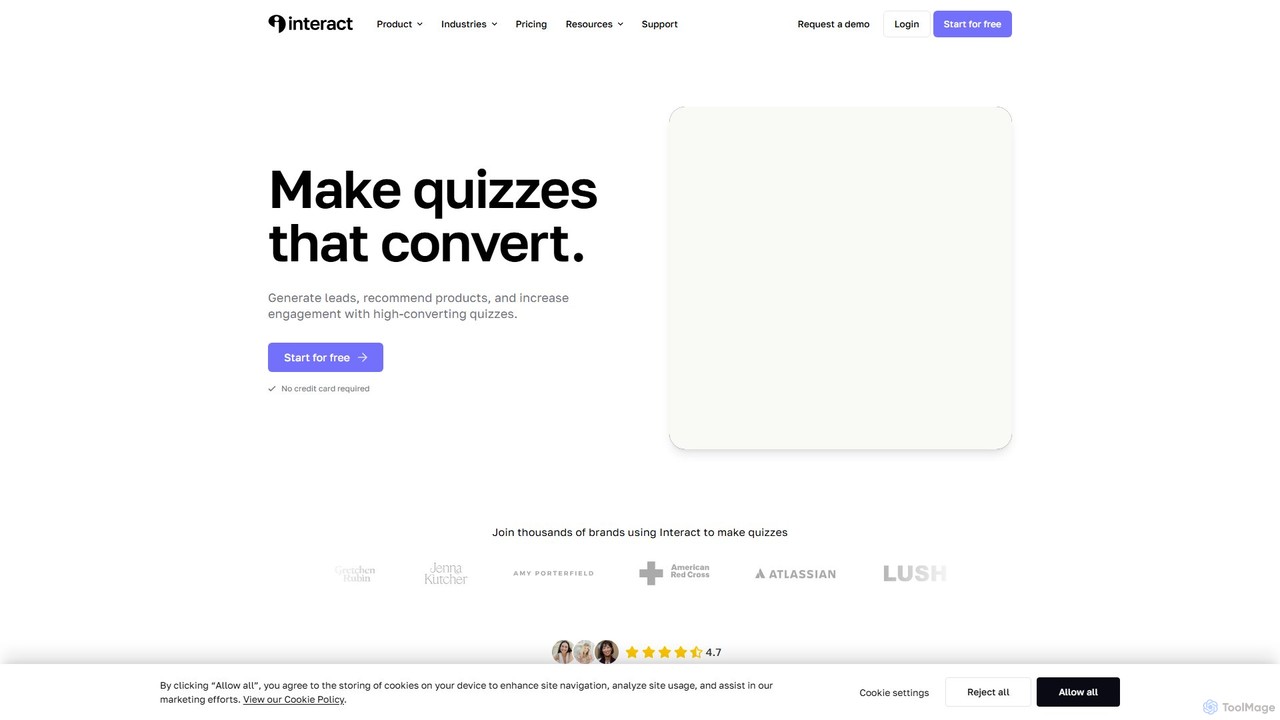
Interact is an AI-powered platform for creating interactive quizzes, polls, and giveaways to generate leads, segment audiences, and …
Interact is an AI-powered platform for creating interactive quizzes, polls, and giveaways to generate leads, segment audiences, and drive sales. It offers a user-friendly drag-and-drop builder, hundreds of templates, and seamless integrations with major marketing tools, making it ideal for businesses, coaches, and creators to engage their audience with personalized content.
About Customer Engagement
Customer Engagement AI tools are specialized solutions designed to optimize and personalize interactions with customers across various touchpoints, from initial contact and onboarding to ongoing support and loyalty programs. Leveraging advanced natural language processing (NLP), machine learning, and predictive analytics, these tools automate communication, analyze sentiment, and provide proactive assistance. Their primary goal is to foster stronger customer relationships, enhance satisfaction, and drive loyalty throughout the entire customer journey, moving beyond mere transactional interactions to build lasting, meaningful connections. This strategic focus on personalized, data-driven interactions distinguishes them within the broader sales technology landscape by prioritizing comprehensive, ongoing relationship management and customer lifetime value.
Core Features
- AI Chatbots & Virtual Assistants: These intelligent agents provide instant, 24/7 support, efficiently answering common customer questions, guiding users through processes, and offering personalized recommendations, significantly improving response times and service availability.
- Sentiment Analysis & Feedback Monitoring: Tools in this category automatically analyze vast amounts of customer feedback from various sources—including social media, reviews, and support interactions—to gauge emotional tone, identify satisfaction levels, and detect emerging issues or trends.
- Personalized Communication Automation: They enable the delivery of highly tailored emails, messages, and offers based on individual customer behavior, purchase history, demographic data, and expressed preferences, ensuring maximum relevance and engagement.
- Proactive Outreach & Support: By analyzing customer data and predicting potential issues or opportunities, these tools can initiate timely and relevant contact with customers, offering support or valuable information before problems escalate, thereby preventing churn and enhancing trust.
- Customer Journey Analytics & Optimization: These platforms map and analyze customer interaction data across all channels to understand their unique paths, identify friction points, and optimize engagement strategies at each stage, from awareness to advocacy.
Applicable Scenarios
Customer Engagement AI tools are indispensable across diverse sectors such as e-commerce, SaaS, financial services, telecommunications, and healthcare. They are crucial for customer service departments aiming to automate routine inquiries, reduce agent workload, and provide instant, consistent support. Marketing teams utilize them to personalize campaigns, nurture leads with relevant content, and improve conversion rates. Sales teams leverage these tools to maintain robust post-purchase relationships, identify upsell opportunities, and ensure customer satisfaction. Furthermore, they are vital for collecting, analyzing, and acting on customer feedback at scale, driving continuous improvement in service and product offerings.
How to Choose
When selecting Customer Engagement AI tools, prioritize solutions with robust integration capabilities that seamlessly connect with your existing CRM, marketing automation, and support platforms to ensure a unified customer view and efficient data flow. Evaluate the depth of personalization offered, the accuracy and multilingual capabilities of the AI models in understanding diverse customer intents, and the scalability to handle growing customer volumes without compromising performance. Additionally, assess the ease of customization for aligning with your specific brand voice and business rules, alongside comprehensive analytics and reporting features essential for measuring engagement effectiveness, identifying areas for improvement, and demonstrating ROI.

Customer EngagementUse Cases
Provide Instant 24/7 Customer Support with AI Chatbots
E-commerce businesses can deploy AI chatbots on their websites and messaging apps to handle common customer inquiries around the clock. These bots can answer questions about order status, product details, shipping policies, and FAQs, freeing up human agents for complex issues. This leads to faster resolution times and improved customer satisfaction, especially for international customers in different time zones.
Personalize Marketing Campaigns with AI-Driven Customer Insights
Marketing managers use Customer Engagement AI to analyze customer browsing history, purchase patterns, and demographic data. Based on these insights, the AI automatically segments customers and triggers personalized email campaigns, product recommendations, or special offers. This highly targeted approach significantly increases open rates, click-through rates, and ultimately, conversion rates, making marketing efforts more effective.
Proactively Resolve Customer Issues Before Escalation
SaaS companies can leverage AI tools to monitor customer usage patterns and sentiment from support tickets or social media. If the AI detects signs of frustration or potential churn (e.g., decreased usage, negative sentiment), it can automatically trigger a proactive outreach. A customer success manager might receive an alert to contact the customer, offering assistance or resources, thereby preventing churn and strengthening loyalty.
Guide New Users Through Personalized Onboarding Journeys
Software providers can implement AI-powered onboarding flows that adapt to each new user's behavior and progress. The AI identifies where a user might be struggling or disengaging and provides timely, relevant in-app messages, tutorials, or tips. This personalized guidance helps users quickly understand the product's value, reduces time-to-value, and significantly improves initial feature adoption and retention rates.
Collect and Analyze Customer Feedback at Scale for Product Improvement
Product teams and market researchers use AI-driven tools to automatically collect and analyze customer feedback from surveys, reviews, and social media comments. The AI can perform sentiment analysis and topic extraction to identify common pain points, feature requests, and overall satisfaction trends. This provides actionable insights for product development and service improvements, ensuring customer voices are heard and acted upon efficiently.
Enhance Post-Purchase Engagement and Foster Customer Loyalty
Retailers and service providers utilize Customer Engagement AI to maintain relationships after a sale. The AI can send personalized follow-up messages, offer relevant accessory recommendations, or invite customers to loyalty programs based on their purchase history and preferences. This continuous, relevant engagement helps build brand loyalty, encourages repeat purchases, and transforms one-time buyers into long-term advocates.