
ToolMage
Sign in

Best 1 Deal Management AI tools for Sales

Popular Deal Management AI tools in Sales include Outlit, helping you work more efficiently.

Outlit
Paid

Outlit

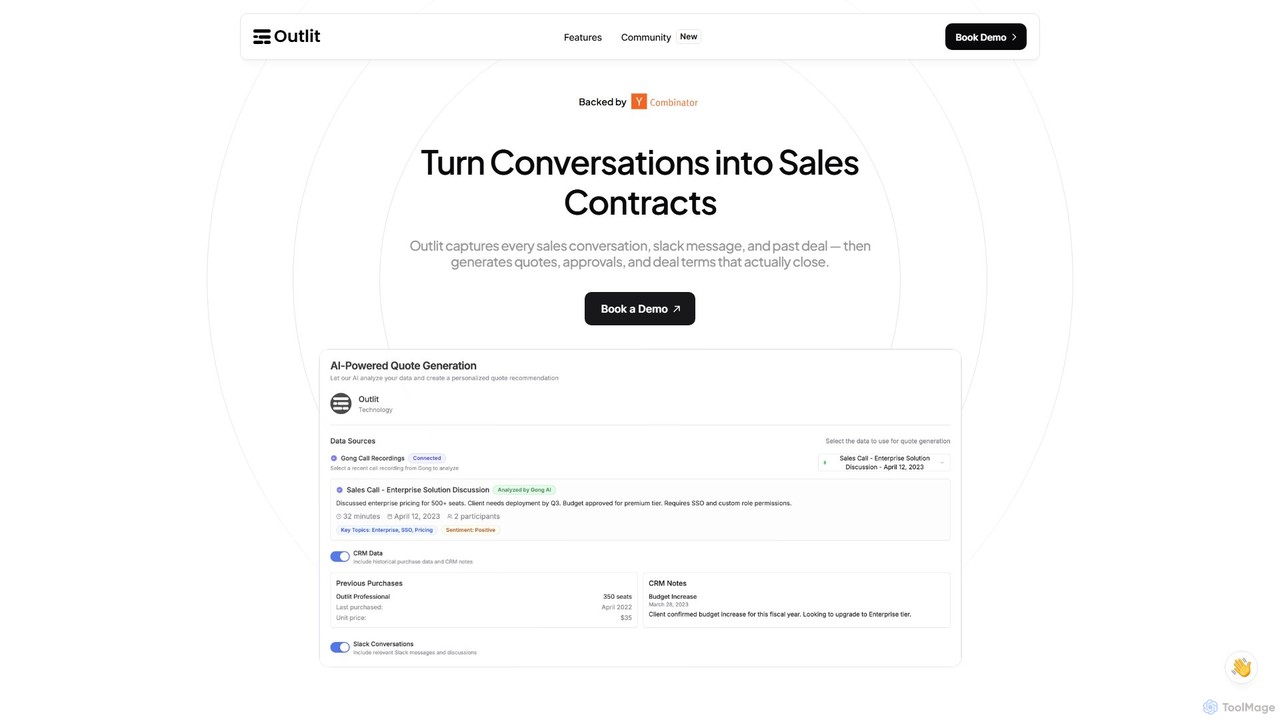
Outlit is an AI-powered deal intelligence platform that transforms sales conversations into actionable contracts. It captures data from Slack, past deals, and other communications to automatically generate accurate quotes, deal terms, and approval workflows, accelerating the entire sales cycle.

Crm
Visits 6KFavorites 125Likes 121

About Deal Management

Deal Management tools are AI-powered platforms designed to help businesses track, manage, and optimize their sales opportunities from initial lead to closed deal. These tools leverage data analytics and automation to provide a clear overview of the sales pipeline, enabling sales teams to prioritize efforts and improve conversion rates. By centralizing deal-related information and activities, they enhance sales efficiency, forecasting accuracy, and overall revenue growth.

Core Features

  • Pipeline Visualization: Offers a clear, visual representation of all active deals, their current stages, and projected values.
  • Activity Tracking: Logs all sales interactions, communications, tasks, and meetings associated with each deal for comprehensive oversight.
  • Sales Forecasting: Utilizes historical data and current pipeline status to predict future sales revenue with greater accuracy.
  • Deal Prioritization: Helps identify and focus on high-potential deals based on criteria like deal size, probability, and engagement level.
  • Performance Analytics: Provides detailed reports on deal progression, win/loss rates, and sales cycle duration to identify trends and areas for improvement.

Use Cases

Sales teams and managers utilize deal management tools to streamline their daily operations, ensuring no opportunity is missed. Business development professionals leverage these platforms to maintain a structured approach to new client acquisition. Small to medium-sized businesses benefit from a centralized system to manage their growing sales pipeline and improve accountability across their sales force.

How to Choose

When selecting a deal management tool, consider its integration capabilities with existing CRM and communication platforms to ensure seamless data flow. Evaluate the customization options for pipeline stages and reporting to match your unique sales process. Assess the accuracy of its forecasting models and the depth of its analytics features. Finally, prioritize user-friendliness and mobile accessibility to maximize adoption and productivity among your sales team.

Deal Management use cases

1

Streamline Sales Pipeline Management

Sales representatives efficiently track and update the status of each deal, log interactions, and manage follow-up tasks, ensuring a smooth progression from prospect to customer. This helps them maintain an organized workflow and focus on critical next steps for every opportunity.

2

Enhance Sales Forecasting Accuracy

Sales managers leverage historical data and current deal probabilities to generate more precise revenue forecasts, aiding in resource allocation, strategic planning, and setting realistic sales targets. This data-driven approach reduces guesswork and improves decision-making.

3

Standardize Deal Progression Workflows

Businesses implement consistent processes for moving deals through various stages, ensuring all team members adhere to best practices and improve overall sales efficiency. This standardization reduces errors, speeds up the sales cycle, and provides a unified customer experience.

4

Identify and Prioritize High-Value Opportunities

Sales teams automatically score deals based on predefined criteria (e.g., budget, authority, need, timeline) to help them focus their efforts on the most promising leads. This ensures resources are allocated effectively, increasing the likelihood of closing high-impact deals.

5

Analyze Win/Loss Reasons for Improvement

Conduct post-deal analysis using collected data to understand why deals are won or lost, providing actionable insights to refine sales strategies, improve training programs, and optimize product offerings. This continuous feedback loop drives ongoing performance enhancement.

6

Facilitate Cross-Functional Collaboration on Complex Deals

Enable sales, legal, and finance teams to collaborate on proposals, contracts, and approvals within a unified platform, accelerating the closing process for large or intricate deals. This ensures all stakeholders are aligned and can contribute efficiently, reducing delays and miscommunications.

Deal Management FAQ

What are Deal Management tools?

Deal Management tools are specialized software designed to help businesses organize, track, and optimize their sales opportunities (deals) throughout the sales pipeline. They provide a structured approach to managing interactions, stages, and data related to each potential sale, aiming to improve sales efficiency and conversion rates. These tools are crucial for sales teams looking to gain better control and visibility over their active deals.

How do Deal Management tools differ from CRM systems?

While CRM (Customer Relationship Management) systems manage the entire customer lifecycle, Deal Management tools focus specifically on the sales pipeline and the progression of individual sales opportunities. Deal management is often a core module within a broader CRM, but it provides deeper, specialized functionality for tracking, forecasting, and analyzing deals, rather than general customer interactions. It offers a more granular view of the sales process.

What are the key benefits of using Deal Management tools?

Key benefits include improved sales pipeline visibility, more accurate revenue forecasting, enhanced sales team productivity through automated task management, better prioritization of sales efforts, and data-driven insights into deal performance. These tools ultimately help businesses close more deals faster, optimize resource allocation, and achieve consistent sales growth by providing a structured and analytical approach to sales opportunities.

Who typically uses Deal Management software?

Deal Management software is primarily used by sales representatives to manage their individual pipelines, sales managers to oversee team performance and forecast revenue, and business development professionals to track new opportunities. Small business owners also benefit from these tools to gain control over their sales processes, improve accountability, and scale their sales efforts effectively. It's essential for anyone involved in driving sales and revenue.

What features should I look for in a Deal Management tool?

Look for robust pipeline visualization, customizable deal stages, comprehensive activity logging, accurate sales forecasting capabilities, and detailed reporting and analytics. Integration with your existing CRM, email, and calendar systems is also crucial for seamless data flow. Additionally, prioritize user-friendliness, mobile accessibility, and strong security features to maximize adoption and protect sensitive sales data.