
ToolMage
Sign in

Best 1 Lead Conversion AI tools for Sales

Popular Lead Conversion AI tools in Sales include Afiniti, helping you work more efficiently.

Afiniti
Paid

Afiniti

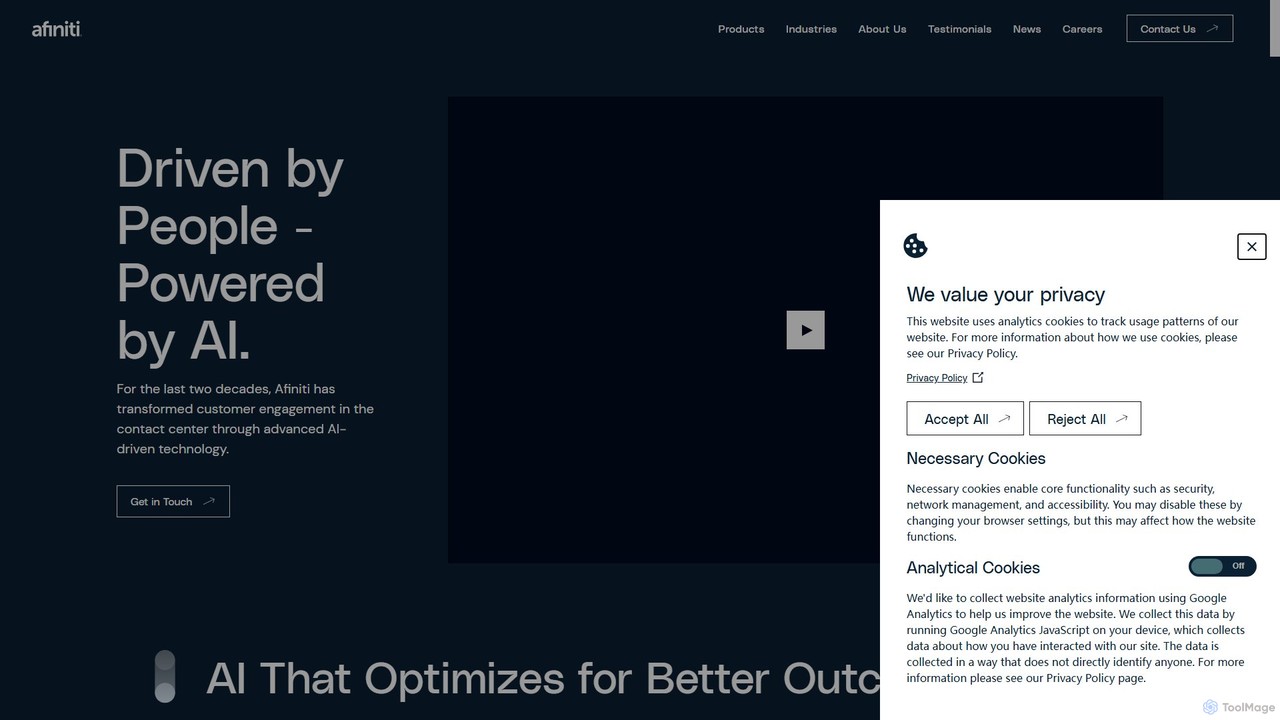
Afiniti is an enterprise AI platform that revolutionizes contact centers using patented behavioral pairing technology. It analyzes customer and agent data to create optimal pairings in real-time, significantly boosting revenue, improving customer satisfaction, and reducing service costs without changing existing workflows. Trusted by global leaders, Afiniti delivers measurable business outcomes.

Analytics
Visits 43.3KFavorites 121Likes 141

About Lead Conversion

AI Lead Conversion tools are a specialized category of sales software designed to intelligently nurture and convert potential customers into paying clients. These platforms leverage machine learning to analyze lead behavior, automate personalized communication, and predict the likelihood of a sale. Their primary value lies in optimizing the middle-to-late stages of the sales funnel, increasing conversion rates and sales team efficiency. By identifying the most promising leads and triggering timely interactions, they bridge the gap between marketing-qualified leads and closed deals.

Core Features

  • AI Lead Scoring: Automatically prioritizes leads by analyzing engagement data and demographic information.
  • Automated Outreach Sequences: Creates and executes multi-channel follow-up campaigns (email, SMS) based on lead behavior.
  • Conversation Intelligence: Transcribes and analyzes sales calls or chats to provide insights on talk tracks and customer sentiment.
  • Behavioral Triggers: Initiates actions, like sending a specific email, when a lead visits a pricing page or opens a proposal.
  • Intelligent Appointment Scheduling: Automates the booking process by suggesting optimal times and handling calendar invites.

Use Cases

These tools are crucial for B2B sales teams, SaaS companies, and high-ticket e-commerce businesses. Sales Development Representatives (SDRs) use them to qualify and nurture inbound leads, while Account Executives leverage them to re-engage prospects and streamline meeting scheduling. Marketing teams also use them for lead nurturing campaigns that hand off sales-ready leads.

How to Choose

When selecting a tool, evaluate its integration capabilities with your existing CRM (like Salesforce or HubSpot). Consider the sophistication of its lead scoring algorithm and the flexibility of its automation workflows. Also, assess the quality of its analytics and reporting features to measure ROI, and ensure the pricing model aligns with your team size and lead volume.

Lead Conversion use cases

1

Automating Follow-up for Inbound Leads

A marketing manager at a B2B tech company faces a high volume of leads from webinars and whitepaper downloads. Using an AI Lead Conversion tool, they create an automated sequence. The tool instantly sends a personalized thank-you email, followed by a series of educational content over several days. It tracks email opens and link clicks. If a lead visits the pricing page, the system automatically assigns them a high score and notifies a sales rep to initiate a personal call, ensuring no warm lead is left unattended and increasing demo booking rates.

2

Prioritizing High-Value Sales Leads

A sales team for a real estate agency receives hundreds of inquiries weekly. An AI Lead Conversion tool analyzes each lead based on their stated budget, property interest, and website activity. It assigns a 'hot,' 'warm,' or 'cold' score. Sales agents can filter their dashboard to focus only on 'hot' leads first, dedicating their prime hours to prospects with the highest conversion probability. This prioritization helps them close more deals by efficiently allocating their time and effort.

3

Re-engaging Dormant or Cold Leads

A sales development representative (SDR) has a list of thousands of leads that went cold six months ago. Instead of manual outreach, they use an AI tool to launch a re-engagement campaign. The AI crafts email variations and sends them at optimal times based on the lead's industry and time zone. The system monitors for any sign of renewed interest, such as opening an old email or visiting the website, and immediately alerts the SDR to follow up with a personalized message, effectively reviving a portion of the pipeline.

4

Optimizing Sales Call Performance with AI Analysis

A sales manager wants to improve their team's closing rate. They use a Lead Conversion tool with conversation intelligence. The platform records, transcribes, and analyzes sales calls. It identifies which talking points correlate with successful conversions and flags moments where reps struggled with objections. The manager uses these data-driven insights to provide targeted coaching, create better sales scripts, and standardize best practices across the entire team, leading to a measurable uplift in performance.

5

Streamlining Demo Booking for SaaS Companies

For a growing SaaS company, the process of scheduling demos is a major bottleneck. An AI Lead Conversion tool is integrated into their website and email campaigns. When a lead expresses interest, the AI chatbot or an embedded calendar link automatically offers available slots from the relevant sales rep's calendar. It handles time zone conversions, sends reminders to both parties, and reduces no-shows. This automation frees up sales reps from administrative back-and-forth, accelerating the sales cycle.

6

Personalizing E-commerce Abandoned Cart Recovery

An e-commerce store manager struggles with a high cart abandonment rate. They implement an AI Lead Conversion tool that tracks user behavior. When a shopper leaves items in their cart, the tool triggers a personalized email sequence. Instead of a generic reminder, it might offer a small discount on a specific item, show social proof like customer reviews for that product, or suggest complementary items. This targeted approach significantly increases the recovery rate compared to standard, one-size-fits-all reminder emails.

Lead Conversion FAQ

What are AI Lead Conversion tools?

AI Lead Conversion tools are software platforms that use artificial intelligence to turn potential customers (leads) into active buyers. They automate and personalize communication, score leads based on their likelihood to purchase, and provide insights to help sales teams focus their efforts. Unlike general sales tools, they specialize in the active nurturing and engagement required to move a lead through the final stages of the sales funnel.

How do I choose the right AI Lead Conversion tool?

To choose the right tool, consider these four factors:

  • Integration: Ensure it seamlessly connects with your existing CRM, marketing automation, and email platforms.
  • Automation Capabilities: Evaluate the flexibility of its workflow builder. Can it support complex, multi-step sequences across different channels?
  • Lead Scoring Accuracy: Look for customizable scoring models that can be tailored to your specific business criteria.
  • Analytics and Reporting: The tool should provide clear dashboards to track conversion rates, campaign performance, and sales team activity.

What's the difference between Lead Conversion and CRM tools?

The primary difference lies in their focus. A CRM (Customer Relationship Management) tool is a system of record, primarily used for storing and managing customer data, contact history, and sales pipelines. An AI Lead Conversion tool is a system of action, designed to actively engage leads with automated, personalized outreach to drive them towards a purchase. While many CRMs have some automation, dedicated conversion tools offer more advanced scoring, sequencing, and intelligence features for this specific task.

What are the key features of AI Lead Conversion software?

Key features typically include AI-powered lead scoring to prioritize prospects, automated email and SMS outreach sequences for consistent follow-up, and behavioral tracking to trigger actions based on lead activity. Many also offer conversation intelligence to analyze sales calls, and intelligent appointment schedulers to eliminate back-and-forth communication. These features work together to increase the efficiency and effectiveness of the sales process.

Who benefits most from using AI Lead Conversion tools?

Sales teams, particularly Sales Development Representatives (SDRs) and Account Executives (AEs), are the primary beneficiaries. They can automate repetitive follow-up tasks and focus on high-value conversations. Marketing teams also benefit by ensuring the leads they generate are properly nurtured and qualified. Businesses with a high volume of inbound leads, such as B2B tech companies, SaaS providers, and real estate agencies, see a significant return on investment.