trestleiq
TrestleIQ provides enterprise-grade identity data enrichment and validation APIs. It helps businesses maximize customer contactability, verify identities, and …
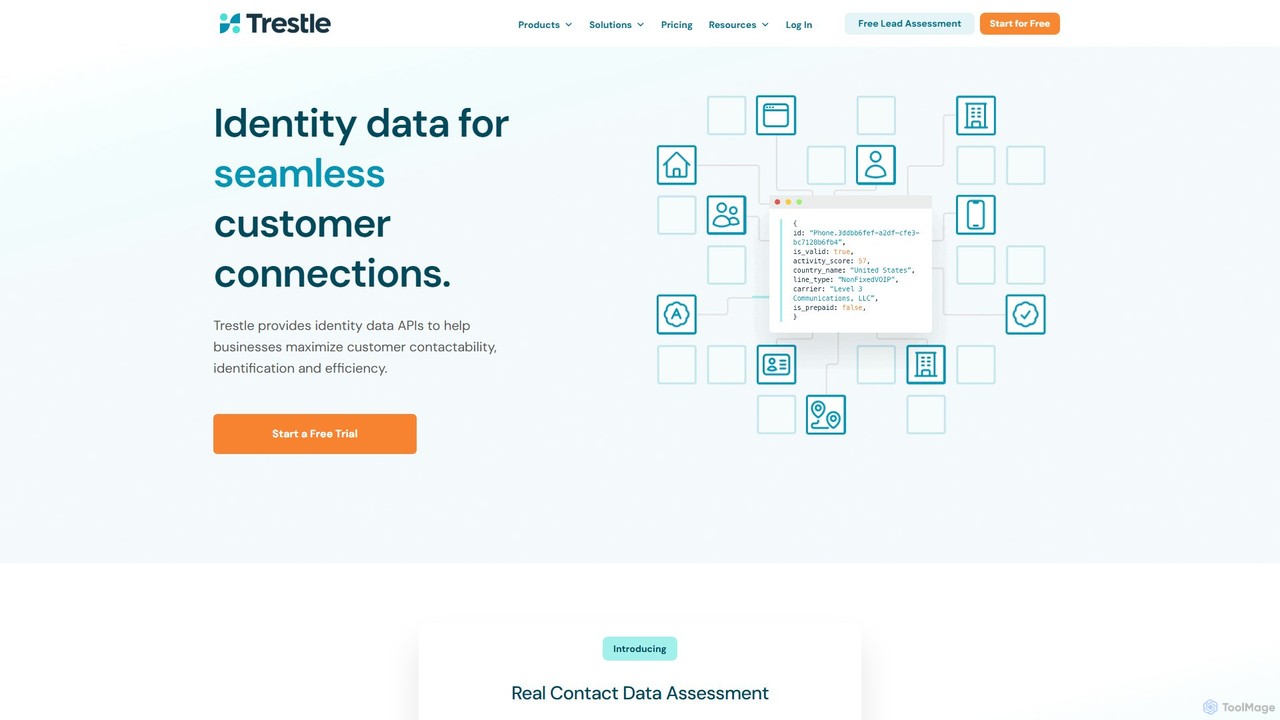
TrestleIQ provides enterprise-grade identity data enrichment and validation APIs. It helps businesses maximize customer contactability, verify identities, and prevent fraud by offering real-time data on phone numbers, addresses, and individuals. Leveraging machine learning, TrestleIQ delivers accurate, low-latency insights for lead generation, customer service, and compliance, accessible via easy-to-integrate APIs or batch uploads.
About Lead Verification
Lead Verification tools are a specialized category of AI-powered sales software designed to automatically validate and enrich contact information for potential customers. They utilize real-time data lookups, social profile analysis, and database cross-referencing to confirm the accuracy of emails, phone numbers, job titles, and company details. By cleaning lead lists and removing invalid contacts, these tools significantly improve email deliverability, increase sales team productivity, and enhance the quality of the sales pipeline. Unlike general CRM platforms, Lead Verification tools focus specifically on the data hygiene aspect of the sales funnel, ensuring outreach efforts are directed at valid prospects.
Core Features
- Email Verification: Checks for syntax errors, domain validity, and real-time mailbox existence to minimize bounce rates.
- Phone Number Validation: Confirms the validity and carrier type (e.g., mobile, landline, VoIP) of phone numbers globally.
- Data Enrichment: Appends missing information such as job titles, company size, and social media profiles to existing lead records.
- Bulk Verification: Processes entire lead lists or CRM databases to identify and segment invalid contacts at scale.
- Real-time API Integration: Verifies leads as they are captured from web forms, preventing bad data from entering your systems from the start.
Use Cases
These tools are primarily used by sales development representatives (SDRs), marketing operations teams, and demand generation specialists. They are essential for B2B companies running cold outreach campaigns, account-based marketing (ABM) initiatives, and for performing regular CRM data hygiene to combat data decay.
How to Choose
When selecting a tool, consider its verification accuracy rate and the breadth of its data sources. Evaluate its integration capabilities with your existing CRM and marketing platforms. Also, compare pricing models, which may be based on credits per verification, subscription tiers, or API call volume, to find the best fit for your needs.

Lead VerificationUse Cases
Cleaning Purchased Lead Lists for Cold Outreach
A Sales Development Representative (SDR) team purchases a list of 10,000 potential leads for a new campaign. Sending emails to this list without verification would result in high bounce rates, damaging the company's sender reputation. The list is uploaded to a bulk Lead Verification tool, which scans each contact, verifies email addresses, and flags invalid entries. The process removes over 1,500 invalid contacts, increasing the email deliverability rate from a potential 75% to over 98%. This protects the domain's reputation and ensures the sales team's efforts are focused on reachable prospects.
Real-time Verification of Website Form Submissions
A Marketing Operations Manager notices that many leads from their website's 'Request a Demo' form contain typos or fake information. This wastes the sales team's time. They integrate a Lead Verification API into the form. Now, when a user submits their details, the tool instantly verifies the email address and phone number. It can suggest corrections for typos (e.g., 'Did you mean [email protected]?') or block disposable email domains. This ensures only high-quality, valid leads enter the CRM, significantly improving lead-to-opportunity conversion rates.
Enriching CRM Data for Account-Based Marketing (ABM)
An ABM Specialist is targeting key decision-makers at 50 specific enterprise accounts. The existing CRM data is incomplete, lacking direct phone numbers and current job titles. The list of target accounts is processed through a Lead Verification tool with enrichment capabilities. The tool cross-references its databases to find and append missing data points like direct dials, LinkedIn profiles, and updated job titles. The sales team receives a highly accurate and detailed contact list, enabling personalized outreach and increasing the meeting booking rate by over 30%.
Performing Routine CRM Database Hygiene
A CRM Administrator for a mid-sized company manages a database with over 100,000 contacts. Over time, data decay has made many records outdated as people change jobs. This skews sales forecasts and marketing analytics. The administrator sets up a quarterly, automated data cleanse using an integrated Lead Verification tool. The tool scans the entire database, identifies contacts with invalid emails or outdated company information, and flags them for review or archival. This process purges thousands of decayed records, improving data accuracy, reducing CRM storage costs, and ensuring better compliance with data privacy regulations.
Validating Leads Before Outbound Calling Campaigns
A B2B telemarketing team is launching a campaign targeting 5,000 leads. Calling invalid or incorrect numbers wastes significant agent time and lowers morale. Before the campaign, the entire calling list is processed through a Lead Verification tool specializing in phone number validation. The tool checks if each number is active, identifies its type (mobile, landline, VoIP), and flags disconnected numbers. As a result, the team's call connection rate improves by 40%, allowing agents to spend their time talking to actual prospects instead of listening to dead lines, which directly increases the number of qualified appointments set per day.
Qualifying E-commerce Customer Sign-ups
An E-commerce Manager offers a 10% discount for new email sign-ups to build their marketing list. However, many users submit fake or disposable email addresses just to get the discount code, leading to a low-quality list with poor engagement. They implement a real-time email verification API at the sign-up point. The system now checks if an email is from a known disposable provider (e.g., Mailinator) and can block or flag these submissions. This ensures the marketing list grows with genuine, interested customers, leading to higher open rates, better campaign ROI, and a more accurate calculation of customer lifetime value.