ToolMage
Sign in

Best 1 Quotation AI tools for Sales

Popular Quotation AI tools in Sales include Scopey, helping you work more efficiently.

Scopey
Freemium

Scopey

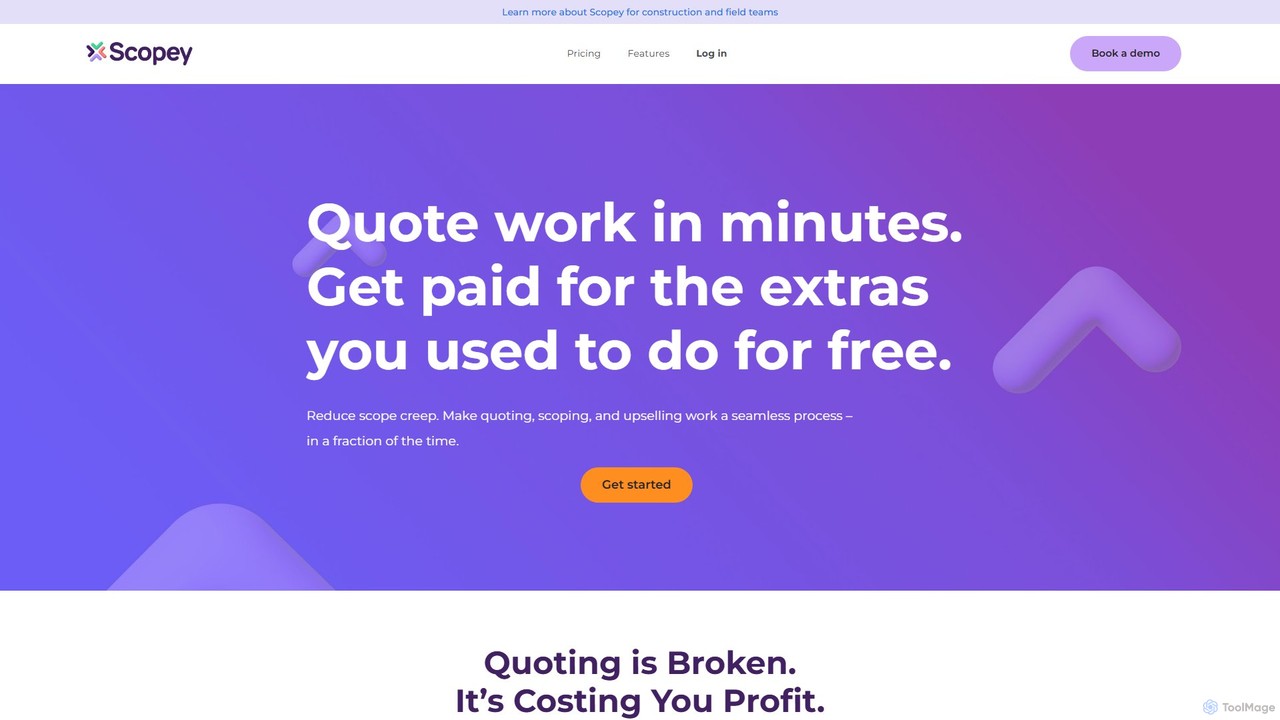
Scopey is an AI-powered platform designed to streamline quoting, scope management, and project change tracking. It helps businesses in construction, digital agencies, and field services prevent scope creep, increase revenue through intelligent upselling, and save significant administrative time by creating dynamic, collaborative quotes and contracts.

Invoicing
Visits 4KFavorites 143Likes 146

About Quotation

AI Quotation tools are a class of software designed to automate the creation, management, and tracking of sales quotes. These tools leverage AI to analyze data, suggest optimal pricing, and configure complex product or service packages accurately. This significantly accelerates the sales cycle by enabling teams to generate professional, consistent, and error-free proposals in a fraction of the time. Many modern quotation platforms also integrate seamlessly with CRM and ERP systems for a unified sales workflow.

Core Features

  • Automated Quote Generation: Instantly create detailed and branded quotes using customizable templates and product catalogs.
  • Dynamic Pricing Engine: Automatically apply complex rules, volume discounts, regional taxes, and promotional pricing.
  • Configure, Price, Quote (CPQ): Guide sales reps through the configuration of complex, multi-option products to ensure viability and accurate pricing.
  • Document Management & e-Signature: Generate professional PDF documents and facilitate legally binding electronic signatures to close deals faster.
  • Quote Tracking & Analytics: Monitor when a quote is opened, viewed, and accepted, providing valuable insights into sales performance.

Use Cases

AI Quotation tools are essential for B2B sales teams in sectors like technology, manufacturing, and professional services. They are used to respond to Requests for Proposals (RFPs), create bids for complex projects with multiple variables, and standardize pricing across a distributed sales force to maintain brand and margin consistency.

How to Choose

When selecting an AI Quotation tool, evaluate its integration capabilities with your existing CRM and ERP systems. Assess the flexibility of its pricing engine to handle your specific rules and discount structures. Consider the level of template customization available to align with your branding, and ensure the platform can scale to support your team's growth and increasing quote volume.

Featured tool rankings

Quotation use cases

1

Accelerating Complex SaaS Proposals

A sales representative at a B2B technology company needs to create a detailed proposal for a multi-module SaaS solution. Instead of manually calculating prices and checking feature compatibility, they use an AI quotation tool. The tool guides them through configuring the package based on the client's needs, automatically applies volume discounts, and suggests relevant add-ons. It then generates a professionally branded PDF proposal in under ten minutes, a process that previously took hours. This allows the rep to respond to leads faster, increasing their win rate.

2

Standardizing Quotes for Custom Machinery

A manufacturing company builds custom machinery, where each order has unique specifications. To ensure consistency and prevent costly errors, their sales engineers use a CPQ (Configure, Price, Quote) tool. The system contains all component options and compatibility rules. The engineer selects specifications with the client, and the tool validates the configuration, calculates the precise cost including labor and materials, and generates a detailed quote. This standardizes the quoting process across the team, reduces engineering errors, and protects profit margins.

3

Creating Detailed Bids for Professional Services

A consulting firm needs to create a comprehensive bid for a large project. A project manager uses a quotation tool to build the bid. They select various service items from a predefined catalog, assign team members with different hourly rates, and estimate the number of hours for each task. The tool automatically calculates the total project cost, adds taxes, and formats the information into a professional scope of work document. This ensures all bids are structured consistently and priced for profitability, while also saving the manager significant administrative time.

4

Improving Sales Funnel Visibility

A sales manager wants a clearer view of their team's pipeline. By using a centralized quotation tool, they can access a dashboard that shows all quotes currently in progress, sent, and accepted. They can track key metrics like the total value of outstanding quotes, average time to acceptance, and win/loss rates per representative. This data allows the manager to forecast revenue more accurately, identify reps who may need coaching, and spot bottlenecks in the sales process, such as quotes that remain unviewed for too long.

5

Streamlining Quotes for Freelance Services

A freelance graphic designer often sends quotes for similar project packages, like 'Logo Design' or 'Social Media Kit'. They use a simple quotation tool to create templates for these services. When a new inquiry comes in, they can select a template, make minor adjustments to the scope or price, and send a professional, branded quote via a shareable link in minutes. The client can view and accept the quote online, and some tools even allow for an initial deposit payment, streamlining the entire client onboarding process from inquiry to project start.

6

Automating Bulk Order Quotes for B2B E-commerce

A B2B e-commerce site that sells industrial parts integrates a quotation tool into its platform. Wholesale buyers who need large, non-standard quantities can use a 'Request a Quote' feature. This feature allows them to build a custom cart and submit it for special pricing. The quotation system automatically applies pre-configured volume discounts and alerts a sales rep to review and approve the quote. The customer then receives an email with a link to finalize the order, automating a previously manual and time-consuming process for the sales team.

Quotation FAQ

What are AI Quotation tools?

AI Quotation tools are software applications that automate the process of creating, sending, and managing sales quotes. They go beyond simple templates by using AI to suggest optimal product configurations, apply complex pricing rules automatically, and even recommend upsells or cross-sells based on customer data. The primary goal is to help sales teams produce accurate, professional, and profitable quotes much faster than manual methods.

How to choose the right AI Quotation tool?

Choosing the right tool depends on your specific business needs. Consider these key factors:

  • Integration: Does it connect seamlessly with your existing CRM (like Salesforce or HubSpot) and ERP systems to avoid manual data entry?
  • Complexity: Can its pricing engine handle your specific rules, such as tiered discounts, bundled products, or subscription models?
  • Customization: How easily can you customize quote templates to match your company's branding and include necessary legal terms?
  • User Experience: Is the interface intuitive for your sales team to adopt quickly with minimal training?
  • Scalability: Will the tool grow with your business as your product catalog and team size expand?
What's the difference between a Quotation tool and a CRM?

A CRM (Customer Relationship Management) system is a broad platform for managing all interactions with customers and prospects, including contact information, communication history, and sales pipeline stages. A Quotation tool is a specialized application focused on one specific part of that sales process: creating, sending, and tracking price quotes. While some CRMs have built-in basic quoting features, dedicated Quotation tools offer more advanced capabilities like complex pricing engines (CPQ), document customization, and e-signatures. Many businesses use a dedicated quotation tool that integrates with their CRM for a seamless workflow.

What are the main benefits of using an AI Quotation tool?

The primary benefits are speed, accuracy, and consistency. Sales reps can generate complex quotes in minutes instead of hours, reducing response time to leads. AI and rule-based engines minimize human error in pricing and configuration, protecting profit margins. All quotes follow a consistent, professional format that reinforces your brand. Additionally, tracking and analytics features provide valuable insights into sales performance, helping managers forecast revenue and identify areas for improvement.

Who typically uses AI Quotation software?

AI Quotation software is primarily used by B2B (business-to-business) sales teams. Key users include:

  • Sales Representatives: To quickly create and send accurate quotes to prospects.
  • Sales Engineers: To configure complex technical products and ensure the proposed solution is viable (often using CPQ features).
  • Sales Managers: To oversee the quoting process, approve discounts, and analyze team performance.
  • Small Business Owners/Freelancers: To streamline their sales process and present a professional image to clients.

It is most common in industries like technology/SaaS, manufacturing, professional services, and telecommunications.