ToolMage
Sign in

Best 1 Reputation Management AI tools for Sales

Popular Reputation Management AI tools in Sales include feedspace, helping you work more efficiently.

feedspace
Freemium

feedspace

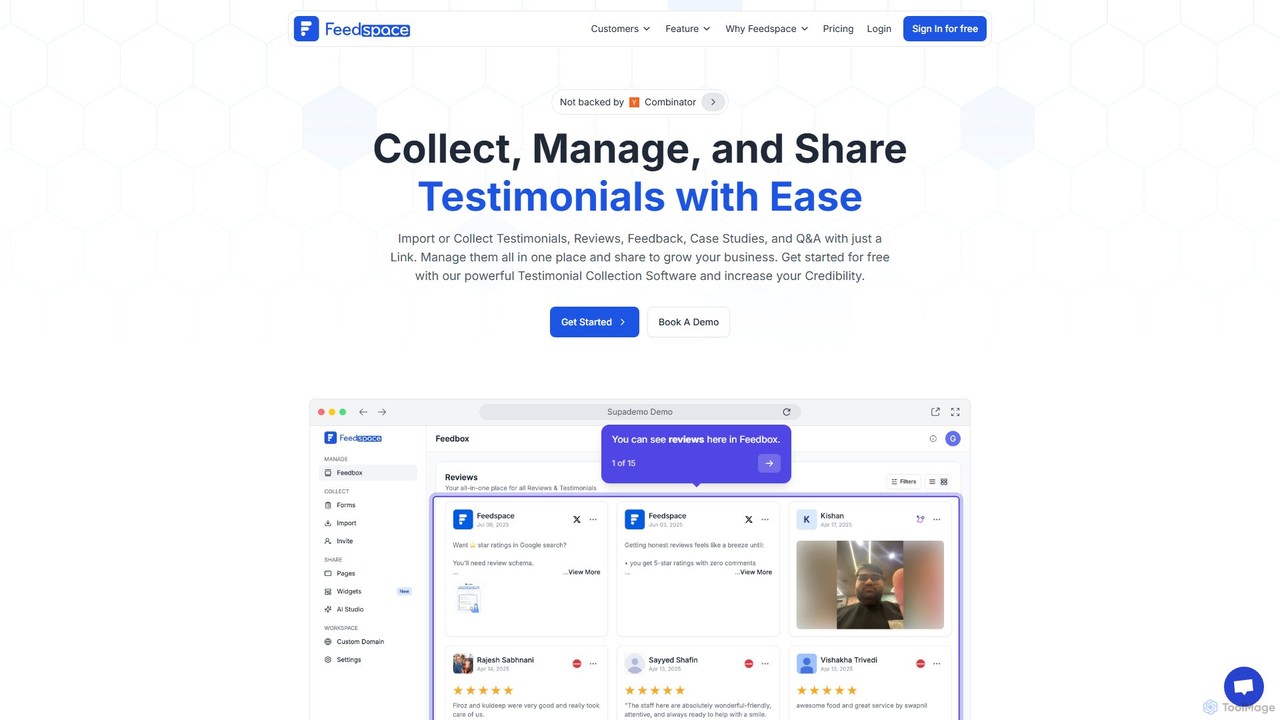
feedspace is a powerful testimonial collection software that helps businesses easily collect, manage, and showcase customer feedback. It supports video, audio, and text formats, allowing you to gather authentic social proof through a simple link. You can import reviews from various platforms and display them on your website using customizable widgets and a 'Wall of Love' to build trust and increase credibility.

Feedback Management
Visits 57.5KFavorites 119Likes 121

About Reputation Management

AI Reputation Management tools are specialized platforms designed to monitor, analyze, and manage a brand's online presence and public perception. Leveraging technologies like Natural Language Processing (NLP), these tools automatically track brand mentions across social media, review sites, news outlets, and forums. This enables businesses to proactively address negative feedback, amplify positive reviews, and gain deep insights into customer sentiment. By automating this process, they provide real-time alerts and comprehensive analytics that are crucial for protecting brand equity and supporting sales efforts.

Core Features

  • Sentiment Analysis: Automatically classifies online mentions as positive, negative, or neutral to gauge public opinion.
  • Real-time Mention Tracking: Continuously scans the web and social media for keywords related to your brand, products, or competitors.
  • Review Management: Aggregates customer reviews from multiple platforms (e.g., Google, Yelp, Trustpilot) into a single dashboard for easy response.
  • Crisis Alerting: Sends immediate notifications for unusual spikes in negative mentions or the emergence of a potential PR crisis.
  • Competitive Analysis: Tracks the share of voice and sentiment trends of competitors to inform strategic decisions.

Applicable Scenarios

These tools are essential for marketing, public relations, and customer service teams, particularly in consumer-facing industries like hospitality, e-commerce, healthcare, and retail. B2B companies also use them to manage their corporate image and track industry conversations. Public figures and agencies rely on them to maintain a positive digital footprint.

How to Choose

When selecting a tool, consider the breadth of its channel coverage—does it monitor the platforms most important to your audience? Evaluate the accuracy of its sentiment analysis, especially for industry-specific jargon. Check for integration capabilities with your existing CRM or helpdesk software to streamline workflows. Finally, assess the depth and customizability of its reporting to ensure you can derive actionable insights.

Reputation Management use cases

1

Mitigating a Food Safety Scare for a Restaurant Chain

A marketing manager for a multi-location restaurant chain uses an AI tool to monitor social media and review sites 24/7. The system detects a sudden surge in negative mentions related to 'food poisoning' at one specific location. It provides an instant alert with source links, allowing the PR team to immediately issue a public statement, contact affected customers directly, and coordinate with the store manager. This proactive crisis management contains the narrative before it goes viral, protecting brand trust and preventing a significant drop in sales across all locations.

2

Amplifying Positive Feedback for E-commerce Sales

An e-commerce brand manager uses a reputation management tool to aggregate all 5-star reviews from various marketplaces and social media channels. The tool's AI identifies the most compelling and authentic-sounding testimonials, highlighting phrases related to 'product quality' and 'fast shipping'. The manager then repurposes these verified positive reviews into marketing assets, such as social media ad creatives and website banners. This strategy builds powerful social proof, increases on-page conversion rates, and directly boosts product sales by leveraging the voice of satisfied customers.

3

Gaining Competitive Intelligence Through Reputation Tracking

A B2B software company's strategy team configures their tool to track not only their own brand but also their top three competitors. The AI analyzes sentiment trends and common discussion topics. They discover that a key competitor is receiving frequent negative feedback about their 'poor customer support' and 'complex onboarding'. The sales team uses this insight to refine their pitches, highlighting their own company's award-winning support and seamless setup process. This targeted messaging helps them win deals by addressing specific pain points that potential customers are experiencing with rivals.

4

Improving Hotel Service Quality with Real-time Review Analysis

A luxury hotel manager uses a reputation tool to monitor reviews on sites like TripAdvisor and Google in real-time. The AI dashboard flags recurring negative comments about 'slow check-in process' and 'unreliable room Wi-Fi'. Armed with this specific, data-backed feedback, the manager implements a new express check-in system and upgrades the Wi-Fi infrastructure. They also respond publicly to the reviews, detailing the improvements made. This demonstrates attentiveness, directly improves the guest experience, and leads to higher satisfaction scores and more positive future bookings.

5

Protecting the Online Reputation of Corporate Executives

A PR agency for a large corporation uses a reputation management tool to monitor the online presence of its C-suite executives. The tool is configured to track mentions in news articles, blogs, and high-profile social media accounts. It analyzes sentiment to identify potential reputational risks, such as misinformation or negative associations. When a misleading article about the CEO is published, the tool sends an immediate alert. This allows the agency to respond swiftly with a press release, correct the public record, and mitigate damage to the executive's and the company's credibility, which is vital for investor confidence.

6

Measuring Campaign Impact on Brand Sentiment

After launching a major advertising campaign, a marketing analyst uses the tool to measure the public's reaction. They set up tracking for the campaign hashtag and related keywords. The AI analyzes sentiment from millions of online conversations, comparing it to pre-campaign benchmarks. The reports show a 15% increase in positive sentiment and identify which campaign messages resonated most with the audience. This data provides a clear, quantifiable measure of the campaign's impact on brand perception, helping to justify marketing spend and guide future creative strategies.

Reputation Management FAQ

What are AI Reputation Management tools?

AI Reputation Management tools are software platforms that use artificial intelligence to monitor, analyze, and manage how a brand is perceived online. They employ technologies like Natural Language Processing (NLP) and sentiment analysis to automatically track mentions across a vast range of digital channels, including social media, review websites, news articles, and forums. Their primary goal is to provide businesses with real-time insights into public opinion, enabling them to protect their brand image, engage with customer feedback, and mitigate potential PR crises before they escalate.

How to choose the right AI Reputation Management tool?

Choosing the right tool depends on your specific needs. Consider these key factors:

  • Source Coverage: Ensure the tool monitors all the channels where your audience talks about you, such as specific social media platforms, industry forums, or crucial review sites.
  • Analysis Accuracy: Evaluate the precision of its sentiment and topic analysis. A good tool should understand context, sarcasm, and industry-specific jargon.
  • Integration Capabilities: Check if it can connect with your existing workflow tools, like CRM (e.g., Salesforce) or helpdesk software (e.g., Zendesk), to streamline responses and data sharing.
  • Reporting and Alerts: Assess the customizability of its dashboards, reports, and real-time alert system. The insights should be actionable and easy to share with your team.
What's the difference between Reputation Management and Social Media Monitoring tools?

While there is overlap, they have different core focuses. Social Media Monitoring tools primarily track conversations, hashtags, and engagement metrics *within* social platforms for marketing and customer service purposes. AI Reputation Management tools take a broader approach. They monitor a wider range of sources beyond social media, including review sites, news media, and blogs. Their main goal is more strategic: to analyze sentiment, manage brand health, and mitigate reputational risks across the entire digital landscape, not just on social channels.

Who should use AI Reputation Management tools?

These tools are valuable for a wide range of roles and industries. Marketing and PR teams use them for brand health tracking, campaign analysis, and crisis management. Customer service teams leverage them to identify and resolve issues raised in public reviews. They are particularly crucial for consumer-facing businesses like hospitality, retail, e-commerce, and healthcare, where online reviews heavily influence purchasing decisions. B2B companies also benefit by monitoring their corporate image and tracking industry conversations to gain a competitive edge.

How does effective reputation management impact sales?

Effective reputation management directly impacts sales by building trust and credibility, which are foundational to the sales process. Positive reviews and a strong online reputation act as powerful social proof, influencing potential customers' purchasing decisions. Proactively managing negative feedback can prevent customer churn and demonstrates excellent customer care, turning a negative experience into a positive one. Ultimately, a good reputation can lead to higher conversion rates, increased customer loyalty, and a stronger brand that can command premium pricing—all of which contribute directly to revenue growth.