Cust
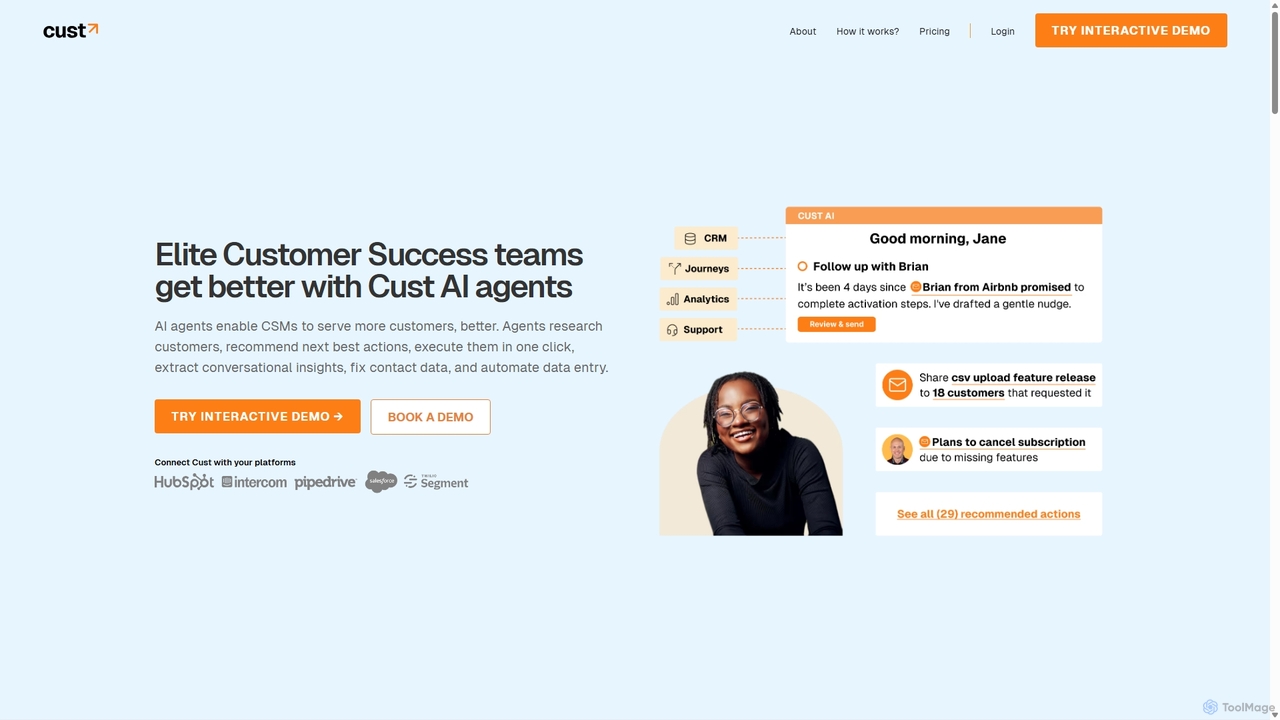
Cust is an AI agent platform designed for elite customer success teams. It empowers CSMs to scale personalized, …
Cust is an AI agent platform designed for elite customer success teams. It empowers CSMs to scale personalized, one-to-one engagement across all customer tiers. By automating research, recommending actions, and executing playbooks for onboarding, upselling, and retention, Cust helps businesses increase Net Revenue Retention (NRR) and reduce churn.
Clari
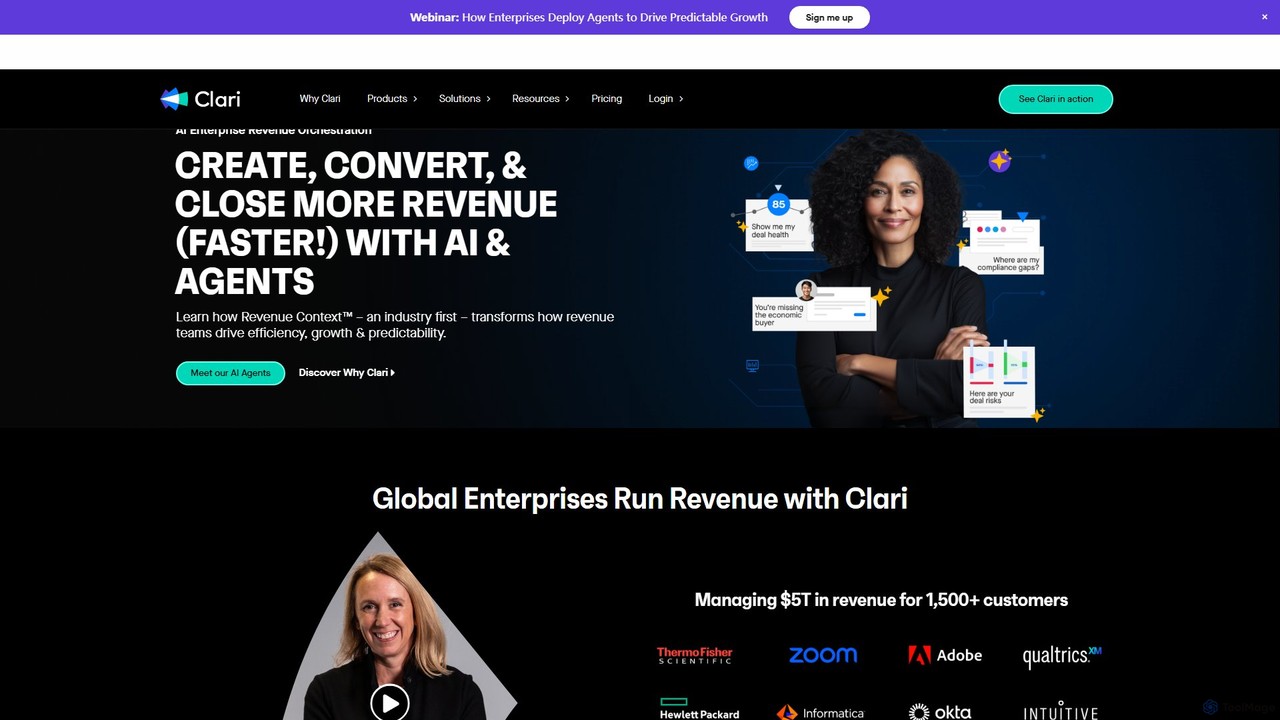
Clari is an AI-powered Revenue Orchestration platform designed for enterprise sales teams. It unifies data from CRM, email, …
Clari is an AI-powered Revenue Orchestration platform designed for enterprise sales teams. It unifies data from CRM, email, and calls to provide complete visibility into the revenue process. By leveraging AI and predictive analytics, Clari helps businesses improve forecast accuracy, manage pipelines effectively, enhance sales productivity, and drive predictable revenue growth.
swyftai
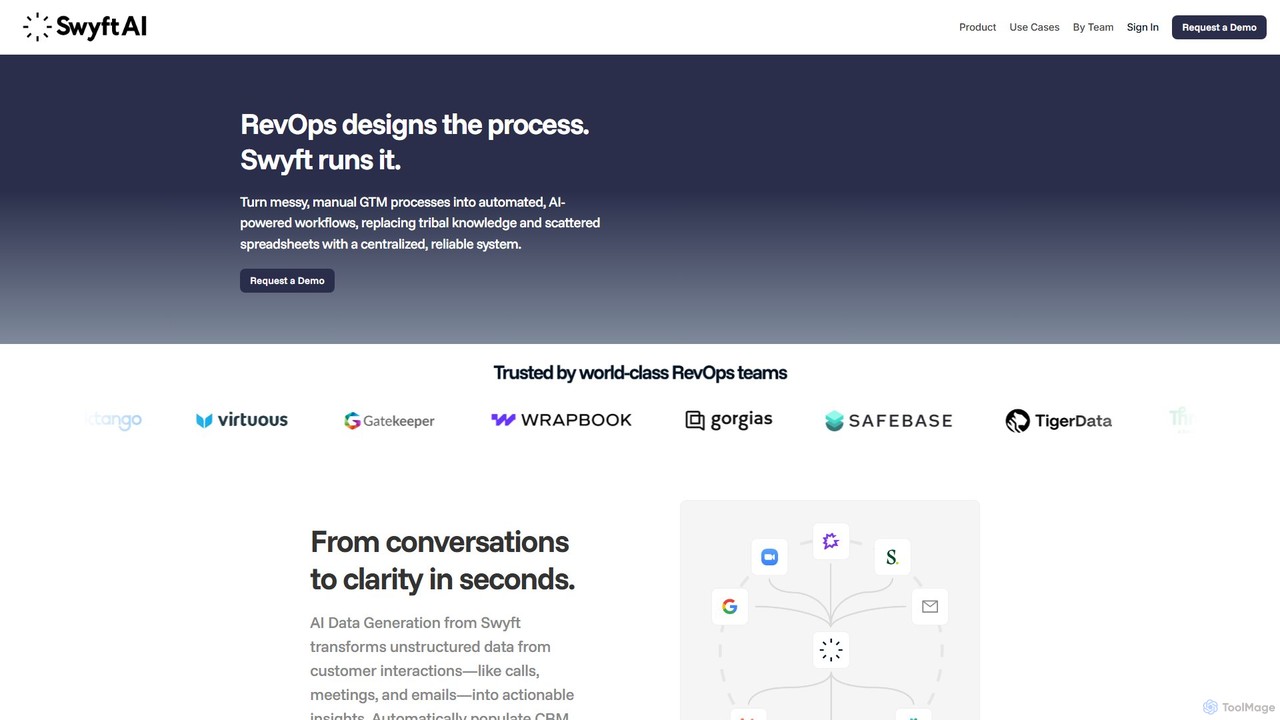
Swyft AI is an automation platform that transforms unstructured customer conversations from calls, meetings, and emails into structured, …
Swyft AI is an automation platform that transforms unstructured customer conversations from calls, meetings, and emails into structured, actionable data. It automatically updates CRMs, generates deal alerts, and powers intelligent workflows for GTM teams, including Sales, RevOps, and Customer Success. By eliminating manual data entry and providing deep insights, Swyft AI helps businesses improve data hygiene, accelerate sales cycles, and make smarter, data-driven decisions.
Salesken
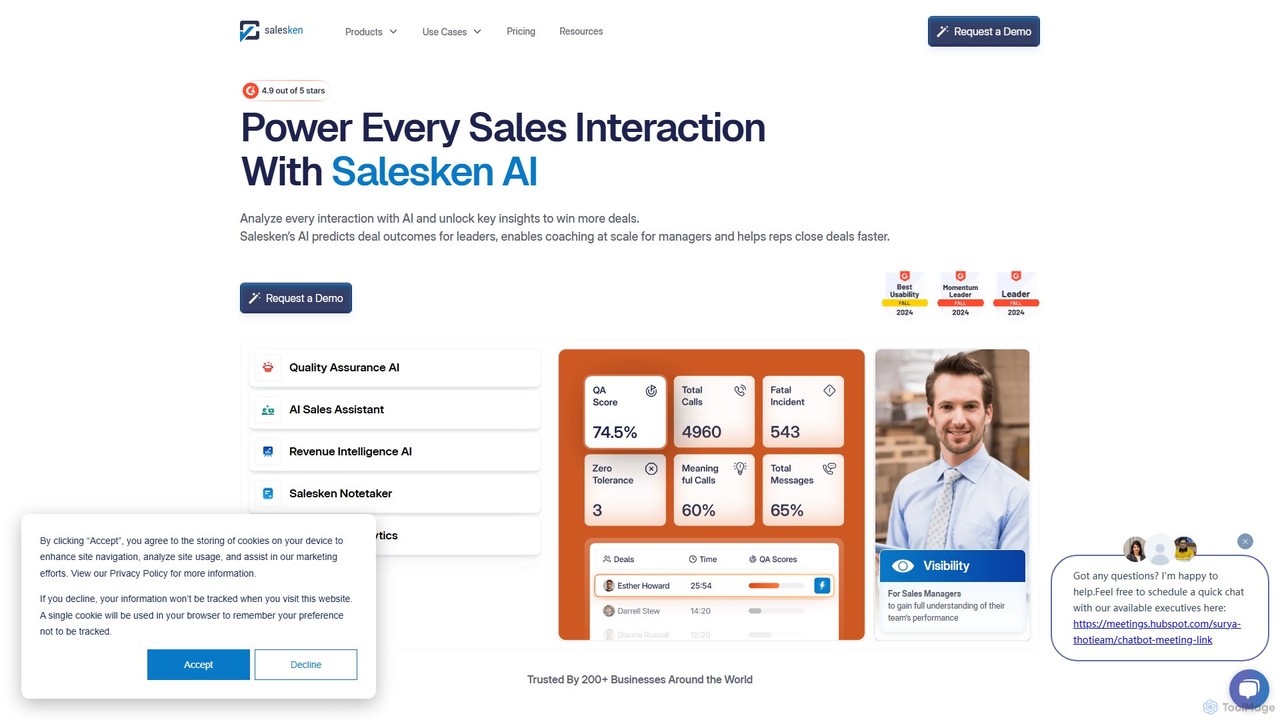
Salesken is an AI-powered conversation intelligence platform for sales teams. It provides real-time coaching, revenue intelligence, and automated …
Salesken is an AI-powered conversation intelligence platform for sales teams. It provides real-time coaching, revenue intelligence, and automated quality assurance to help reps improve performance, close deals faster, and drive predictable revenue growth. The all-in-one platform analyzes every sales conversation to uncover insights, flag risks, and automate administrative tasks.
About Revenue Operations
Revenue Operations (RevOps) tools are AI-powered platforms designed to align and optimize the processes, data, and technology across an organization's entire revenue engine. These tools integrate data from sales, marketing, and customer service systems to create a single, unified source of truth. This holistic view enables more accurate forecasting, identifies bottlenecks in the customer journey, and automates cross-functional workflows to accelerate growth. Unlike traditional sales tools that focus on a single department, RevOps platforms provide a comprehensive perspective on the entire customer lifecycle.
Core Features
- Data Unification: Consolidates data from CRM, marketing automation, and support platforms for a complete 360-degree customer view.
- AI-Powered Forecasting: Utilizes machine learning models to analyze pipeline health and historical data for highly accurate revenue predictions.
- Process Automation: Automates cross-departmental workflows, such as lead handoffs and renewal alerts, to improve efficiency.
- Funnel Analytics: Provides deep insights into conversion rates, sales cycle length, and deal velocity across the entire revenue funnel.
- Performance Monitoring: Tracks and visualizes key metrics for sales, marketing, and customer success on shared dashboards.
Use Cases
RevOps tools are essential for B2B companies, particularly in sectors like SaaS, technology, and financial services with complex sales cycles. They are used by Revenue Operations teams, sales leaders, and marketing operations managers to align departmental goals, optimize the lead-to-revenue process, and provide executives with a clear view of business health.
How to Choose
When selecting a Revenue Operations tool, prioritize its integration capabilities with your existing tech stack (e.g., Salesforce, HubSpot). Evaluate the depth of its analytical features and the accuracy of its AI forecasting models. Consider the platform's scalability to handle growing data volumes and its ease of use for both technical analysts and business leaders.
Revenue OperationsUse Cases
Create Unified Revenue Forecasts
A Revenue Operations Manager at a B2B SaaS company uses an AI RevOps tool to consolidate data from Salesforce (CRM), Marketo (marketing), and Zendesk (support). The platform's AI model analyzes pipeline progression, historical win rates, and customer health scores to generate a single, reliable revenue forecast. This replaces siloed, spreadsheet-based predictions from each department, improving forecast accuracy by over 20% and giving leadership a trustworthy view of future performance.
Optimize the Lead Handoff Process
A marketing operations team notices a delay between when a lead is marked as 'Marketing Qualified' (MQL) and when a sales rep first makes contact. Using a RevOps tool, they map the entire lead lifecycle and identify a bottleneck in the assignment rules. The tool automates the lead routing process based on territory and rep availability, and sends instant notifications. This reduces the average lead response time from 4 hours to under 30 minutes, significantly increasing conversion rates.
Analyze Sales Funnel Leakage
A sales leader is concerned about deals stalling in the 'Proposal Sent' stage. The RevOps platform visualizes the entire sales funnel and uses AI to analyze data from lost deals at this stage. It identifies a common pattern: deals without a follow-up activity scheduled within 3 days are 50% more likely to be lost. Based on this insight, the system automatically creates follow-up tasks for reps, helping to plug the funnel leak and improve the close rate for proposed deals.
Align Sales and Marketing KPIs
Historically, a company's marketing team was measured on MQL volume, while the sales team was measured on closed-won revenue. This led to misalignment, with marketing generating many low-quality leads. The RevOps tool creates a shared dashboard that tracks the entire customer journey, from first touchpoint to final renewal. It highlights which marketing campaigns generate the most pipeline and revenue, not just leads. This shifts the marketing team's focus to revenue-centric metrics, aligning both teams around the same ultimate goal.
Automate Sales Territory Planning
A RevOps specialist is tasked with redesigning sales territories for the new fiscal year. Instead of spending weeks manually balancing accounts in a spreadsheet, they use an AI RevOps tool. The tool analyzes historical performance, market potential data, and rep workload to automatically generate multiple balanced territory scenarios. The specialist can then adjust parameters and visualize the impact on quota attainment and travel time, finalizing an optimized plan in a few hours instead of weeks.
Proactively Predict Customer Churn
A customer success team wants to reduce churn. Their RevOps platform connects to product usage data, support ticket history, and CRM contract information. The AI model identifies patterns that precede churn, such as a drop in feature usage or an increase in support tickets. It then flags at-risk accounts and automatically creates a task for the Customer Success Manager to intervene with a proactive outreach campaign, helping to save accounts that might have otherwise been lost.