ToolMage
Sign in

Best 3 Sales Training AI tools for Sales

Popular Sales Training AI tools in Sales include Retorio, Syrenn, and Salesably, helping you work more efficiently.

Retorio
Paid

Retorio

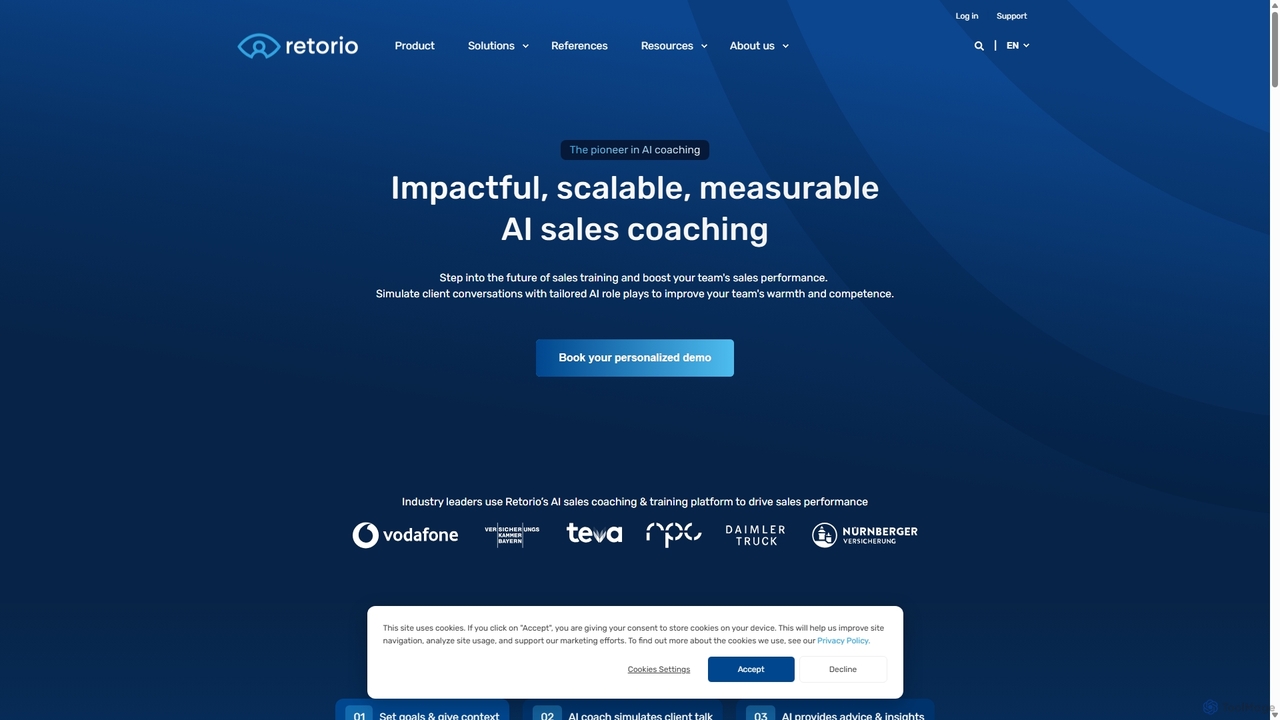
Retorio is an AI-powered coaching platform that enhances sales, service, and leadership skills through realistic role-play simulations. It analyzes verbal and non-verbal communication to provide personalized, actionable feedback, helping teams improve performance, close skill gaps, and drive measurable business results in a scalable and psychologically safe environment.

Corporate Training
Visits 13.5KFavorites 102Likes 116
Syrenn
Paid

Syrenn

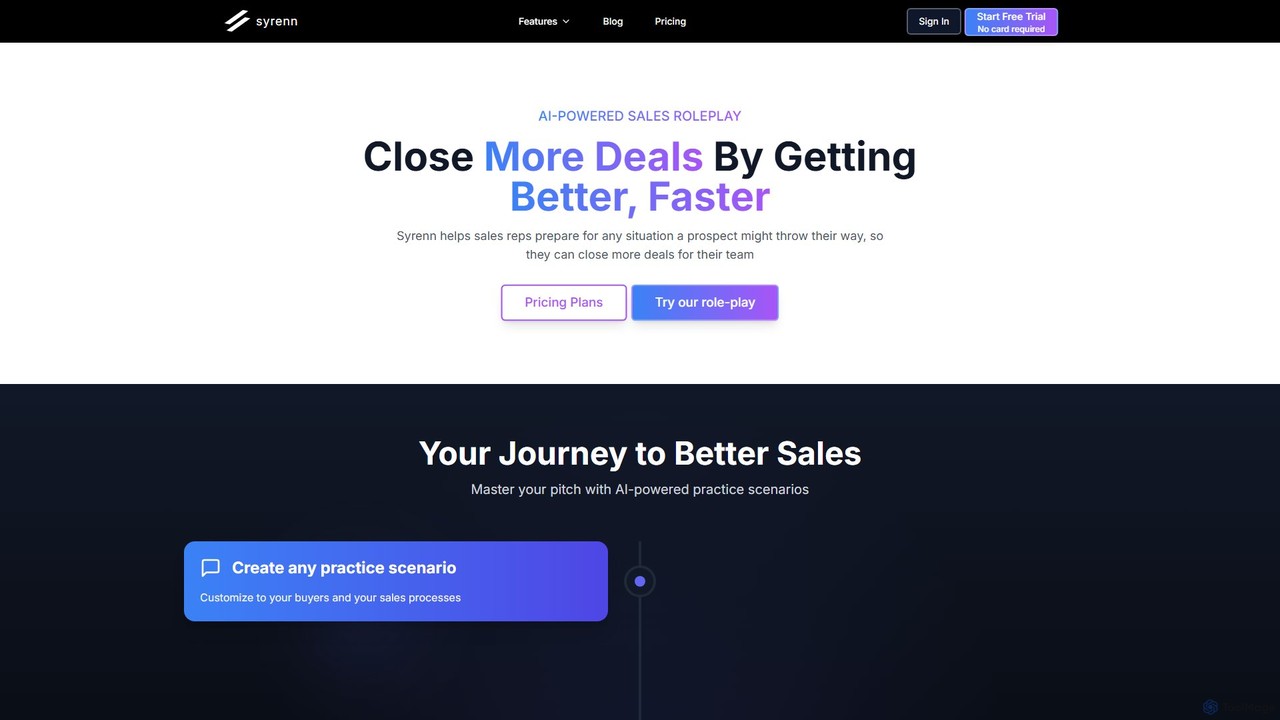
Syrenn is an AI-powered sales training platform that enables sales representatives to practice any sales scenario through realistic role-playing with AI personas. It provides instant feedback, performance analytics, and customizable scenarios to help teams close more deals, improve confidence, and master their pitch.

Corporate Training
Visits 7KFavorites 154Likes 143
Salesably
Freemium

Salesably

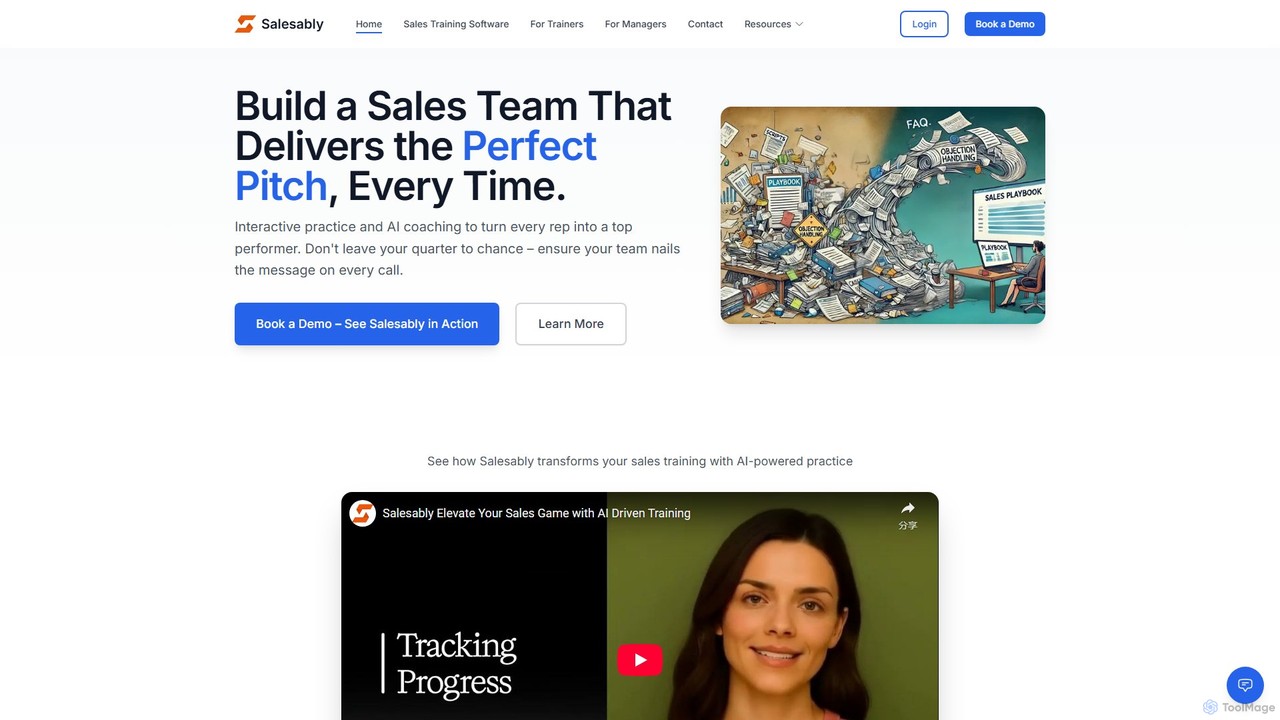
Salesably is an AI-powered sales training platform that helps teams perfect their pitch through interactive practice with realistic AI buyer personas. It provides AI coaching, data-driven feedback, and structured learning paths to transform every sales representative into a top performer by mastering message fluency, objection handling, and discovery questioning.

Corporate Training
Visits 5.5KFavorites 160Likes 157

About Sales Training

AI Sales Training tools are platforms that use artificial intelligence to deliver personalized, scalable, and data-driven coaching for sales teams. These tools leverage conversation intelligence and machine learning to analyze sales calls, meetings, and role-plays, identifying key behaviors and communication patterns. This enables organizations to pinpoint specific areas for improvement, replicate the habits of top performers, and provide objective feedback at scale. Unlike traditional training methods, AI-powered platforms offer consistent, on-demand practice and actionable insights derived from actual sales interactions.

Core Features

  • Conversation Analysis: Automatically transcribes and analyzes sales calls to score performance on metrics like talk-listen ratio, key topic mentions, and question-asking skills.
  • AI-Powered Role-Playing: Provides a safe environment for reps to practice pitches and handle objections with realistic AI avatars that simulate customer interactions.
  • Personalized Coaching Plans: Generates tailored feedback and development recommendations for each rep based on their unique performance data and identified skill gaps.
  • Best Practice Identification: Analyzes the conversations of top-performing reps to identify and codify winning strategies that can be taught to the entire team.

Use Cases

These tools are widely used by sales enablement teams, frontline sales managers, and B2B sales organizations to streamline onboarding for new hires, upskill existing teams, and ensure consistent messaging for product launches. They are particularly effective in remote or hybrid sales environments where direct observation is challenging.

How to Choose

When selecting an AI Sales Training tool, consider its integration capabilities with your CRM and communication platforms (e.g., Salesforce, Zoom). Evaluate the depth and accuracy of its conversation analysis, the realism of its AI simulations, and the clarity of its analytics dashboards. Also, assess its scalability to support your team's size and growth.

Sales Training use cases

1

Accelerating New Hire Onboarding and Ramp-Up

A sales enablement manager for a fast-growing tech company uses an AI Sales Training platform to standardize the onboarding process. New hires complete a series of AI-powered role-plays to practice the company's value proposition and product messaging. The system provides instant, objective scores and feedback on their delivery, clarity, and confidence. This allows new reps to gain proficiency and confidence much faster than through traditional shadowing, reducing their ramp-up time by an average of 30% and ensuring they are field-ready sooner.

2

Mastering Objection Handling with AI Simulations

An account executive team is struggling to overcome pricing objections from competitors. Using an AI Sales Training tool, their manager creates custom role-play scenarios that simulate these specific objections. Reps can practice their responses in a pressure-free environment against an AI avatar. The platform analyzes their word choice, tone, and response structure, providing targeted suggestions for improvement. This repeated practice builds muscle memory and equips the team with proven tactics to navigate difficult conversations and protect deal margins.

3

Scaling Coaching Efforts for Sales Managers

A sales director oversees a team of 20 remote representatives, making it impossible to listen to every call. The team's AI Sales Training platform automatically analyzes all recorded calls and flags key coaching moments, such as missed buying signals or poor discovery questions. The manager receives a weekly digest highlighting which reps need help and on what specific skills. This allows them to deliver highly targeted, data-backed coaching during 1-on-1s, dramatically increasing the efficiency and impact of their coaching time.

4

Ensuring Consistent Go-to-Market Messaging

Following a major product launch, a company needs to ensure its entire sales force is communicating the new value proposition correctly. They upload their official messaging and talk tracks into the AI Sales Training platform. The tool then monitors all sales conversations to track the adoption of key phrases and concepts. Dashboards show leadership which teams or individuals are struggling with the new messaging, allowing for timely intervention and retraining to ensure a unified and powerful message reaches the market.

5

Preparing for High-Stakes Competitive Deals

An enterprise sales team frequently competes against an established industry leader. To improve their win rate, they use an AI role-play module configured with their competitor's common claims and customer FUD (Fear, Uncertainty, and Doubt). Sales reps practice articulating their unique differentiators and countering competitor arguments. The AI provides feedback on the effectiveness of their responses, helping them build the confidence and skills needed to win strategic, high-value accounts.

6

Automating Sales Skill Certification

A global organization needs a scalable way to certify that its 500+ sales reps have mastered a complex new solution. Instead of manual assessments, they use an AI Sales Training tool for certification. Reps record themselves delivering a pitch to an AI evaluator, which then scores them on predefined criteria like product knowledge accuracy, benefit articulation, and objection handling. This automates the entire process, provides a consistent evaluation standard, and creates a clear record of team-wide proficiency.

Sales Training FAQ

What is an AI Sales Training tool?

An AI Sales Training tool is a software platform that uses artificial intelligence to analyze sales conversations and provide personalized coaching. It moves beyond traditional training by using data from real-world sales interactions to identify skill gaps and offer targeted practice, often through AI-powered role-playing simulations. The core goal is to make sales coaching more scalable, objective, and effective.

How do I choose the right AI Sales Training tool?

To choose the right tool, consider these four key factors:

  • Integrations: Does it seamlessly connect with your existing CRM, video conferencing tools (like Zoom or Teams), and dialers?
  • Analysis Quality: How accurate and deep is its conversation intelligence? Can it track custom topics and complex sales methodologies?
  • Practice Environment: How realistic and customizable are the AI role-play simulations? Can you tailor them to your specific industry and sales scenarios?
  • Analytics and Reporting: Does it provide clear, actionable insights for both individual reps and sales leaders to track progress and ROI?
What is the difference between AI Sales Training and a standard LMS?

A standard Learning Management System (LMS) is primarily a content library used to host and track completion of courses, videos, and documents. It's a passive learning tool. In contrast, an AI Sales Training platform is an active skill development tool. It analyzes actual on-the-job performance (calls and meetings) and provides an interactive environment (AI role-plays) for reps to practice and apply what they've learned, with feedback tied directly to performance data.

What are the main benefits of using AI for sales training?

The primary benefits are scalability, objectivity, and data-driven insights. AI allows you to provide personalized coaching to every single rep, not just the top or bottom performers. The feedback is based on objective data from conversations, removing managerial bias. Finally, it gives leadership a clear view of team-wide skill gaps and the effectiveness of their training initiatives, enabling them to make smarter decisions about sales enablement.

Who should use AI Sales Training tools?

AI Sales Training tools are ideal for B2B sales organizations, particularly those with teams of 10 or more reps. The primary users are sales enablement leaders responsible for training programs, frontline sales managers who need to coach their teams effectively, and individual sales representatives who want to proactively improve their skills. They are especially valuable for remote or distributed teams where direct observation and in-person coaching are limited.