ToolMage
Sign in

Best 13 Ai Search Engine AI tools for Search

Popular Ai Search Engine AI tools in Search include Baidu, Bing, Neeva, Andi Search, thegigabrain, Bocha AI, ThinkAny, XAnswer, yoursearch.ai, and aoyo, helping you work more efficiently.

Cluezy

Cluezy

Cluezy is an advanced AI search and answer engine designed to revolutionize information discovery. It leverages AI models, contextual understanding, and real-time search to provide accurate, meaningful, and reliable answers, making knowledge access instant and effortless for users exploring, learning, or researching.

Research Assistant
Visits 5.7KFavorites 155Likes 134

SpaceSearch

SpaceSearch

SpaceSearch is a next-generation, AI-powered search engine designed to redefine online browsing. It provides instant AI answers, understands search intent, and allows users to chat with the search engine for a more interactive and private experience.

Research
Visits 5.7KFavorites 139Likes 118
Bocha AI
Freemium

Bocha AI

Bocha AI is a multimodal AI search engine that provides rich, direct answers by integrating multiple large language models and specialized intelligent agents. It goes beyond traditional search by offering targeted tools for travel, academic research, document retrieval, and more, all through natural language queries.

Api
Visits 47.2KFavorites 140Likes 128
Neeva
Freemium

Neeva

Neeva was a pioneering ad-free, private search engine powered by AI. It offered users a unique, subscription-based search experience focused on delivering fast, unbiased results and AI-generated summaries without tracking. The consumer search product was discontinued in June 2023 following its acquisition by Snowflake.

Research
Visits 783.3KFavorites 134Likes 120
yoursearch.ai
Free

yoursearch.ai

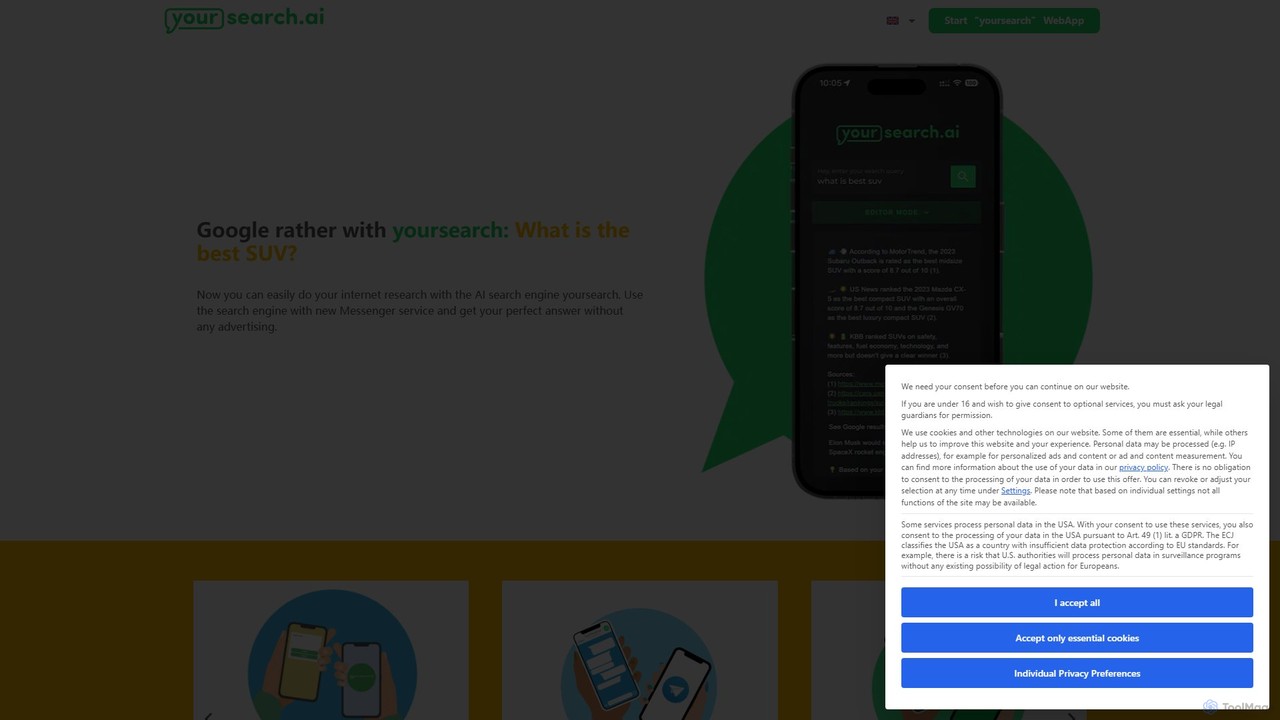
yoursearch.ai is a privacy-focused AI search engine that delivers direct, summarized answers instead of just a list of links. It uses advanced AI to understand natural language queries and synthesizes information from multiple sources, providing a fast, accurate, and conversational search experience.

Learning
Visits 5.9KFavorites 154Likes 144
aoyo
Freemium

aoyo

aoyo is an AI-powered search engine designed to provide direct, synthesized answers instead of just a list of links. It features a special "Deep Thinking" mode for in-depth analysis and research, delivering accurate, comprehensive, and cited information quickly. It can be set as your default browser search engine for seamless integration into your workflow.

Information Retrieval
Visits 5.8KFavorites 141Likes 130
thegigabrain
Freemium

thegigabrain

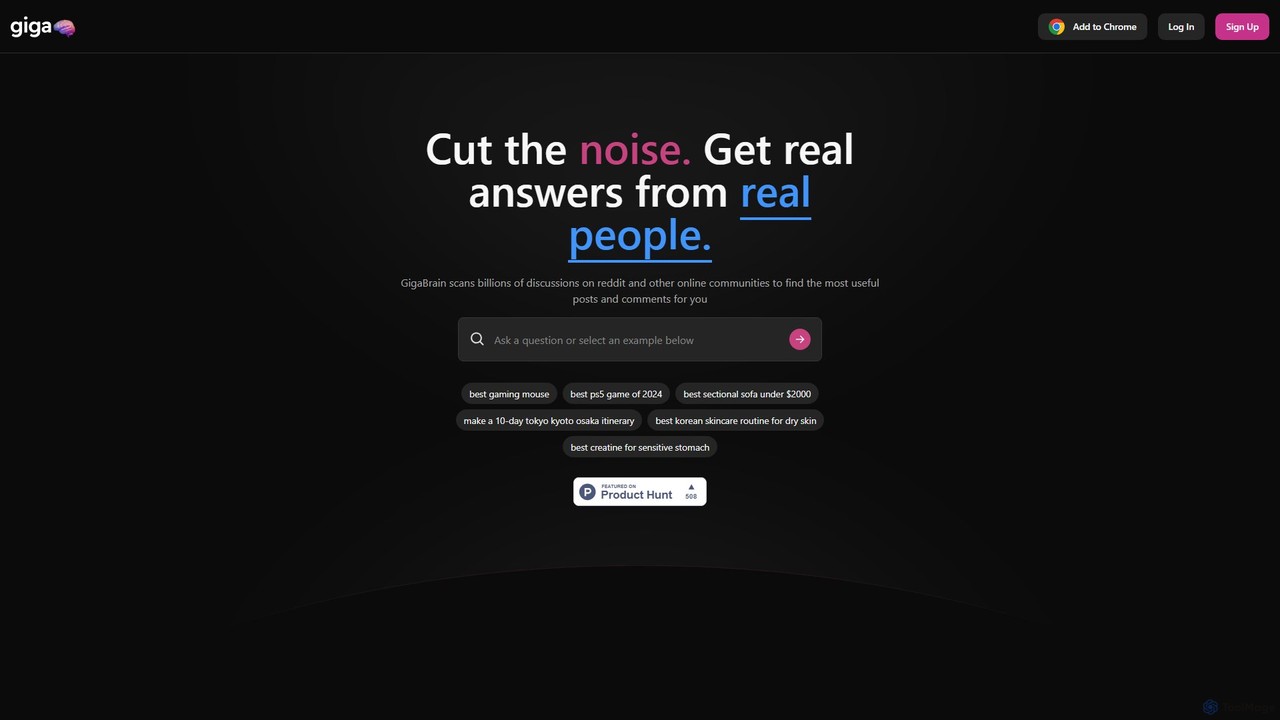
GigaBrain is an AI-powered search engine that scans billions of discussions on Reddit and other online communities. It delivers authentic, summarized answers from real people, cutting through marketing noise to provide genuine product reviews, travel advice, and practical solutions.

Research
Visits 48.2KFavorites 135Likes 133
Andi Search
Free

Andi Search

Andi Search is a next-generation AI search assistant that provides direct, accurate answers in a conversational, ad-free, and private interface. It uses generative AI to find, summarize, and explain information from the best sources, cutting through spam and tracking to deliver a smarter, faster search experience.

Research
Visits 183.4KFavorites 137Likes 143
Baidu
Freemium

Baidu

Baidu is a comprehensive AI-powered platform that has evolved beyond a traditional search engine. It integrates the powerful ERNIE large language model to provide conversational search, content generation, in-depth Q&A, and a suite of intelligent tools, creating a unified ecosystem for information discovery and creation.

Ai Assistant
Visits 1.9BFavorites 116Likes 123
XAnswer
Free

XAnswer

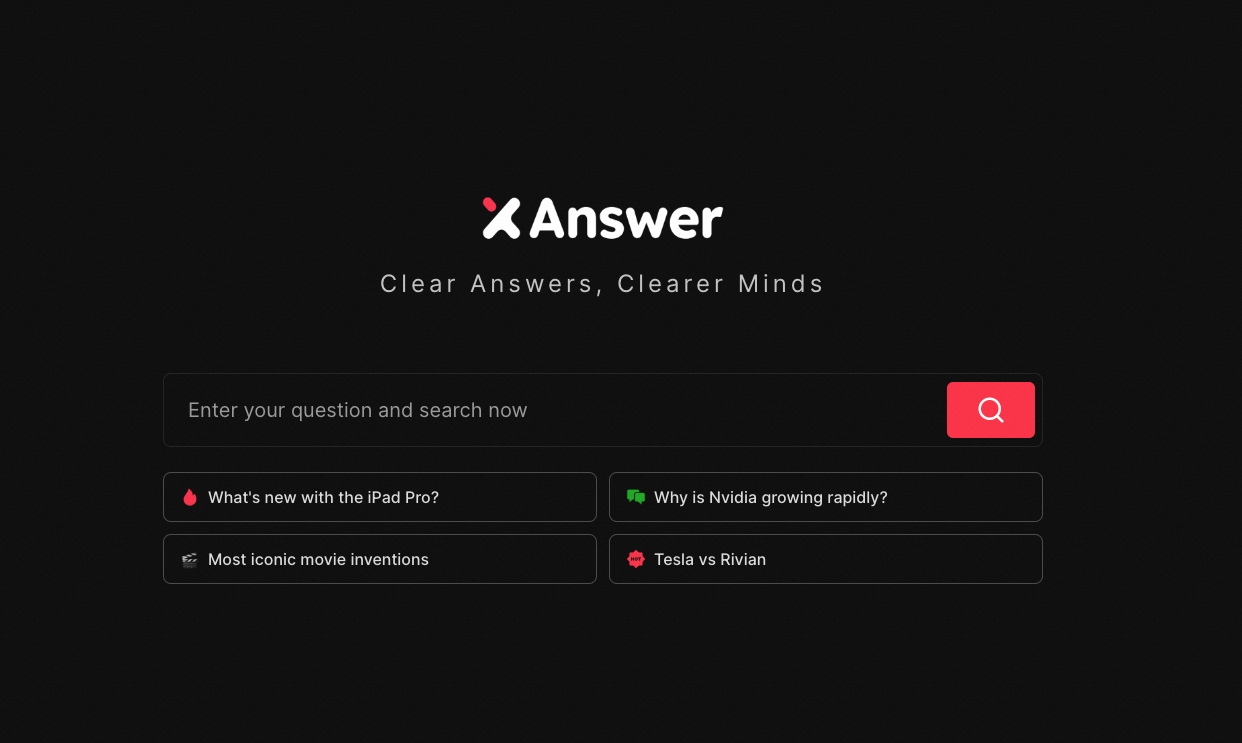
XAnswer is a free AI-powered search engine designed to provide direct, synthesized answers to your questions. Instead of just a list of links, it delivers clear, concise summaries with cited sources, making research and information discovery faster and more efficient. It's ideal for students, professionals, and anyone seeking quick, reliable information.

Learning
Visits 6.4KFavorites 166Likes 143
GoodFriend
Freemium

GoodFriend

GoodFriend is an advanced AI companion that offers more than just data processing. It provides deeply human-like conversations with virtual characters, each with a unique personality and unlimited memory. It also functions as a powerful, web-connected personal assistant, capable of real-time data analysis, specialized searches, and multimedia interaction to simplify your daily life.

Chat
Visits 5.7KFavorites 135Likes 151
ThinkAny
Freemium

ThinkAny

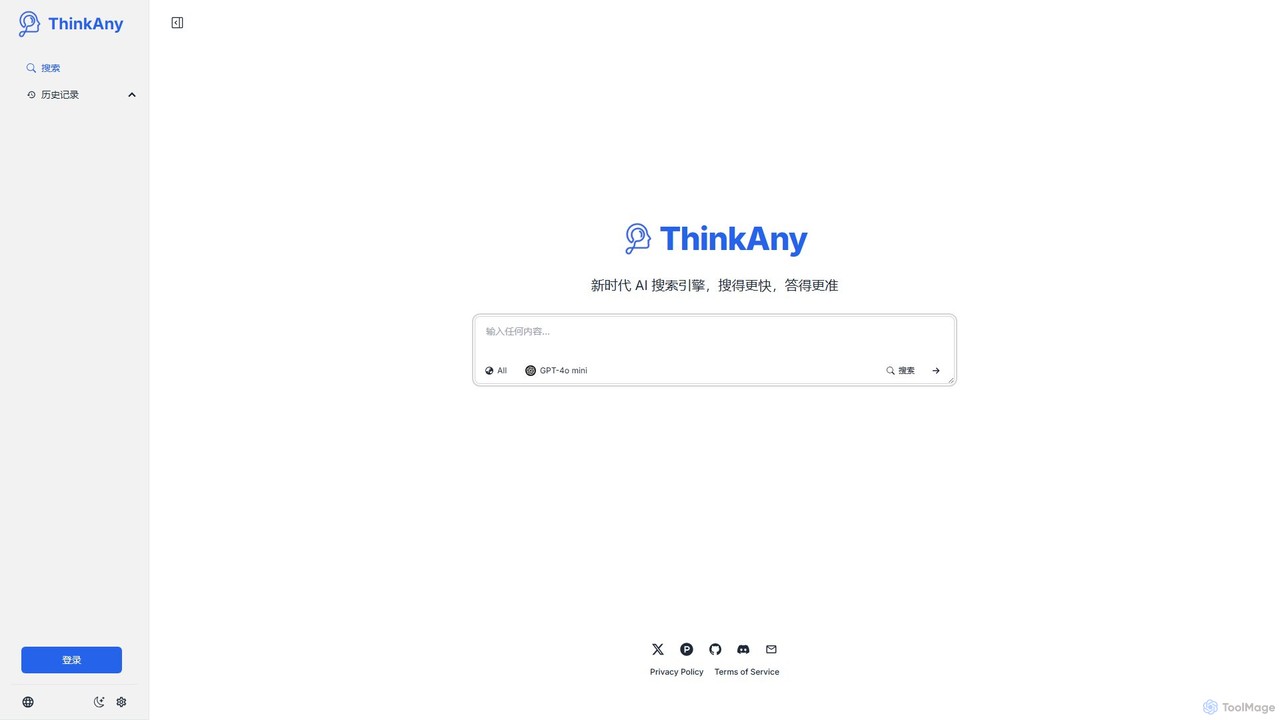
ThinkAny is a new-era AI search engine powered by advanced models like GPT-4o mini. It delivers fast, accurate, and synthesized answers with cited sources, moving beyond traditional link-based search. It's designed for efficient research, learning, and complex problem-solving.

Learning
Visits 9.7KFavorites 119Likes 124
Bing
Freemium

Bing

Bing is an AI-powered search engine by Microsoft, integrated with Copilot to provide direct answers, content creation, and image generation. It goes beyond traditional search by offering conversational AI to help users research, write, plan, and create, all in one place.

Generative Ai
Visits 1.4BFavorites 132Likes 130

About Ai Search Engine

AI Search Engines are advanced tools that leverage artificial intelligence to understand user intent and deliver more relevant, contextualized search results. Unlike traditional keyword-based search, they analyze natural language queries to provide synthesized answers, summaries, and insights directly. This significantly enhances information discovery, making complex research faster and more intuitive for users across various domains.

Core Features

  • Natural Language Understanding (NLU): Interprets complex queries and conversational language, not just keywords.
  • Contextual Relevance: Delivers results based on the broader context and intent of the query, not just exact matches.
  • Synthesized Answers: Provides direct, summarized answers to questions, often citing sources, rather than just a list of links.
  • Information Aggregation: Gathers and processes information from diverse sources, presenting a consolidated view.
  • Personalized Search: Adapts results over time based on user preferences and past interactions.

Use Cases

Researchers can quickly synthesize information from academic papers, marketers can identify emerging trends by analyzing vast datasets, and customer service agents can find precise answers to complex queries in internal knowledge bases.

How to Choose

When selecting an AI Search Engine, consider its NLU capabilities for understanding complex queries, the breadth and depth of its data sources, its ability to provide verifiable citations, integration options with existing workflows, and the level of customization available for specific industry needs.

Featured tool rankings

Ai Search Engine use cases

1

Conducting In-depth Academic Research

Academic researchers often spend countless hours sifting through journals and papers. An AI Search Engine allows them to input complex research questions in natural language, receiving synthesized summaries, key findings, and direct links to relevant sections across multiple sources. This significantly reduces literature review time, enabling faster hypothesis generation and evidence gathering for studies.

2

Market Trend Analysis for Business Strategy

Marketing professionals and business strategists need to stay ahead of industry trends. By using an AI Search Engine, they can analyze vast amounts of online data, news articles, and social media discussions to identify emerging patterns, consumer sentiment shifts, and competitive landscapes. The engine can summarize key insights, helping to inform product development and marketing campaigns.

3

Enhancing Customer Support Knowledge Bases

Customer service teams frequently deal with diverse and sometimes ambiguous customer queries. Implementing an AI Search Engine within an internal knowledge base allows agents to quickly find precise answers to complex questions by simply typing them in natural language. This improves response times, ensures consistent information delivery, and reduces agent training overhead.

4

Personalized Content Discovery for Media Consumers

Media consumers often struggle to find content that truly aligns with their interests across various platforms. An AI Search Engine can learn user preferences, browsing history, and explicit feedback to recommend highly personalized articles, videos, and podcasts. This moves beyond simple genre matching, offering a more engaging and relevant content discovery experience.

5

Legal Document Review and Case Preparation

Legal professionals face the daunting task of reviewing extensive legal documents, precedents, and case files. An AI Search Engine can rapidly scan and analyze these documents, identifying relevant clauses, case law, and factual connections based on specific legal questions. This accelerates the discovery process, aids in building stronger arguments, and reduces manual review errors.

6

Competitive Intelligence Gathering

Businesses need to monitor competitors' activities, product launches, and market positioning. An AI Search Engine can continuously track and analyze public information about competitors, providing summarized reports on their strategies, strengths, and weaknesses. This enables companies to react quickly to market changes and refine their own competitive strategies.

Ai Search Engine FAQ

What is an AI Search Engine?

An AI Search Engine is a search tool that uses artificial intelligence, particularly natural language processing (NLP) and machine learning, to understand the intent behind a user's query and provide more relevant, contextualized, and often synthesized results. Unlike traditional keyword-based search, it aims to answer questions directly and aggregate information from various sources.

How does an AI Search Engine differ from a traditional search engine?

The primary difference lies in their approach to queries. Traditional search engines primarily match keywords to indexed web pages, returning a list of links. AI Search Engines, however, interpret the meaning and context of natural language queries, providing direct answers, summaries, and insights, often drawing from multiple sources to synthesize information rather than just listing documents.

What are the main benefits of using an AI Search Engine?

AI Search Engines offer several benefits, including enhanced relevance through intent understanding, faster information discovery by providing direct answers and summaries, improved efficiency in research, and the ability to process complex, conversational queries. They also reduce information overload by aggregating and synthesizing data from diverse sources.

Who can benefit most from using AI Search Engines?

Professionals in fields requiring extensive research and information synthesis, such as academics, journalists, market researchers, legal professionals, and customer support agents, can greatly benefit. Anyone seeking to quickly find precise answers to complex questions or to understand broad topics without sifting through countless links will find these tools valuable.

What should I consider when choosing an AI Search Engine?

Key considerations include the accuracy and depth of its natural language understanding, the breadth and quality of its data sources, its ability to provide verifiable citations, the user interface's intuitiveness, integration capabilities with your existing tools, and its pricing model. Also, assess if it offers specialized features relevant to your specific industry or use case.