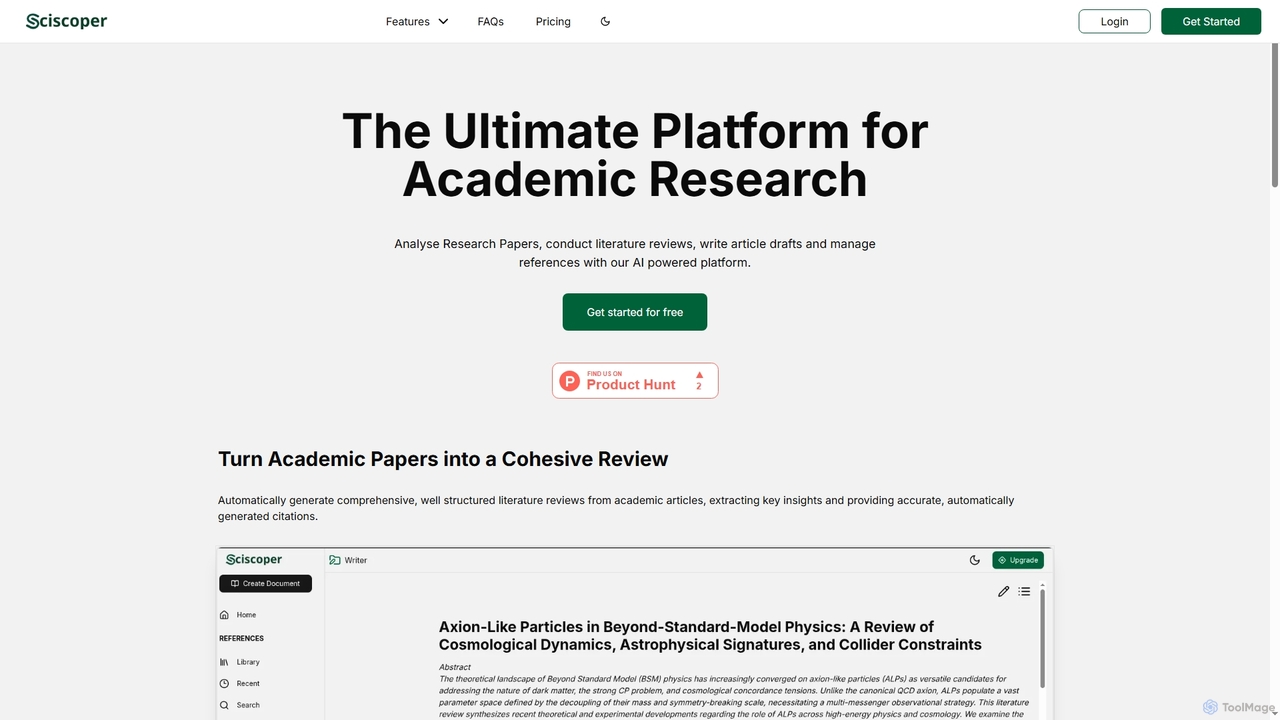
Academic Search tools are specialized AI-powered platforms designed to efficiently discover, analyze, and synthesize scholarly literature across various disciplines. Unlike general search engines, they leverage advanced algorithms to index academic papers, journals, conference proceedings, and theses, providing precise, context-aware results relevant to research. These tools significantly streamline the research process for academics, students, and professionals by offering features like semantic search, citation analysis, and research trend identification.
Core Features
- Semantic Search: Understands the meaning and context of research queries, not just keywords, to retrieve highly relevant academic papers.
- Citation Analysis: Tracks citation networks, identifying influential papers, authors, and research trends within a specific field.
- Research Trend Identification: Utilizes AI to detect emerging topics, hot areas, and shifts in research focus across academic disciplines.
- Advanced Filtering: Offers granular filtering options by publication year, author, institution, journal, and research methodology.
- Content Summarization: Provides AI-generated summaries or key takeaways from research papers, saving time in initial review.
Applicable Scenarios
Academic researchers use these tools to conduct comprehensive literature reviews, identify gaps in existing knowledge, and stay updated with the latest findings in their field. Students leverage them for thesis writing, dissertation research, and finding credible sources for assignments. Professionals in R&D departments utilize academic search to explore foundational research, understand technological advancements, and inform product development strategies.
How to Choose
When selecting an academic search tool, consider its database coverage (journals, disciplines), the sophistication of its AI features (semantic search, summarization), integration capabilities with reference managers, and the accuracy of its citation analysis. Evaluate the user interface for ease of navigation and the availability of advanced filtering options. Finally, assess the pricing model and whether it offers institutional access or individual subscriptions suitable for your needs.