ToolMage
Sign in

Best 1 Bot Protection AI tools for Security

Popular Bot Protection AI tools in Security include AgentShield, helping you work more efficiently.

AgentShield
Freemium

AgentShield

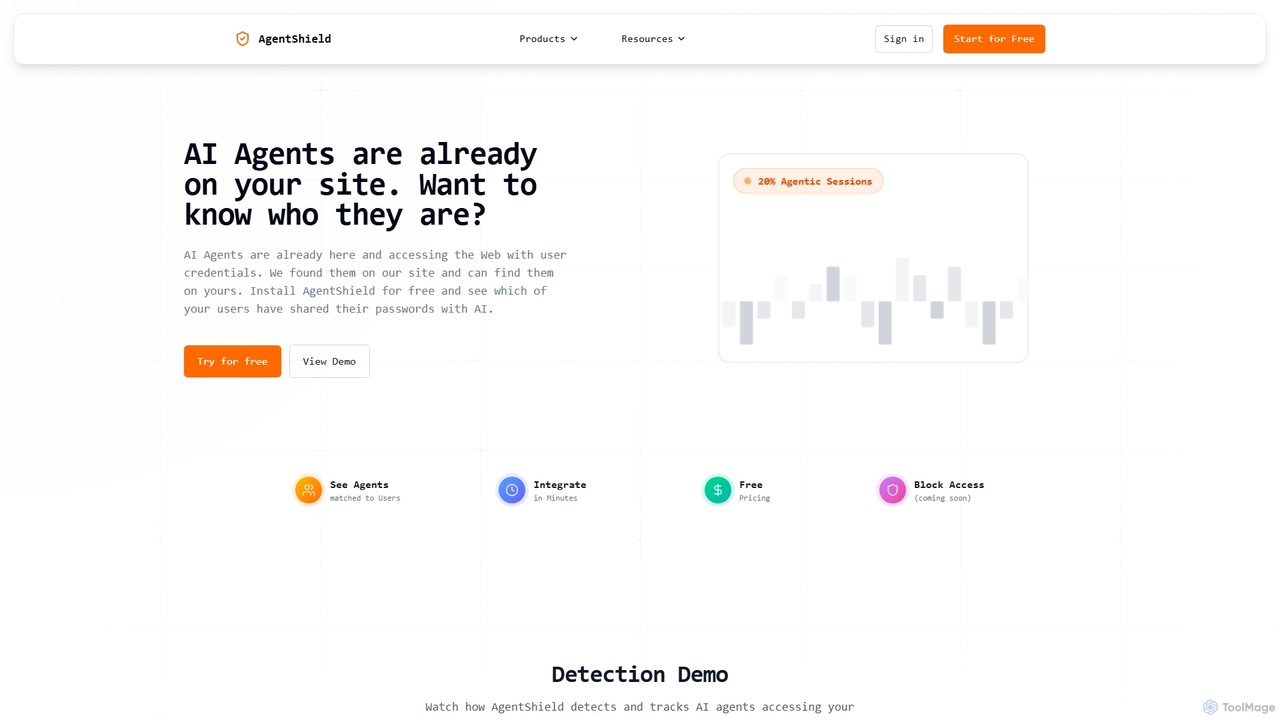
AgentShield is an advanced AI agent detection and protection solution designed to identify and track AI agents accessing your website using user credentials. It offers free, easy installation and real-time, cryptographically verified detection, helping businesses understand who is sharing their site access with AI.

Website Analytics
Visits 4.1KFavorites 102Likes 103

About Bot Protection

Bot Protection tools are a specialized category of security solutions designed to distinguish between human and automated bot traffic on websites, apps, and APIs. They employ advanced techniques like behavioral analysis, device fingerprinting, and AI-powered challenges to identify and mitigate malicious bot activity in real-time. These tools are crucial for defending against threats such as credential stuffing, content scraping, inventory hoarding, and application-layer DDoS attacks. Unlike general firewalls, Bot Protection focuses specifically on the nuanced behavior of sophisticated bots, offering a more targeted defense layer within a broader security strategy.

Core Features

  • Behavioral Analysis: Analyzes user interaction patterns like mouse movements, typing speed, and navigation paths to detect non-human behavior.
  • Device Fingerprinting: Collects browser and device attributes to create unique identifiers for accurately tracking and blocking malicious actors.
  • AI-Powered Challenges: Deploys intelligent, user-friendly CAPTCHA-like tests that are difficult for bots to solve but simple for humans.
  • API Security: Protects application programming interfaces (APIs) from automated abuse, data exfiltration, and other bot-driven attacks.
  • Threat Intelligence Feed: Utilizes a constantly updated database of known malicious IP addresses, botnets, and attack signatures to proactively block threats.

Use Cases

Bot Protection is essential for industries like e-commerce, financial services, online ticketing, and digital publishing. For example, an e-commerce site uses it to prevent scalper bots from buying out limited-edition products, while a financial institution deploys it to secure login pages from automated account takeover attempts.

How to Choose

When selecting a Bot Protection tool, evaluate its detection accuracy (false positive/negative rates) and its impact on user experience and site performance. Consider the ease of integration with your existing infrastructure (CDN, web servers) and the level of customization available for creating specific security rules. Finally, assess the quality of its reporting and analytics to gain visibility into bot traffic patterns.

Featured tool rankings

Bot Protection use cases

1

Prevent Scalper Bots on E-commerce Sites

An e-commerce manager for a popular apparel brand faces inventory hoarding by scalper bots during limited-edition product drops. By implementing a Bot Protection tool, they can analyze traffic in real-time. The system identifies automated scripts by detecting inhumanly fast navigation, high-frequency requests from single IPs, and the use of data center proxies. These bots are then challenged or blocked before they can add items to a cart, ensuring genuine customers have a fair chance to purchase and protecting the brand's reputation for fairness.

2

Secure User Accounts from Credential Stuffing Attacks

A financial services platform needs to protect its customer login portal from account takeover (ATO) attempts. Cybercriminals use bots to test thousands of stolen username/password combinations per minute. A Bot Protection solution monitors login attempt velocity and patterns. When it detects a high rate of failed logins from a distributed network or suspicious device fingerprints, it automatically triggers multi-factor authentication (MFA) or presents an invisible challenge to block the attack without disrupting legitimate users, preventing fraud and data breaches.

3

Stop Competitor Data and Price Scraping

An online travel agency's competitive edge relies on its dynamic pricing for flights and hotels. Competitors deploy scraping bots to systematically harvest this data, undermining their pricing strategy. By deploying a Bot Protection tool, the agency can identify these scrapers. The tool detects non-human browsing patterns, such as visiting thousands of pages in a specific order without any delay, and blocks the offending IP addresses or presents them with CAPTCHAs. This protects their proprietary data, maintains their market position, and prevents server overload from excessive requests.

4

Eliminate Click Fraud in Digital Advertising

A digital marketing team running a large pay-per-click (PPC) campaign notices a high bounce rate and low conversion from a specific traffic source, suspecting click fraud. They integrate a Bot Protection service with their landing pages. The service analyzes incoming traffic for signs of automation, such as traffic from known data centers, use of outdated browser versions, or impossibly consistent click patterns. It then blocks this fraudulent traffic from triggering ad clicks, which cleans up campaign data, stops budget waste, and provides a more accurate measure of marketing ROI.

5

Safeguard APIs from Automated Abuse

A SaaS company provides critical data to its customers via an API, which is being targeted by unauthorized scripts causing server strain and potential data theft. An API-specific Bot Protection solution is deployed. It analyzes API request patterns, token usage, and HTTP headers to distinguish legitimate application traffic from malicious bots. It can then rate-limit, challenge, or block abusive sources without affecting valid API calls from subscribed customers. This ensures API availability, protects sensitive data, and reduces operational costs associated with handling unwanted traffic.

6

Ensure Integrity of Online Polls and Surveys

A media organization runs online polls that are susceptible to manipulation by bots designed to skew results. To maintain credibility, they place a Bot Protection solution on the polling page. The system uses device fingerprinting and behavioral analysis to ensure each vote comes from a unique, human-like session. It can detect and block suspicious, high-frequency voting attempts from the same device or IP range, or those using automation tools. This preserves the integrity of the poll results and upholds the organization's reputation for trustworthy content.

Bot Protection FAQ

What is Bot Protection?

Bot Protection refers to a set of security technologies designed to distinguish between human and automated bot traffic on websites, mobile apps, and APIs. Unlike traditional security measures, it focuses on identifying the intent and behavior of traffic. It uses techniques like behavioral analysis, device fingerprinting, and AI-powered challenges to block malicious bots responsible for activities like credential stuffing, content scraping, and inventory hoarding, while allowing legitimate bots like search engine crawlers to operate.

How do I choose the right Bot Protection tool?

To choose the right tool, consider these key factors:

  • Detection Accuracy: Look for a solution with low false positive (blocking real users) and false negative (missing bad bots) rates. A multi-layered approach using behavioral analysis and fingerprinting is often more effective.
  • Performance Impact: Ensure the tool does not introduce significant latency that could harm user experience and SEO rankings.
  • Integration: Check for compatibility with your existing technology stack, such as your CDN, web server, and cloud provider.
  • Customization and Reporting: The ability to create custom rules and access detailed analytics on bot traffic is crucial for adapting to new threats and understanding your security posture.
What's the difference between a WAF and Bot Protection?

A Web Application Firewall (WAF) and Bot Protection are both security tools, but they address different threats. A WAF acts like a filter for web traffic, protecting against known vulnerabilities and application-layer attacks like SQL injection and Cross-Site Scripting (XSS). It focuses on the 'what' of the request. In contrast, Bot Protection focuses on the 'who'—determining if the user is a human or a bot. It analyzes behavior and identity to stop sophisticated automated threats that a WAF might miss. They are complementary and often used together for comprehensive security.

Can Bot Protection block good bots like Googlebot?

Reputable Bot Protection solutions are designed to distinguish between good bots and bad bots. They maintain and regularly update whitelists of known, legitimate bots such as search engine crawlers (e.g., Googlebot, Bingbot) and other essential services. This ensures that your site's SEO performance and critical automated functions are not negatively impacted. Most tools also allow you to create custom rules to allow specific partner bots or internal automation tools, giving you full control over what is permitted.

Who needs to use Bot Protection tools?

Any online business whose revenue, data, or user experience is threatened by automated attacks should use Bot Protection. This is especially critical for:

  • E-commerce: To prevent inventory hoarding, price scraping, and carding fraud.
  • Financial Services: To stop account takeover attempts, credential stuffing, and application fraud.
  • Online Publishing & Media: To prevent content scraping and ad fraud.
  • Ticketing & Travel: To block scalper bots that buy up tickets and inventory unfairly.

Essentially, if your platform has valuable assets or user accounts, it is a target for malicious bots.