StreamerSuite
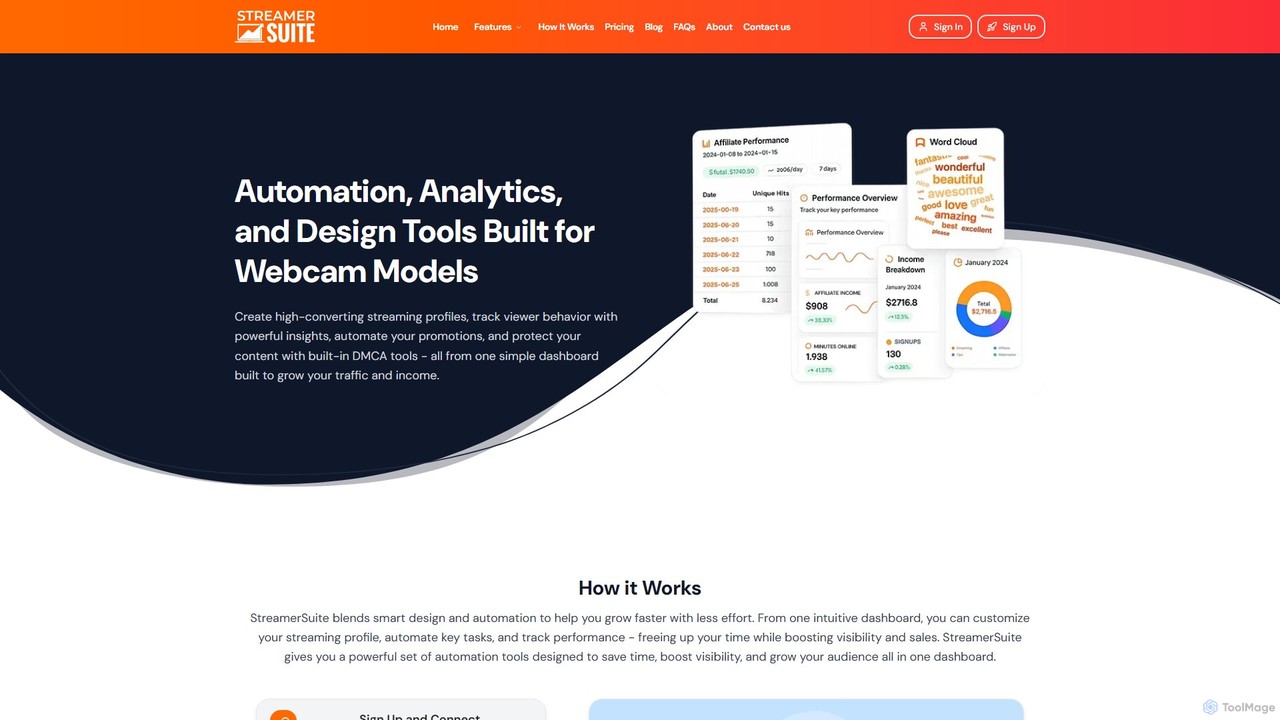
An all-in-one toolkit for streamers and content creators, offering automation, analytics, custom profile design, and DMCA content protection. …
An all-in-one toolkit for streamers and content creators, offering automation, analytics, custom profile design, and DMCA content protection. StreamerSuite helps grow your audience, increase income, and protect your brand with a suite of powerful, easy-to-use tools managed from a single dashboard.
About Content Protection
AI Content Protection tools are a specialized category of security software designed to safeguard digital assets from unauthorized use, copying, and distribution. They leverage artificial intelligence for advanced techniques like dynamic watermarking, plagiarism detection, and intelligent access control. These tools are crucial for creators, businesses, and educational institutions to protect their intellectual property, maintain content integrity, and secure revenue streams. Unlike general security tools that focus on network threats, AI Content Protection solutions operate at the file level, offering granular control over specific content.
Core Features
- AI-Powered Plagiarism Detection: Scans vast databases and the web to identify copied or unoriginal content with high accuracy.
- Dynamic Digital Watermarking: Embeds invisible or visible identifiers into images, videos, and documents to trace ownership and deter theft.
- Intelligent Access Control: Manages permissions based on user behavior, location, and device to prevent unauthorized sharing.
- Content Encryption & DRM: Secures files with robust encryption and applies Digital Rights Management (DRM) policies to control usage.
Use Cases
Educational institutions use these tools to ensure academic integrity by checking student submissions for plagiarism. Media companies and online course creators rely on them to protect premium video and audio content from piracy. Additionally, corporations use AI Content Protection to secure sensitive internal documents, research data, and training materials from leaks.
How to Choose
When selecting a tool, first consider the types of content you need to protect (text, image, video). Evaluate the tool's detection accuracy for plagiarism or its watermarking robustness. Check for integration capabilities with your existing platforms, such as an LMS or CMS, and assess the scalability of its access control policies for your user base.
Content ProtectionUse Cases
Protecting Online Courses from Piracy
An e-learning provider invests significant resources into creating high-quality video courses. To prevent revenue loss from piracy, they use an AI Content Protection tool. The platform automatically applies a dynamic, invisible watermark to each video stream, embedding the specific user's ID. It also encrypts the video files and uses DRM policies to block screen recording software and prevent unauthorized downloads. This multi-layered approach ensures that only paying subscribers can access the content as intended, significantly reducing the risk of courses being illegally shared on other platforms.
Ensuring Academic Integrity with Plagiarism Detection
A university needs to uphold academic standards across thousands of student submissions each semester. They integrate an AI-powered plagiarism checker into their Learning Management System (LMS). When a student submits an essay, the tool automatically scans the document and compares it against a vast database of academic journals, publications, and billions of web pages. The AI provides a detailed originality report, highlighting matching text and its source. This allows professors to quickly identify potential plagiarism, educate students on proper citation, and maintain the institution's academic integrity.
Securing Confidential Business Documents
A corporate legal team needs to share sensitive contracts with external partners for review. To prevent leaks, they use a content protection service. Before sending, they upload the document and apply specific DRM policies: disable printing and copying, set an expiration date for access, and restrict viewing to specific IP addresses. The document is encrypted, and only authorized recipients can open it after verifying their identity. This ensures that confidential information remains secure and auditable, even when shared outside the company's network.
Safeguarding Digital Art and Photography
A professional photographer displays their portfolio on their website to attract clients. To prevent their high-resolution images from being stolen and used without permission, they use an AI watermarking tool. The tool intelligently analyzes each photo to place a semi-transparent watermark in a location that is difficult to crop or digitally remove without noticeably degrading the image. For private client galleries, they use invisible forensic watermarking, which embeds a unique ID into the image data itself, allowing them to trace the source of any unauthorized sharing.
Preventing Leaks of Pre-Release Media Content
A film studio needs to distribute pre-release screeners to critics and award voters. Leaks at this stage can be financially devastating. They use a secure content delivery platform that applies forensic watermarking. Each copy of the film is uniquely and invisibly marked with the recipient's details. Access is also time-limited and restricted to specific devices. If a copy appears online, the studio can analyze the leaked file, instantly identify the watermark, and pinpoint the exact source of the breach, holding the responsible party accountable.
Managing Brand Asset Usage for Marketing Teams
A global marketing team manages thousands of brand assets like logos, ad templates, and campaign photos. To ensure consistency and prevent misuse, they use a Digital Asset Management (DAM) system with integrated content protection. The system uses AI to automatically tag assets, making them easy to find. More importantly, it allows administrators to set granular permissions. For example, a freelance designer might only be able to view and download low-resolution versions, while regional marketing heads can access and edit high-resolution source files. This prevents outdated or incorrect brand assets from being used in public campaigns.