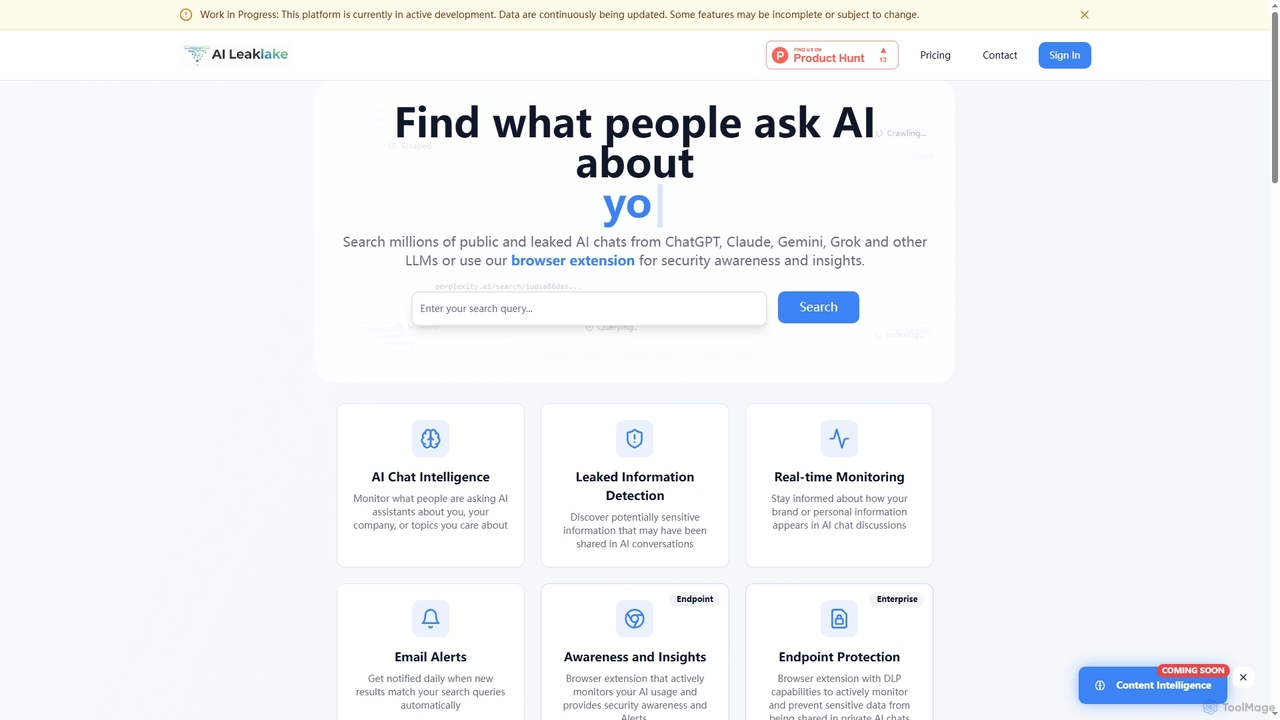
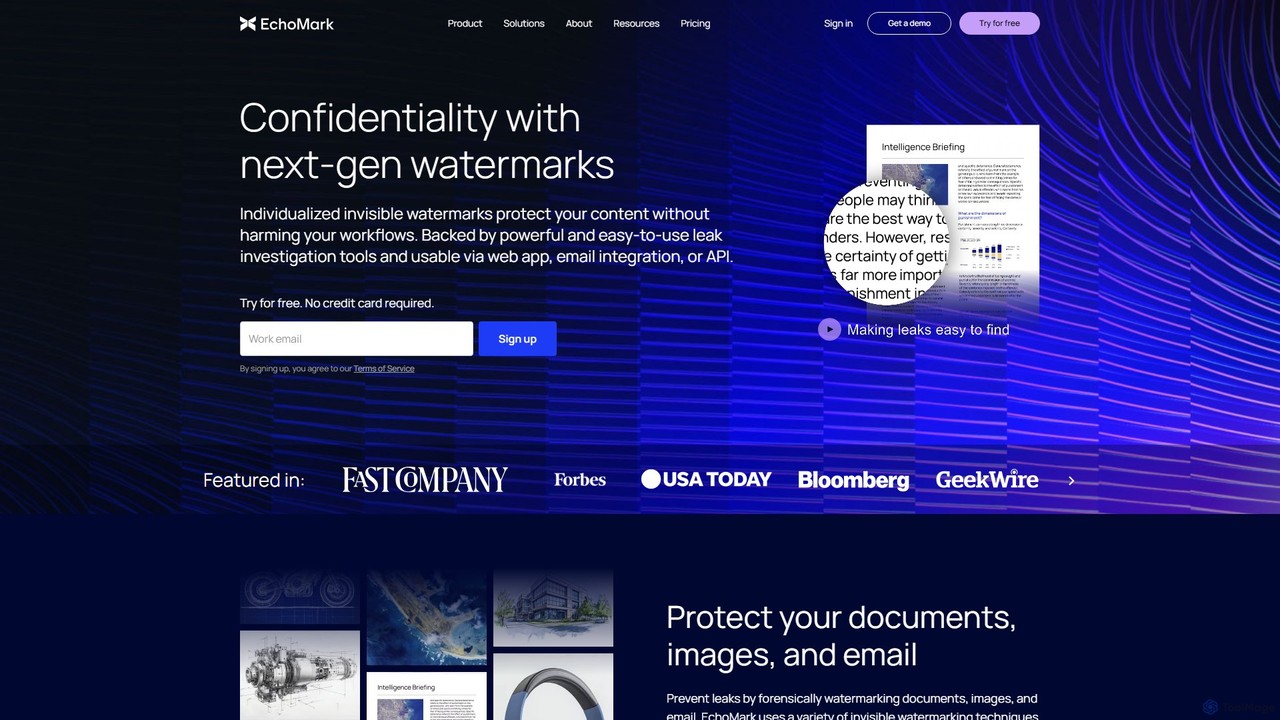
Data Leak Prevention (DLP) tools are AI-powered solutions designed to identify, monitor, and prevent sensitive information from unauthorized egress from an organization's network. Leveraging advanced machine learning and natural language processing, these tools analyze data in motion, at rest, and in use across various channels. Their primary goal is to safeguard confidential data, intellectual property, and personally identifiable information (PII) against accidental exposure or malicious theft, thereby ensuring regulatory compliance and maintaining business integrity.
Core Features
- Content Inspection & Classification: Automatically identifies and categorizes sensitive data based on predefined policies and patterns.
- Endpoint Monitoring: Tracks data movement and user activities on devices like laptops, desktops, and mobile phones.
- Network & Cloud Protection: Monitors data flowing across network perimeters and stored within cloud applications and services.
- User Behavior Analytics (UBA): Detects anomalous user activities that might indicate an insider threat or compromised account.
- Automated Remediation: Enforces policies by blocking, encrypting, or quarantining data leaks in real-time.
Applicable Scenarios
Organizations across finance, healthcare, legal, and technology sectors heavily rely on DLP to protect critical assets. It's essential for compliance officers ensuring adherence to regulations like GDPR or HIPAA, IT security teams preventing insider threats, and legal departments safeguarding client confidentiality. DLP tools are deployed to secure sensitive customer data, proprietary source code, financial records, and patient health information from leaving controlled environments.
How to Choose
When selecting a Data Leak Prevention solution, consider its coverage across endpoints, networks, and cloud environments to match your infrastructure. Evaluate the accuracy of its detection capabilities to minimize false positives and ensure effective policy enforcement. Assess its integration potential with your existing security ecosystem, such as SIEM or identity management systems, for a unified approach. Finally, review its compliance reporting features and scalability to meet your organization's evolving data protection needs.