ThreatCluster
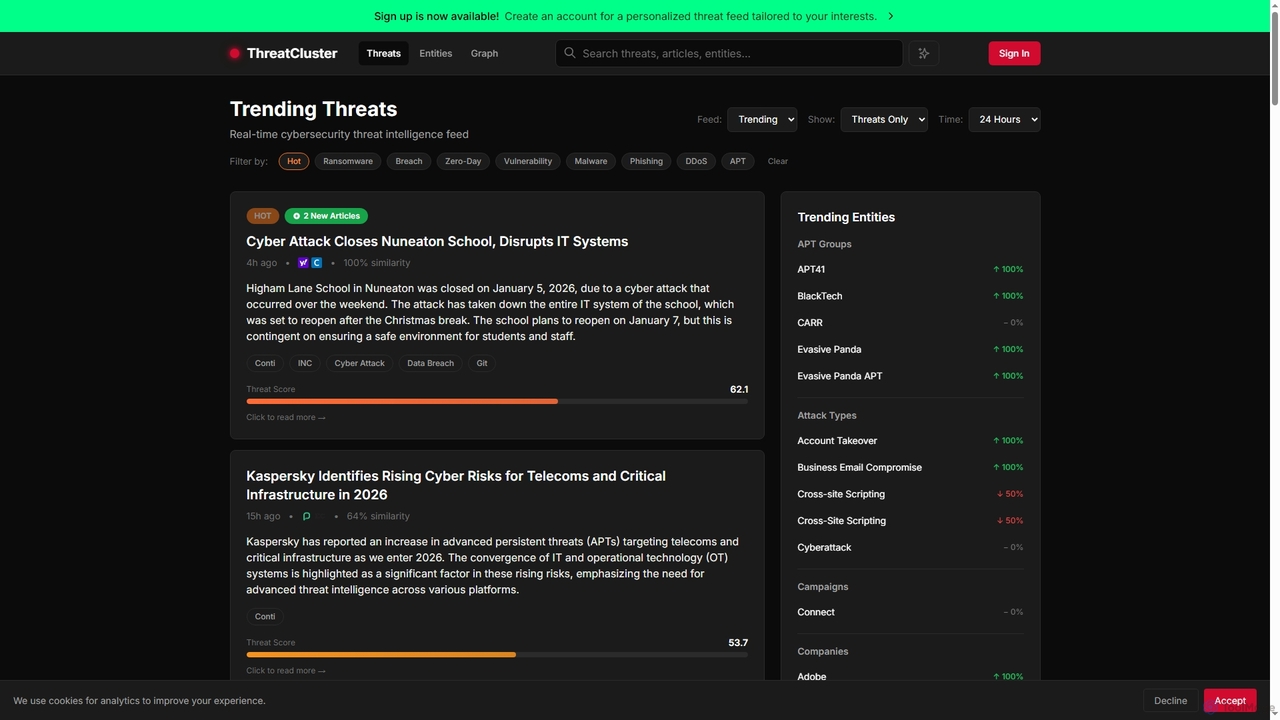
ThreatCluster is a real-time cybersecurity threat intelligence platform that aggregates, clusters, and scores threats from over 1000 sources …
ThreatCluster is a real-time cybersecurity threat intelligence platform that aggregates, clusters, and scores threats from over 1000 sources daily, providing a focused, actionable feed without information overload.
Securly
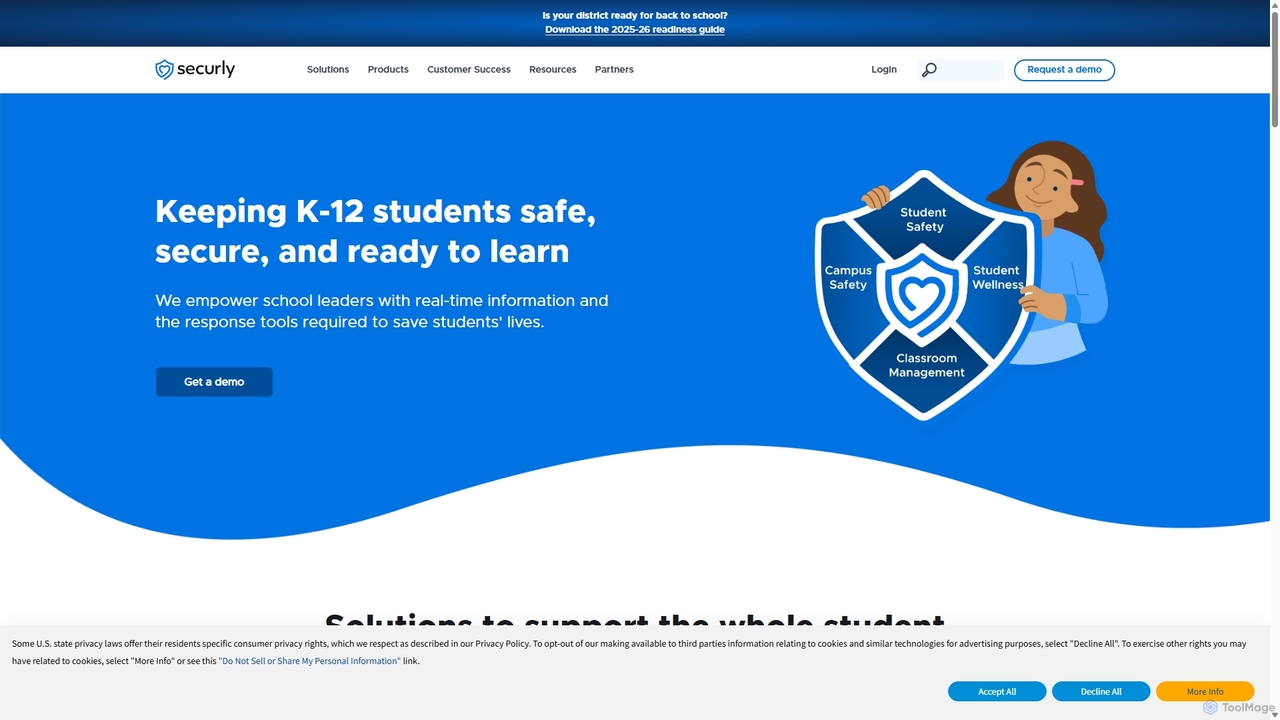
Securly is a comprehensive AI-powered student safety and wellness platform for K-12 schools. It provides web filtering, wellness …
Securly is a comprehensive AI-powered student safety and wellness platform for K-12 schools. It provides web filtering, wellness monitoring, classroom management, and campus safety solutions to create a secure learning environment. Securly helps educators identify at-risk students, prevent bullying and self-harm, and engage parents through dedicated tools, ensuring students are safe, secure, and ready to learn.
Bark
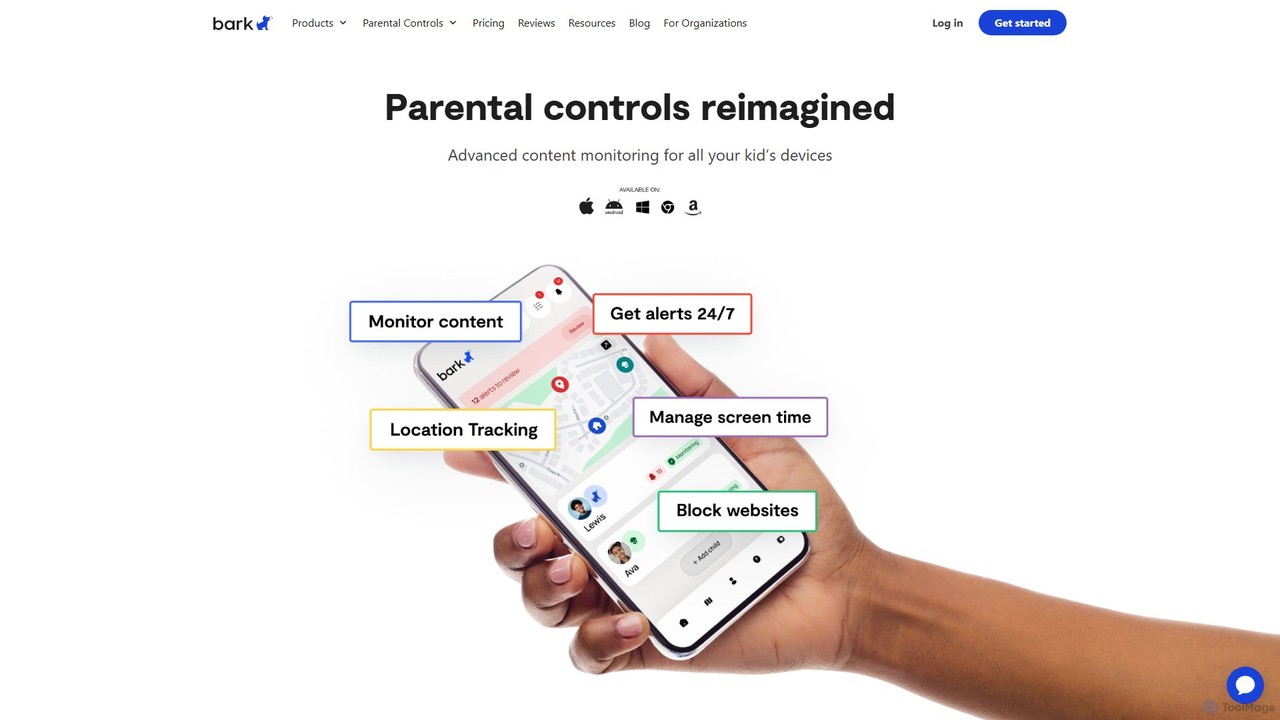
Bark is an AI-powered parental control service that helps families protect their children online. It monitors texts, social …
Bark is an AI-powered parental control service that helps families protect their children online. It monitors texts, social media, and emails for potential dangers like cyberbullying and self-harm, while also providing screen time management, web filtering, and location tracking to ensure comprehensive digital safety.
About Monitoring
AI Monitoring tools are a class of security software that uses machine learning to continuously analyze system activity and identify potential threats. These tools employ behavioral analysis and anomaly detection to spot unusual patterns that deviate from established baselines, unlike traditional rule-based systems. Their primary value is in proactively detecting sophisticated attacks, reducing alert fatigue from false positives, and enabling faster incident response. This allows security teams to maintain a vigilant posture against evolving cyber threats with greater accuracy and efficiency.
Core Features
- Behavioral Anomaly Detection: Automatically identifies unusual activities by learning normal patterns of users, devices, and networks.
- Predictive Threat Intelligence: Analyzes vast datasets to forecast potential attack vectors and prioritize vulnerabilities.
- Automated Log Analysis: Processes and correlates logs from diverse sources to uncover subtle signs of a security breach.
- Real-time Alerting & Triage: Generates high-fidelity alerts for suspicious events and helps prioritize them based on risk level.
Use Cases
Primarily used by Security Operations Center (SOC) analysts, IT administrators, and compliance officers in sectors like finance, healthcare, and e-commerce. They are crucial for monitoring cloud infrastructure, protecting sensitive data, and ensuring regulatory compliance by providing continuous visibility into system security.
How to Choose
When selecting an AI Monitoring tool, consider its integration capabilities with your existing security stack (like SIEM/SOAR), the accuracy of its detection models to minimize false positives, its scalability to handle your data volume, and the clarity of its reporting for incident investigation.
MonitoringUse Cases
Detecting Insider Threats with Behavioral Analytics
A financial services company uses an AI Monitoring tool to protect sensitive customer data. The tool establishes a baseline of normal data access patterns for each employee. When a user suddenly starts accessing unusual files late at night or attempts to download large volumes of data, the AI flags this as anomalous behavior. This triggers an immediate alert to the security team, allowing them to investigate a potential insider threat or compromised account before a major data breach occurs, significantly reducing risk.
Proactive Threat Hunting in Cloud Environments
A cloud-native tech company deploys an AI Monitoring solution across its AWS infrastructure. The tool continuously analyzes VPC flow logs, CloudTrail events, and application logs. It identifies a subtle, low-and-slow attack pattern where an external IP address makes infrequent connections to multiple non-public ports. A traditional firewall might miss this, but the AI correlates these minor events over time, identifies them as a reconnaissance scan, and alerts the SOC analyst. This enables the team to block the IP and patch potential vulnerabilities before an actual exploit is attempted.
Reducing Alert Fatigue for SOC Teams
A large enterprise's Security Operations Center (SOC) was overwhelmed with thousands of daily alerts from various security tools. After implementing an AI Monitoring platform, the system automatically correlates related low-level alerts into a single, high-context incident. It uses machine learning to filter out false positives, such as benign administrative activities that mimic threats. This reduces the alert volume by over 90%, allowing analysts to focus their time and expertise on investigating genuine, high-risk threats instead of chasing down countless insignificant warnings.
Automating Compliance Monitoring and Reporting
A healthcare organization must comply with strict HIPAA regulations. They use an AI Monitoring tool to continuously check for policy violations, such as unauthorized access to patient records. The tool automatically generates detailed audit logs and compliance reports, mapping system events directly to specific HIPAA controls. This automates a previously manual and error-prone process, providing compliance officers with real-time visibility and verifiable evidence for audits, saving hundreds of hours of work annually.
Identifying Zero-Day Malware Attacks
An e-commerce platform is targeted by a new strain of ransomware that traditional signature-based antivirus software cannot detect. However, their AI Monitoring tool, which focuses on behavior rather than signatures, detects the malware's actions. It observes a process suddenly encrypting files at high speed and attempting to delete shadow copies—actions characteristic of ransomware. The system immediately isolates the affected endpoint from the network and alerts the security team, containing the attack before it can spread and cause widespread damage.
Securing IoT and OT Environments
A manufacturing plant uses an AI Monitoring tool to secure its Operational Technology (OT) network, which includes industrial control systems (ICS) and IoT devices. These devices often lack built-in security. The AI tool learns the normal communication patterns between all devices. When a new, unauthorized device attempts to connect or an existing device starts sending unusual commands, the system flags it as a potential threat. This allows the plant's IT security team to quickly investigate and prevent potential sabotage or disruption of critical manufacturing processes.