Security Best in category 1 results Network AI Tool

Popular AI tools in the Network field of Security include Web Toolset, etc., helping you quickly improve efficiency.

Free
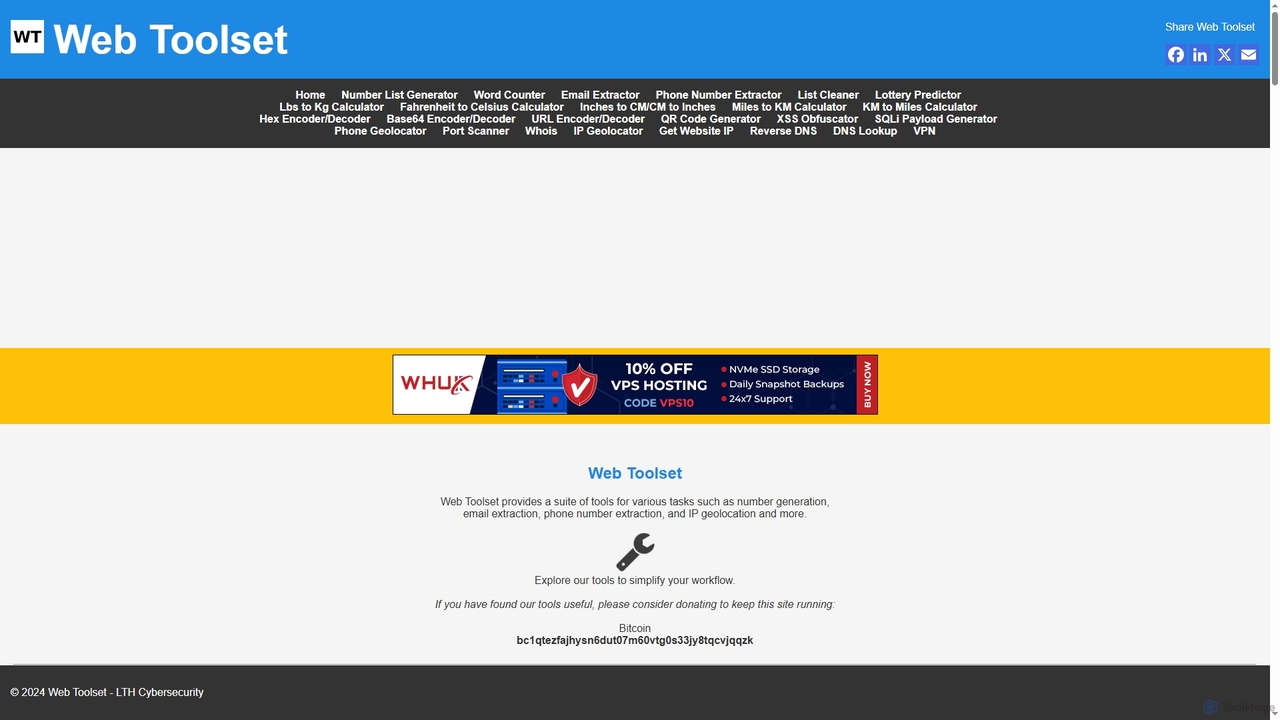
Web Toolset

Web Toolset

A comprehensive suite of free online tools designed for developers, marketers, and security professionals. It offers utilities for …

3.4K

About Network

AI Network tools are a class of security solutions that use machine learning to monitor, analyze, and protect network traffic. These tools establish a baseline of normal network activity and use behavioral analysis to detect anomalies and potential threats in real-time. Their primary value is in identifying sophisticated attacks, such as zero-day exploits and advanced persistent threats (APTs), that evade traditional signature-based defenses. This proactive approach allows for faster threat detection and automated response, significantly strengthening an organization's security posture.

Core Features

  • Anomaly Detection: Uses machine learning to identify unusual patterns or deviations from normal network behavior.
  • Behavioral Analysis: Analyzes traffic patterns to detect malicious activities, even without a known threat signature.
  • Predictive Threat Intelligence: Forecasts potential attacks based on global threat data and internal network trends.
  • Automated Response: Automatically isolates compromised devices or blocks malicious traffic to contain threats instantly.

Use Cases

These tools are crucial for Security Operations Centers (SOCs), enterprise IT departments, and managed security service providers (MSSPs). They are applied in environments with high-value data, such as finance, healthcare, and government, to protect against data breaches and ensure network integrity. Common applications include real-time intrusion detection and automated incident response.

How to Choose

When selecting an AI Network tool, consider its integration capabilities with your existing security stack (e.g., SIEM, firewalls). Evaluate the accuracy of its detection engine and its false positive rate. Also, assess the level of automation it provides for incident response and whether its scalability matches your network's size and traffic volume.

NetworkUse Cases

1

Automated Intrusion Detection for Enterprises

A Security Operations Center (SOC) analyst at a large financial institution is tasked with monitoring vast amounts of network traffic for signs of compromise. Using an AI Network tool, they can automate this process. The AI establishes a baseline of normal data flow and communication patterns. When an attacker attempts to exfiltrate data, causing an unusual spike in outbound traffic to an unknown server, the system instantly flags this anomaly. It can then automatically trigger an alert and isolate the affected endpoint, reducing the mean time to detect (MTTD) from hours to minutes and preventing a major data breach.

2

Identifying Insider Threats with Behavioral Analysis

An IT administrator in a healthcare organization needs to protect sensitive patient records from both external and internal threats. An AI Network tool can monitor internal network traffic for suspicious behavior. For instance, if an employee's account, which normally accesses patient records during business hours, suddenly starts downloading large volumes of data at 3 AM, the AI flags this as anomalous behavior indicative of a potential insider threat or a compromised account. This allows the security team to investigate promptly before a significant data breach occurs.

3

Detecting Zero-Day Malware in Network Traffic

A manufacturing company relies on its operational technology (OT) network, which is a prime target for new malware. Traditional antivirus software, which uses known signatures, cannot detect zero-day attacks. An AI Network tool analyzes network packets for malicious payloads and command-and-control (C2) communication patterns. Even if the malware is new, its behavior—such as attempting to spread laterally across the network or communicating with a suspicious external domain—deviates from normal patterns. The AI detects this behavioral anomaly, quarantines the infected devices, and blocks the C2 traffic, preventing the malware from disrupting production.

4

Optimizing Network Performance and Security Policies

A network administrator for a growing e-commerce platform needs to ensure both high performance and tight security. An AI Network tool can analyze traffic flows to identify bottlenecks and inefficient routing. More importantly, it can model the impact of potential security policy changes. For example, before implementing a new firewall rule, the administrator can use the AI to simulate its effect on application performance and user access. This predictive capability helps in crafting security policies that are effective without inadvertently disrupting business operations, balancing security with performance.

5

Securing IoT and Edge Devices

A smart city project manager oversees thousands of IoT devices like traffic cameras and sensors. These devices are often resource-constrained and cannot run traditional security agents. An AI Network tool provides agentless security by monitoring the network traffic to and from these devices. If a group of cameras suddenly starts communicating with an unauthorized server, a behavior consistent with a botnet infection, the AI system detects this collective anomaly. It can then automatically block the malicious communication at the network level, preventing the botnet from launching a DDoS attack or spreading further.

6

Forensic Analysis and Incident Response

After a security incident, a digital forensics investigator needs to understand the attack's full scope. Instead of manually piecing together logs from dozens of systems, they use an AI Network tool. The tool provides a visualized timeline of the attack, showing the initial point of entry, the lateral movement across the network, and the data that was accessed or exfiltrated. This AI-powered reconstruction provides clear, actionable evidence, drastically reducing the time required for investigation and helping the team to quickly patch vulnerabilities and report the incident accurately.

NetworkFrequently Asked Questions