Akismet
Akismet is an advanced spam protection service that uses machine learning to filter out comment, form, and text …
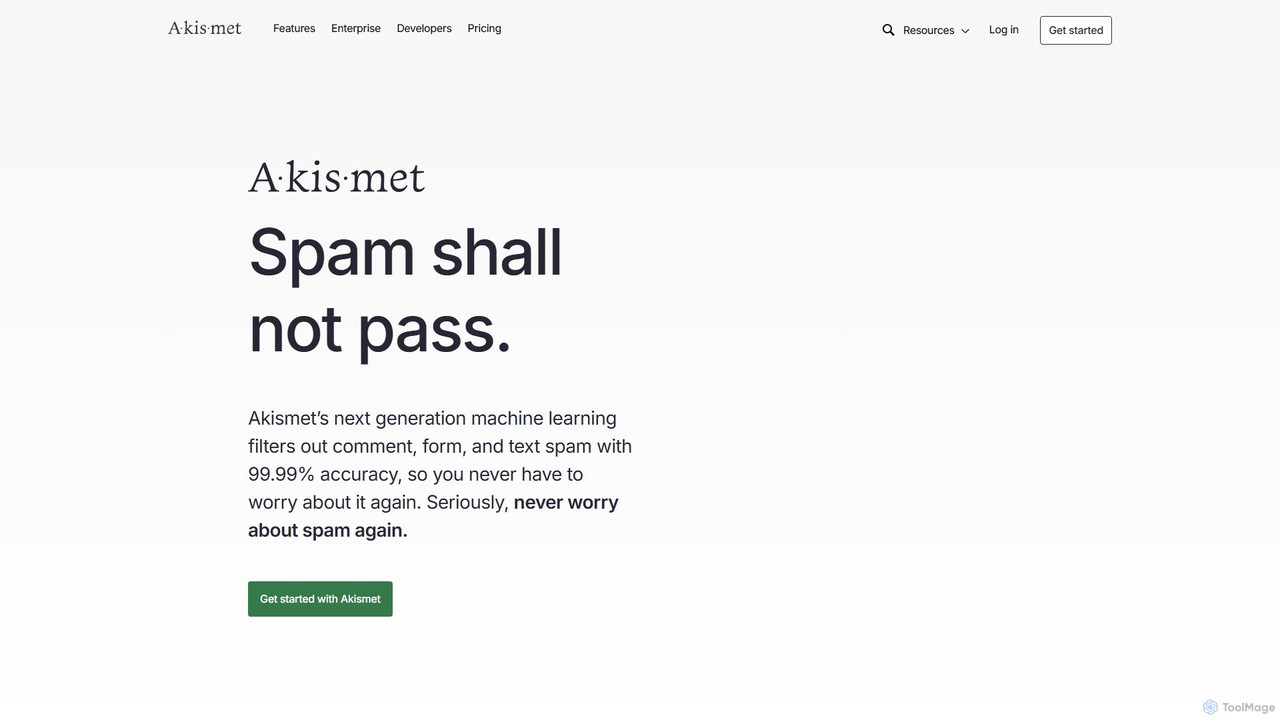
Akismet is an advanced spam protection service that uses machine learning to filter out comment, form, and text spam with 99.99% accuracy. It works silently in the background to protect websites from malicious content without requiring user-facing CAPTCHAs, thus improving user experience and conversion rates. Trusted by millions of websites, it saves time, protects revenue, and ensures cleaner user engagement.
About Spam Protection
AI Spam Protection tools are a specialized category of security software designed to automatically identify and block unsolicited and malicious digital communications. Leveraging machine learning models, natural language processing (NLP), and behavioral analysis, these tools analyze content, sender reputation, and engagement patterns to detect threats with high accuracy. They are crucial for protecting email inboxes, website comment sections, and online forms from phishing attempts, malware distribution, and irrelevant content. Unlike traditional rule-based filters, AI-powered solutions adapt in real-time to new spam tactics, offering a more dynamic and effective defense.
Core Features
- Real-time Threat Analysis: Continuously scans incoming messages and content for spam, phishing, and malware signatures.
- Behavioral & Heuristic Filtering: Analyzes sender behavior, message structure, and link patterns beyond simple keyword matching.
- Adaptive Learning: Improves its detection accuracy over time by learning from user feedback and new global threat data.
- Content & Link Inspection: Scans email attachments and embedded URLs for malicious code or links to fraudulent websites.
- Sender Reputation Scoring: Evaluates the trustworthiness of sending domains and IP addresses to preemptively block known spammers.
Use Cases
These tools are primarily used by businesses to secure corporate email systems, by website administrators to maintain clean comment sections and forums, and by developers to protect web forms from bot submissions. They are essential for any organization looking to maintain digital hygiene and protect against communication-based threats.
How to Choose
When selecting an AI Spam Protection tool, consider the platform you need to protect (email, web, API), the tool's detection accuracy and false positive rates, and its integration capabilities with your existing systems like email servers or a CMS. Also, evaluate the level of customization available for filtering rules and whitelists to tailor the protection to your specific needs.

Spam ProtectionUse Cases
Securing Corporate Email Inboxes
An IT administrator in a medium-sized enterprise needs to manage the daily influx of phishing emails and spam, which pose a major security risk. They deploy an AI Spam Protection tool integrated with their email server. The tool automatically quarantines suspicious emails based on content analysis and sender reputation, significantly reducing the number of malicious emails reaching employee inboxes. This action protects sensitive company data and reduces the time employees waste managing junk mail, enhancing overall productivity and security posture.
Moderating Website and Blog Comments
A content creator running a popular blog faces a constant barrage of spam comments containing malicious links and irrelevant promotions. By integrating an AI spam protection service via a plugin, every new comment is automatically scanned. The AI identifies spam patterns, gibberish text, and known spammer IPs, holding them for moderation or deleting them outright. This keeps the comment section clean, improves the user experience, and protects the site's SEO ranking from being penalized for hosting low-quality links.
Protecting Online Forms from Bot Submissions
An e-commerce marketing team uses a 'Contact Us' form for lead generation, but it's flooded with fake submissions from bots. This pollutes their CRM and wastes sales team resources. They implement an AI spam protection tool on their web forms. The tool uses behavioral analysis, such as typing speed and mouse movements, and invisible challenges to distinguish human users from bots. This effectively blocks automated submissions without requiring users to solve complex CAPTCHAs, ensuring higher quality leads and saving valuable time.
Filtering User-Generated Content on Forums
The community manager for an online forum needs to ensure discussions remain on-topic and free from harmful content. An AI spam protection tool is used to scan every new post and reply in real-time. It flags not only obvious spam but also potential hate speech or policy violations based on contextual understanding. This automates a large part of the moderation workload, allowing the manager to focus on fostering positive community engagement rather than manually sifting through harmful content.
Preventing Fake Account Registrations
A SaaS company offering a free trial is plagued by bots creating thousands of fake accounts to abuse the service. They integrate an AI spam protection API into their sign-up process. The API analyzes registration data in real-time, including email address reputation, IP location, and sign-up velocity, to assign a risk score. High-risk registrations are automatically blocked or flagged for manual review, preserving server resources, ensuring the integrity of user data, and preventing service abuse by automated scripts.
Securing API Endpoints from Abuse
A mobile app developer provides a public API that is being targeted by automated scripts, leading to high server costs and service degradation. They deploy an AI-powered protection layer in front of their API. This tool monitors request patterns in real-time, identifies anomalous traffic typical of bots (like credential stuffing or scraping), and automatically blocks malicious IP addresses. This ensures the API remains available and performant for legitimate users while protecting the backend infrastructure from overload and attack.