Jetpack
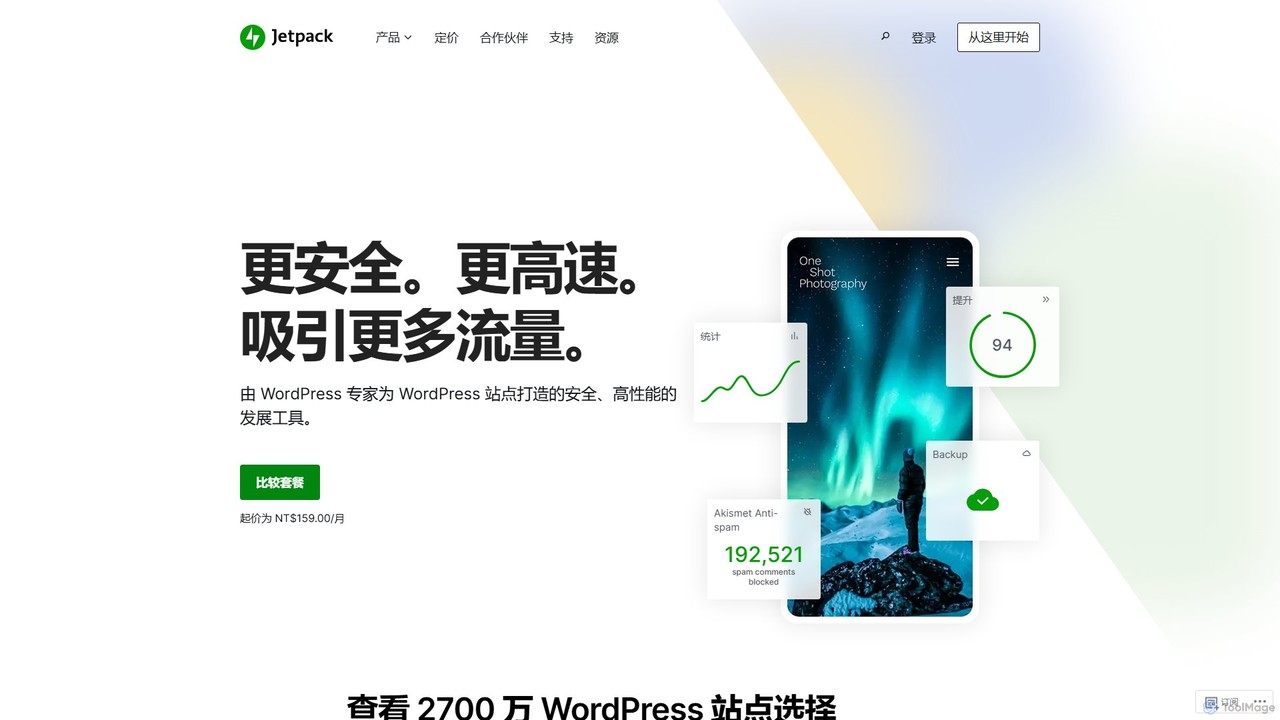
An all-in-one toolkit for WordPress that enhances security, performance, and growth. Jetpack provides real-time backups, malware scanning, a …
An all-in-one toolkit for WordPress that enhances security, performance, and growth. Jetpack provides real-time backups, malware scanning, a global CDN, advanced site stats, and an integrated AI Assistant to help you create content, protect your site, and grow your audience from a single plugin.
About Website Protection
Website Protection tools are AI-powered solutions designed to safeguard websites from a wide array of cyber threats. These tools leverage advanced artificial intelligence and machine learning algorithms to detect, prevent, and mitigate attacks in real-time. Their primary value lies in ensuring website availability, data integrity, and user security against evolving online dangers. They offer a proactive defense, adapting to new threats faster than traditional, rule-based systems.
Core Features
- AI-driven Threat Detection: Identifies sophisticated and zero-day threats by analyzing traffic patterns, behavioral anomalies, and global threat intelligence.
- Web Application Firewall (WAF): Filters and monitors HTTP traffic, blocking malicious requests like SQL injection, cross-site scripting (XSS), and other OWASP Top 10 vulnerabilities.
- DDoS Protection: Mitigates distributed denial-of-service attacks across various layers to ensure continuous website availability and performance.
- Malware & Phishing Prevention: Scans for and blocks malicious code, suspicious links, and phishing attempts that could compromise the website or its users.
- Automated Vulnerability Scanning: Regularly scans the website for security weaknesses, misconfigurations, and outdated components, providing actionable insights for remediation.
Use Cases
Website Protection tools are crucial for any online entity, from small businesses to large enterprises. E-commerce platforms utilize them to secure transactions and customer data, while media outlets and content publishers rely on them to maintain uptime and protect against content defacement. SaaS providers integrate these tools to ensure service availability and safeguard sensitive application data, making them indispensable for maintaining trust and operational continuity.
How to Choose
When selecting a Website Protection solution, consider its comprehensive threat coverage, including WAF, DDoS, and malware protection. Evaluate its performance impact on your website's loading speed and user experience, as well as its ease of integration with your existing infrastructure. Look for robust reporting and analytics capabilities, along with responsive customer support and the ability to scale with your traffic demands. Finally, assess the solution's ability to adapt to new and emerging threats.
Website ProtectionUse Cases
Securing E-commerce Transactions and Customer Data
E-commerce businesses face constant threats of payment fraud, data breaches, and credential stuffing. AI Website Protection tools deploy advanced WAFs and bot detection to monitor transaction flows, identify suspicious activities, and block malicious bots attempting to exploit vulnerabilities or steal customer information. This ensures secure online shopping experiences, protects sensitive financial data, and helps maintain PCI DSS compliance, safeguarding both the business and its customers.
Preventing DDoS Attacks for Online Services
SaaS providers, online gaming platforms, and media streaming services rely heavily on continuous uptime. AI-powered DDoS protection tools analyze incoming traffic patterns in real-time, distinguishing legitimate user requests from malicious volumetric attacks. They automatically filter out attack traffic at the network edge, ensuring that services remain accessible and performant even under heavy assault. This proactive mitigation prevents service disruptions, maintains user satisfaction, and protects revenue streams.
Automated Vulnerability Management for Web Applications
Developers and security teams need to ensure their custom web applications are free from exploitable vulnerabilities. AI Website Protection tools offer automated, continuous vulnerability scanning that identifies security flaws like insecure APIs, misconfigurations, and outdated libraries. These tools provide detailed reports and prioritize remediation efforts, allowing teams to proactively patch weaknesses before attackers can exploit them. This significantly reduces the attack surface and enhances the overall security posture of web applications.
Protecting Content Management Systems (CMS) from Exploits
Website owners using popular CMS platforms like WordPress, Joomla, or Drupal are frequent targets for attackers exploiting plugin vulnerabilities, themes, or brute-force login attempts. AI Website Protection tools integrate with these CMS platforms to provide a layer of defense, detecting and blocking malicious requests aimed at exploiting known weaknesses. They can identify suspicious login patterns, prevent malware injections, and protect against defacement, ensuring the integrity and availability of content-rich websites.
Real-time Threat Intelligence for Enterprise Websites
Large enterprises with complex web infrastructures require sophisticated threat intelligence to stay ahead of evolving cyber threats. AI Website Protection solutions aggregate and analyze global threat data, identifying emerging attack vectors and malicious IPs in real-time. This intelligence is then used to proactively update WAF rules, block suspicious traffic, and alert security teams to potential threats before they can impact the enterprise's web assets. This ensures a robust and adaptive security posture for critical online operations.
Safeguarding User Data and Privacy Compliance
Organizations handling sensitive user data must comply with regulations like GDPR, CCPA, and HIPAA. AI Website Protection tools play a vital role by preventing unauthorized access and data breaches through robust WAFs, intrusion detection systems, and real-time monitoring. They help enforce security policies, encrypt sensitive data in transit, and provide audit trails for compliance reporting. This ensures user privacy, builds trust, and helps avoid costly regulatory penalties by proactively securing data.