Social & Communication Best in category 1 results Chat AI Tool

Popular AI tools in the Chat field of Social & Communication include dating_coach, etc., helping you quickly improve efficiency.

dating_coach

dating_coach

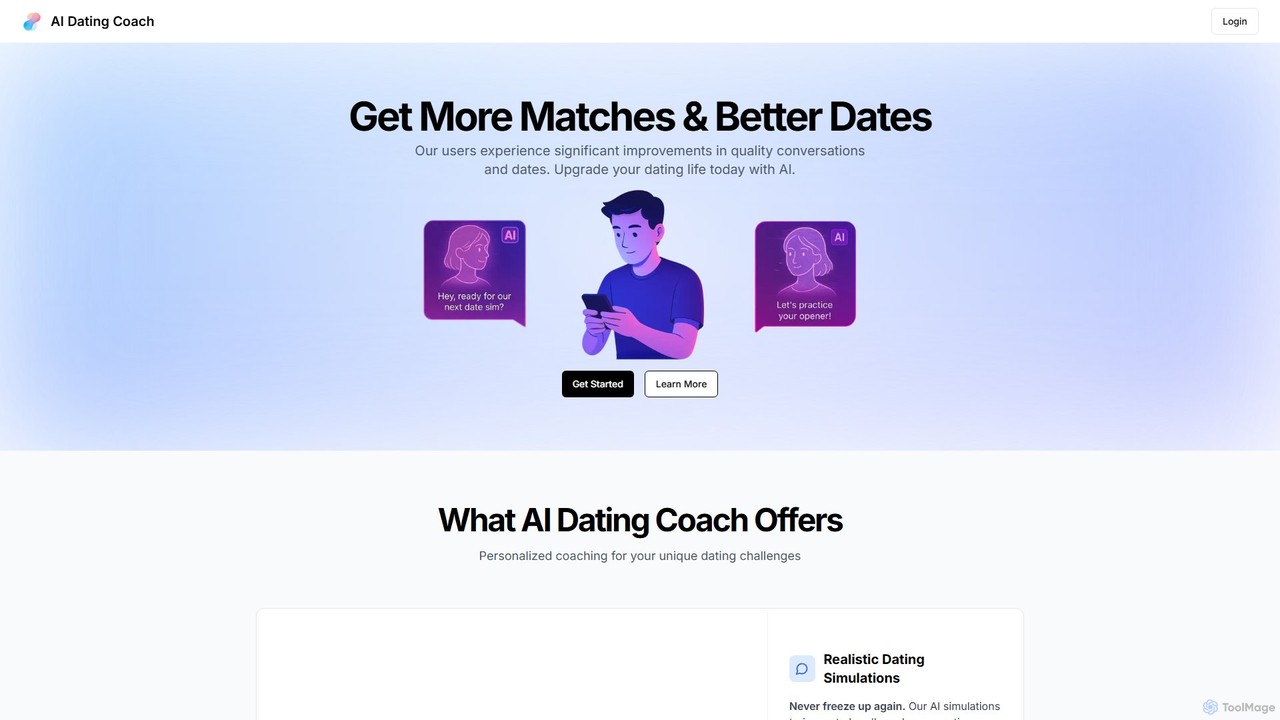
AI Dating Coach by Mimetic Labs offers personalized dating advice and realistic chat simulations to improve your conversation …

2.8K

About Chat

AI Chat tools are applications that leverage artificial intelligence, particularly Natural Language Processing (NLP), to simulate human-like conversations. These tools analyze user input to understand intent, context, and sentiment, enabling them to provide relevant and coherent responses in real time. They are primarily used to automate communication, provide instant support, and engage users across various digital platforms. Unlike simple rule-based bots, AI Chat tools can handle complex queries, learn from interactions, and personalize the user experience.

Core Features

  • Natural Language Understanding (NLU): Accurately interprets user intent, entities, and sentiment from unstructured text.
  • Contextual Memory: Maintains conversation history to provide relevant and follow-up responses.
  • Multi-Channel Integration: Deploys seamlessly across websites, mobile apps, social media, and messaging platforms like Slack or Teams.
  • Knowledge Base Integration: Connects to internal or external data sources to retrieve and deliver accurate information.
  • Automated Workflows: Triggers actions such as scheduling appointments, creating support tickets, or processing orders based on the conversation.

Use Cases

AI Chat tools are widely adopted in customer service for 24/7 support, in marketing for lead generation and qualification, and in sales for initial customer engagement. Internally, companies use them for IT helpdesks and HR onboarding. They are also integral to virtual assistants and educational platforms for interactive learning.

How to Choose

When selecting an AI Chat tool, evaluate the sophistication of its NLU capabilities and its ability to handle complex dialogues. Consider its integration options with your existing CRM, helpdesk, or e-commerce platforms. Assess the tool's scalability, customization options, and the quality of its analytics for monitoring performance and user behavior. Finally, review the pricing model to ensure it aligns with your expected usage volume.

ChatUse Cases

1

Automate 24/7 Customer Support

An e-commerce store manager implements an AI Chat tool on their website to handle common customer inquiries outside of business hours. The chatbot accesses the order database to provide real-time updates on shipping status, explains the return policy by pulling information from the knowledge base, and answers frequently asked questions about products. This frees up the human support team to focus on complex issues during work hours and reduces customer wait times, leading to a 25% increase in customer satisfaction scores.

2

Qualify Leads on a B2B Website

A marketing manager for a SaaS company uses an AI chatbot to engage website visitors. The bot proactively starts conversations, asks qualifying questions (like company size, role, and specific needs), and based on the answers, determines if the visitor is a qualified lead. For high-potential leads, the bot can directly access the sales team's calendars and schedule a product demo, streamlining the lead-to-meeting pipeline and increasing the number of qualified demos booked by 40%.

3

Streamline Internal IT Helpdesk Support

An IT support specialist in a large corporation deploys an AI chatbot within the company's Microsoft Teams environment. Employees can chat with the bot to resolve common issues like resetting passwords, requesting software access, or troubleshooting VPN connections. The bot guides them through step-by-step solutions or automatically creates a support ticket with all necessary information for complex problems. This reduces the ticket volume for the human IT team by 30% and provides employees with instant solutions, minimizing productivity loss.

4

Provide Interactive Educational Tutoring

An online learning platform developer integrates an AI Chat tutor into their language-learning course. Students can practice conversations with the AI, ask grammar questions in their native language, and receive instant feedback on their pronunciation and sentence structure. The AI tutor adapts its difficulty level based on the student's performance, creating a personalized learning path. This provides students with unlimited, on-demand practice, which has been shown to improve conversational fluency by 50% faster than traditional methods alone.

5

Act as a Personalized Shopping Assistant

A fashion retailer's mobile app includes an AI chat feature that acts as a personal stylist. Users can describe what they're looking for (e.g., "a blue dress for a summer wedding"). The AI asks follow-up questions about style, fit, and budget, then searches the product catalog to provide personalized recommendations with images and links. It can also suggest matching accessories. This conversational commerce approach increases user engagement and has led to a 15% higher average order value for sessions that use the chat assistant.

6

Provide Mental Health & Wellness Support

A developer creates a wellness app featuring an AI companion for mental health support. Users can chat with the AI to journal their thoughts, practice cognitive behavioral therapy (CBT) exercises, or engage in guided meditations. The AI is trained to recognize distress signals and can provide immediate coping strategies or suggest contacting a human professional. It offers a non-judgmental space for users to express themselves, making mental wellness support accessible 24/7 and reducing the stigma associated with seeking help.

ChatFrequently Asked Questions