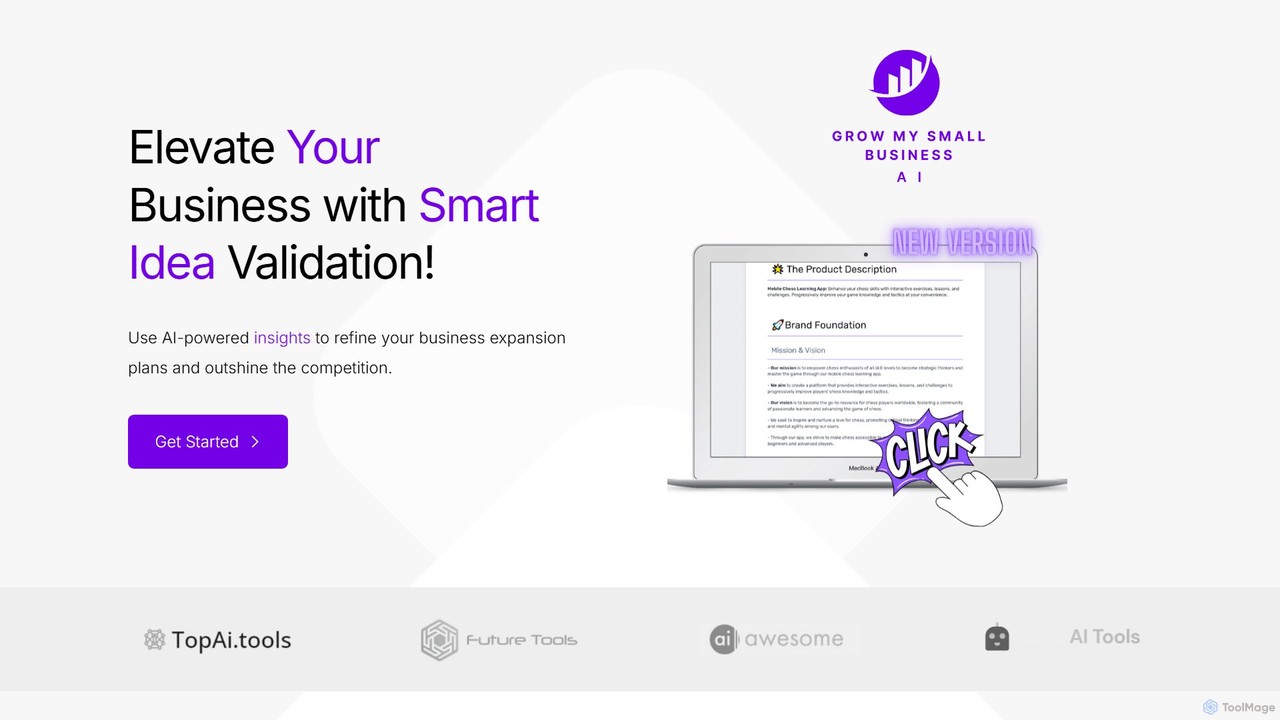
growmysmallbusiness_ai
An AI-powered platform designed for small businesses to validate expansion ideas. It provides in-depth market analysis, competitive insights, …
An AI-powered platform designed for small businesses to validate expansion ideas. It provides in-depth market analysis, competitive insights, risk assessment, and customized growth strategies, acting as an affordable, data-driven business advisor to help you scale effectively and minimize risks.
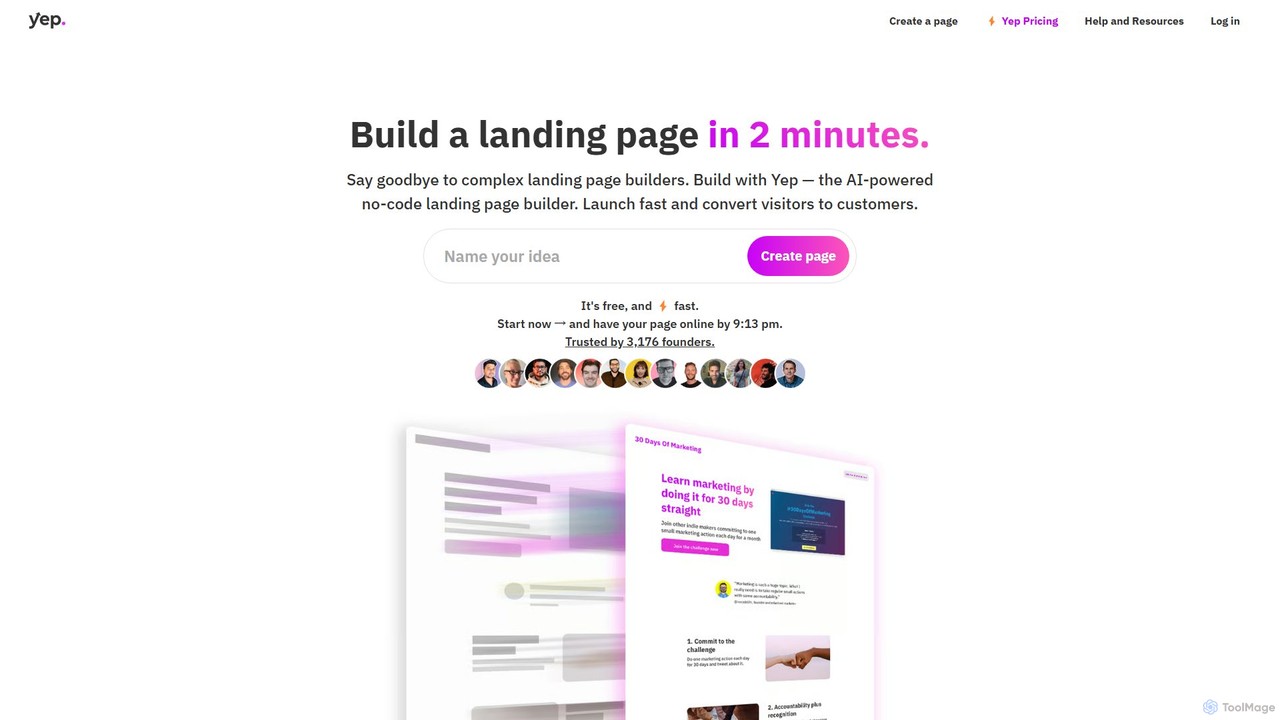
Yep.so
Yep.so is an AI-powered, no-code landing page builder designed for rapid idea validation. It enables founders and creators …
Yep.so is an AI-powered, no-code landing page builder designed for rapid idea validation. It enables founders and creators to go from concept to a live, lead-capturing page in minutes. With features like AI-generated content, pre-built components, email collection, and integrations, Yep.so streamlines the process of launching and testing new ventures without any coding skills. It's the fastest way to build a professional landing page and start collecting signups.
About Idea Validation
Idea Validation tools are AI-powered platforms designed to systematically test the viability and desirability of new business concepts, products, or features. These tools leverage data analysis, user feedback mechanisms, and market insights to assess potential demand and identify critical risks. By providing early insights into product-market fit, they help entrepreneurs and innovators make informed decisions before committing significant resources. This process is crucial for minimizing investment risk within the broader context of startup development.
Core Features
- Market Research & Analysis: AI-driven analysis of market trends, competitor landscapes, and target audience demographics to identify opportunities and gaps.
- User Feedback & Surveys: Tools for creating, distributing, and analyzing surveys, polls, and feedback forms to gather direct insights from potential customers.
- Landing Page & A/B Testing: Platforms to quickly build and test different versions of landing pages or product concepts to gauge user interest and conversion potential.
- Sentiment Analysis: AI algorithms to process and understand the emotional tone and opinions expressed in user reviews, social media, and open-ended feedback.
- Prototyping & Mockup Generation: Features to rapidly create low-fidelity prototypes or mockups for early user testing and visual validation.
Use Cases
Entrepreneurs can validate a new SaaS product concept by testing its core value proposition with a target audience through surveys and mockups, ensuring demand before development. Product managers can assess the market's reception to a new feature idea by running A/B tests on a landing page, measuring user engagement and sign-up interest.
How to Choose
When selecting Idea Validation tools, consider the specific validation methods you need (e.g., surveys, A/B testing, market analysis). Evaluate the tool's data analysis capabilities, ease of integration with existing workflows, and the quality of its audience targeting features. Also, assess the scalability for future projects and the clarity of its reporting dashboards to ensure actionable insights.
Idea ValidationUse Cases
Validating a New SaaS Product Concept
An aspiring entrepreneur uses Idea Validation tools to test the core value proposition of a new SaaS application. They create a simple landing page describing the product, run A/B tests on different messaging, and distribute targeted surveys to potential users to gauge interest, pricing sensitivity, and desired features. This helps confirm market demand and refine the product's direction before any coding begins.
Assessing Demand for a Physical Product
A small business owner wants to launch a new eco-friendly product. They utilize Idea Validation tools to conduct online polls and focus group simulations, gathering feedback on product design, material preferences, and perceived value. They also analyze social media sentiment around similar products to understand consumer pain points and preferences, ensuring the product meets a real market need.
Testing a New Feature for an Existing App
A product manager at a tech company needs to validate a proposed new feature for their mobile application. They use Idea Validation tools to create interactive mockups of the feature, then conduct remote user interviews and usability tests with a segment of their existing user base. This helps identify potential usability issues and confirms the feature's value proposition before committing development resources.
Exploring New Market Segments
A marketing team aims to expand into a new demographic. They deploy Idea Validation tools to analyze online discussions, search trends, and competitor activities within that segment. They also run micro-campaigns with different value propositions to measure engagement and identify the most receptive messaging, minimizing risk for market entry.
Optimizing Business Model & Pricing
A startup founder is unsure about the optimal pricing strategy for their service. They use Idea Validation tools to present different pricing tiers and subscription models to potential customers through surveys and simulated purchase flows. Analyzing the conversion rates and feedback helps them determine the most attractive and sustainable business model.
Gathering Feedback for Content Ideas
A content creator or media company wants to launch a new podcast series or blog topic. They use Idea Validation tools to poll their audience on preferred themes, formats, and guest speakers. Analyzing the responses helps them prioritize content ideas that resonate most strongly, ensuring high engagement and audience growth.