ToolMage
Sign in

Best 7 Writing AI tools for Storytelling

Popular Writing AI tools in Storytelling include BabeChat, Magic Light AI, AI Comic Factory, Storychat, animeshorts, PopStory, and Polybuzz AI, helping you work more efficiently.

Magic Light AI
Freemium

Magic Light AI

Magic Light AI is a powerful AI-driven platform that transforms your text scripts and stories into engaging, full-length videos. From script to screen in minutes, it automates scene generation, character creation, voiceovers, and animation. Ideal for content creators, marketers, and storytellers looking to produce high-quality video content efficiently and affordably, supporting videos up to 50 minutes long.

Image Generation
Visits 908.4KFavorites 145Likes 162
PopStory
Paid

PopStory

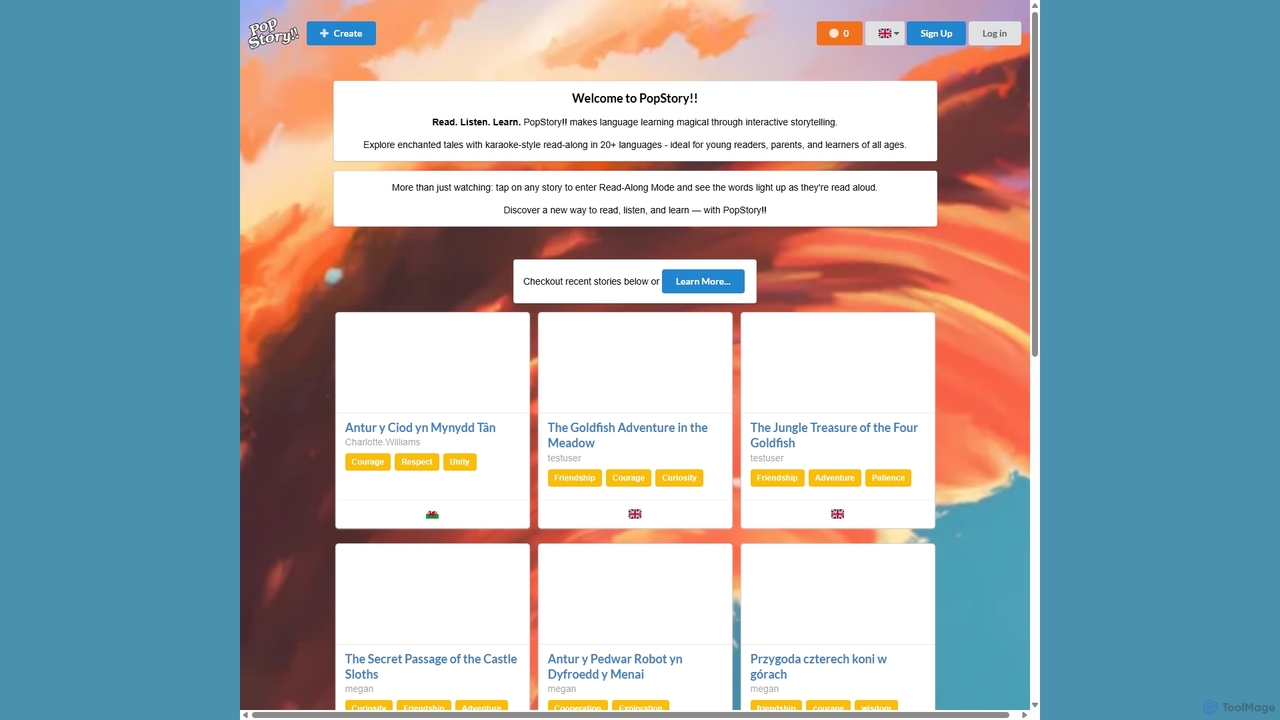
PopStory is an AI-powered platform that generates interactive, multilingual stories for children. It makes language learning magical with karaoke-style read-alongs in over 20 languages. Users can choose characters and settings to create unique tales with audio and images, making it ideal for parents, young readers, and language learners.

Language Learning
Visits 7.7KFavorites 153Likes 120
BabeChat
Freemium

BabeChat

BabeChat is an immersive AI character chat platform that allows users to engage in unlimited role-playing and storytelling. Discover thousands of unique characters created by a vibrant community, or craft your own AI companions. Powered by advanced models like Gemini Pro, it offers a dynamic and creative space for interactive narratives.

Chat
Visits 3MFavorites 131Likes 146
Polybuzz AI
Freemium

Polybuzz AI

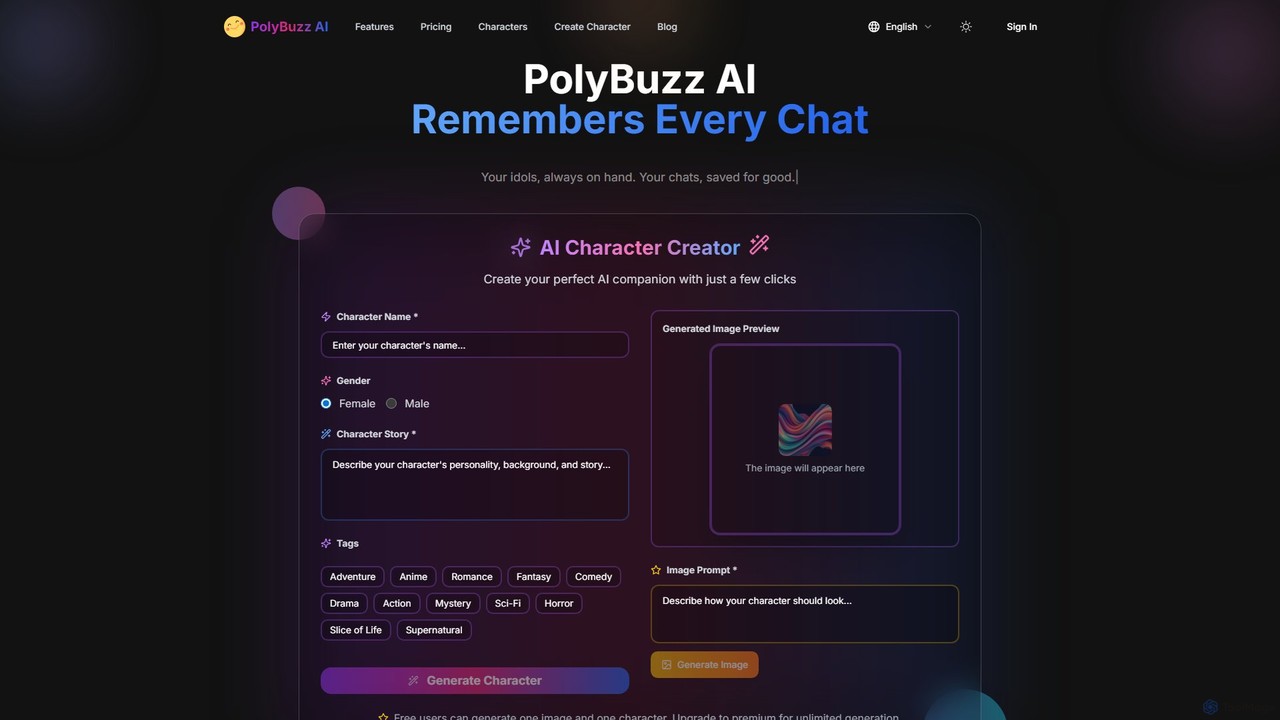
Polybuzz AI is an advanced AI companion platform for deep, evolving conversations. Create unique AI characters or chat with a vast library of figures. Featuring a state-of-the-art long-term memory system, it ensures every chat is continuous and personalized, perfect for entertainment, role-playing, learning, or creative brainstorming.

Ai Companions
Visits 5.7KFavorites 103Likes 117
animeshorts
Freemium

animeshorts

An AI-powered platform for creating anime shorts and comics, with a special focus on the BL (Boys' Love) genre. It offers integrated tools for script generation, storyboarding, and art creation, allowing creators to effortlessly bring their stories to life, from script to finished comic.

Comic Generation
Visits 15.9KFavorites 128Likes 120
Storychat
Freemium

Storychat

Storychat is an AI platform where users can create, share, and monetize interactive stories by chatting with intelligent AI characters. It features a community feed for discovery, advanced character memory for personalized experiences, and options for unfiltered content, positioning itself as a dynamic alternative to Character.AI.

Character Ai
Visits 64.7KFavorites 101Likes 100
AI Comic Factory
Freemium

AI Comic Factory

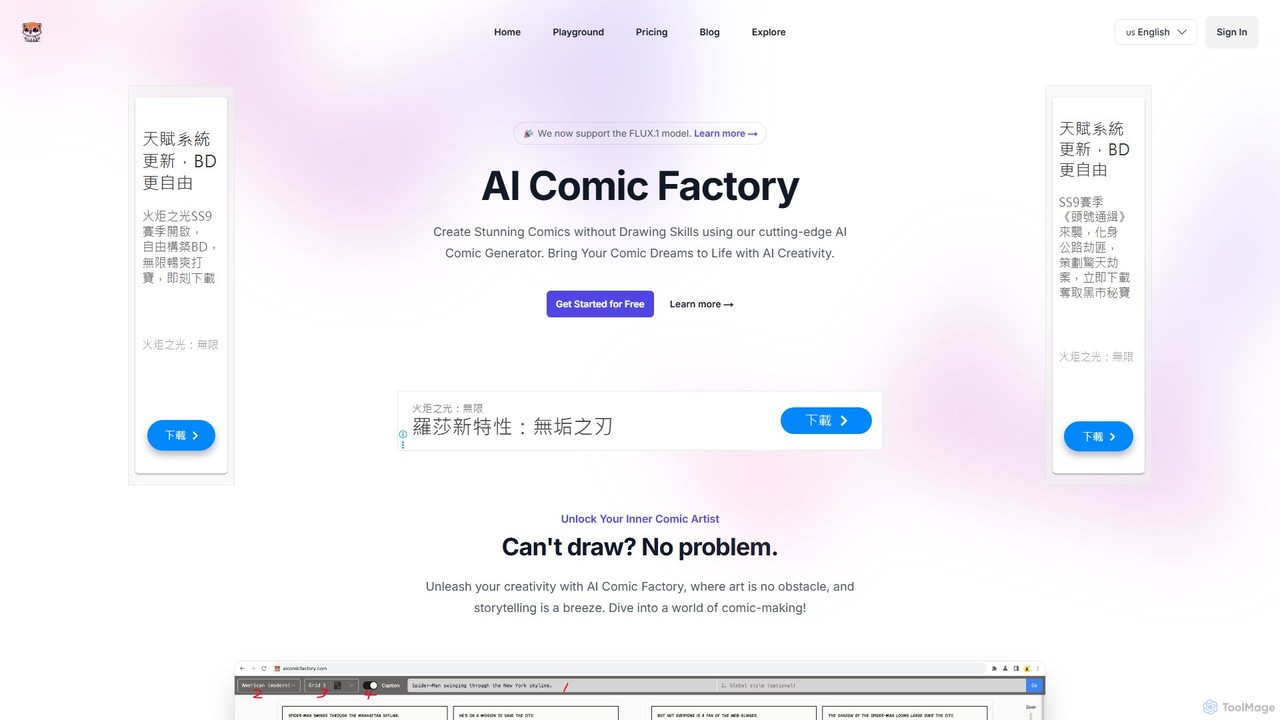
AI Comic Factory is a cutting-edge AI tool that empowers anyone to create stunning comics from simple text descriptions. No drawing skills are required. Choose from over 15 diverse styles, including American, Japanese, and 3D, to bring your stories to life. The platform ensures character consistency across panels, allows for prompt editing, and supports reference image uploads for personalized creations. It's the perfect tool for storytellers, marketers, and comic enthusiasts to visualize their ideas effortlessly.

Entertainment
Visits 132KFavorites 159Likes 138

About Writing

AI Writing tools are applications that leverage artificial intelligence to generate, refine, and structure written content. These tools utilize large language models (LLMs) and natural language processing (NLP) to understand prompts and produce human-like text. They serve as powerful assistants for creating everything from articles and emails to marketing copy and creative stories, helping to overcome writer's block and improve clarity. Their primary value lies in accelerating the content creation process and enhancing the quality of the final text.

Core Features

  • Text Generation: Creates original content, such as paragraphs, blog posts, or social media captions, based on user-provided keywords or prompts.
  • Paraphrasing and Rewriting: Rephrases sentences or entire passages to improve readability, change the tone, or avoid plagiarism.
  • Grammar and Style Enhancement: Goes beyond basic spell-checking to offer suggestions on sentence structure, word choice, and stylistic consistency.
  • Content Summarization: Condenses long documents, articles, or reports into concise summaries, highlighting key points.
  • Tone Adjustment: Modifies the tone of the text to match specific contexts, such as formal, casual, persuasive, or empathetic.

Use Cases

These tools are widely used by content marketers, copywriters, authors, students, and business professionals. Common applications include drafting blog posts, generating product descriptions, composing professional emails, polishing academic papers, and creating engaging social media updates. They are integral to workflows requiring high-volume, quality text production.

How to Choose

When selecting an AI Writing tool, consider the primary type of content you create (e.g., technical vs. creative). Evaluate its integration capabilities with your existing software, such as word processors or content management systems. Assess the quality and coherence of the generated text, the range of supported languages, and whether the pricing model aligns with your usage volume.

Writing use cases

1

Drafting Blog Posts and Articles

A content marketer needs to produce a high volume of articles to drive organic traffic. Using an AI Writing tool, they input a topic, target keywords, and a brief outline. The tool generates a structured first draft, including an introduction, body paragraphs, and a conclusion. This process reduces initial writing time by up to 70%, allowing the marketer to focus on refining the content, adding unique insights, and optimizing for SEO, ultimately increasing content output and quality.

2

Generating Marketing and Ad Copy

An e-commerce manager needs compelling copy for a new product launch across multiple channels (social media ads, product descriptions, email newsletters). They provide the AI tool with key product features and target audience details. The tool generates dozens of copy variations with different tones and calls-to-action. This allows for rapid A/B testing to identify the most effective messaging, significantly improving conversion rates without the need for extensive brainstorming sessions.

3

Polishing Academic Papers and Reports

A researcher is finalizing a scientific paper for publication. They use an AI Writing tool to perform an advanced grammar and style check, ensuring the language is formal, precise, and adheres to academic conventions. The tool suggests alternative phrasing to improve clarity and conciseness, and helps reformat citations. This elevates the paper's professionalism and increases its chances of being accepted by peer-reviewed journals, saving time on manual proofreading.

4

Composing Professional Business Emails

A project manager needs to send a critical update to a client. They draft the key points and use an AI Writing tool to structure them into a professional, clear, and concise email. The tool helps adjust the tone to be assertive yet polite, ensuring the message is well-received. This avoids miscommunication and strengthens client relationships, while also serving as a quick way to draft responses to a high volume of daily emails, improving productivity.

5

Creating Social Media Content Calendars

A social media manager is tasked with planning a month's worth of content. They provide the AI Writing tool with a list of topics, campaign themes, and platform specifications (e.g., character limits for Twitter, professional tone for LinkedIn). The tool generates a variety of post ideas and captions for each day. This automates the most time-consuming part of content planning, freeing up the manager to focus on community engagement, analytics, and overall strategy.

6

Overcoming Writer's Block in Creative Projects

A novelist is stuck on a pivotal scene in their book. They use an AI Writing tool not to write the chapter for them, but as a brainstorming partner. By inputting the character's situation and desired emotional outcome, the tool generates several potential dialogue snippets, plot developments, or descriptive phrases. This sparks new ideas and provides fresh perspectives, helping the author break through the creative block and continue writing with renewed inspiration.

Writing FAQ

What are AI Writing tools?

AI Writing tools are software applications that use artificial intelligence, specifically large language models, to assist with or automate the creation of written text. They can generate content from prompts, rewrite existing text, correct grammar and style, summarize long documents, and adjust the tone of writing. These tools are designed to augment human writing capabilities, not replace them, by speeding up drafts and improving quality.

How to choose the right AI Writing tool?

To choose the right tool, consider these factors:

  • Primary Use Case: Determine if you need it for creative writing, marketing copy, academic papers, or general business communication. Different tools specialize in different areas.
  • Output Quality: Test the tool to see if the generated text is coherent, relevant, and matches your desired style.
  • Integrations: Check if it integrates with your existing workflow, such as Google Docs, Microsoft Word, or WordPress.
  • Features: Look for specific features you need, like plagiarism checking, tone adjustment, or multi-language support.
  • Pricing: Compare pricing models (subscription, pay-per-word) and choose one that fits your budget and usage frequency.
What is the difference between AI Writing tools and grammar checkers?

The primary difference lies in their core function. A traditional grammar checker (like the basic version in word processors) identifies and corrects objective errors based on pre-defined grammatical rules, such as spelling mistakes, punctuation errors, and subject-verb agreement. AI Writing tools do this and much more. They can generate entirely new content, rewrite sentences for clarity or tone, summarize text, and offer stylistic suggestions. In essence, grammar checkers are for proofreading, while AI writers are for both creation and refinement.

Can AI Writing tools replace human writers?

AI Writing tools are best viewed as powerful assistants rather than replacements for human writers. While they excel at generating text quickly, brainstorming ideas, and handling repetitive writing tasks, they currently lack genuine creativity, emotional intelligence, critical thinking, and the ability to conduct original research or fact-check complex topics. The most effective use of these tools is a collaborative one, where a human writer guides the AI, refines its output, and adds the strategic insight and unique voice that only a person can provide.

How do AI Writing tools ensure content originality?

Reputable AI Writing tools generate original content by synthesizing information and language patterns from vast datasets, rather than copying and pasting existing text. They construct sentences and paragraphs from scratch based on the user's prompt. To further ensure originality, many advanced tools include a built-in plagiarism checker that compares the generated text against a massive database of web pages and academic papers. This combination of generative technology and verification helps produce unique content suitable for publication.