ToolMage
Sign in

Best 3 Document Summarizer AI tools for Summarizer

Popular Document Summarizer AI tools in Summarizer include TinaMind, pdfaionline, and GenForge, helping you work more efficiently.

pdfaionline
Freemium

pdfaionline

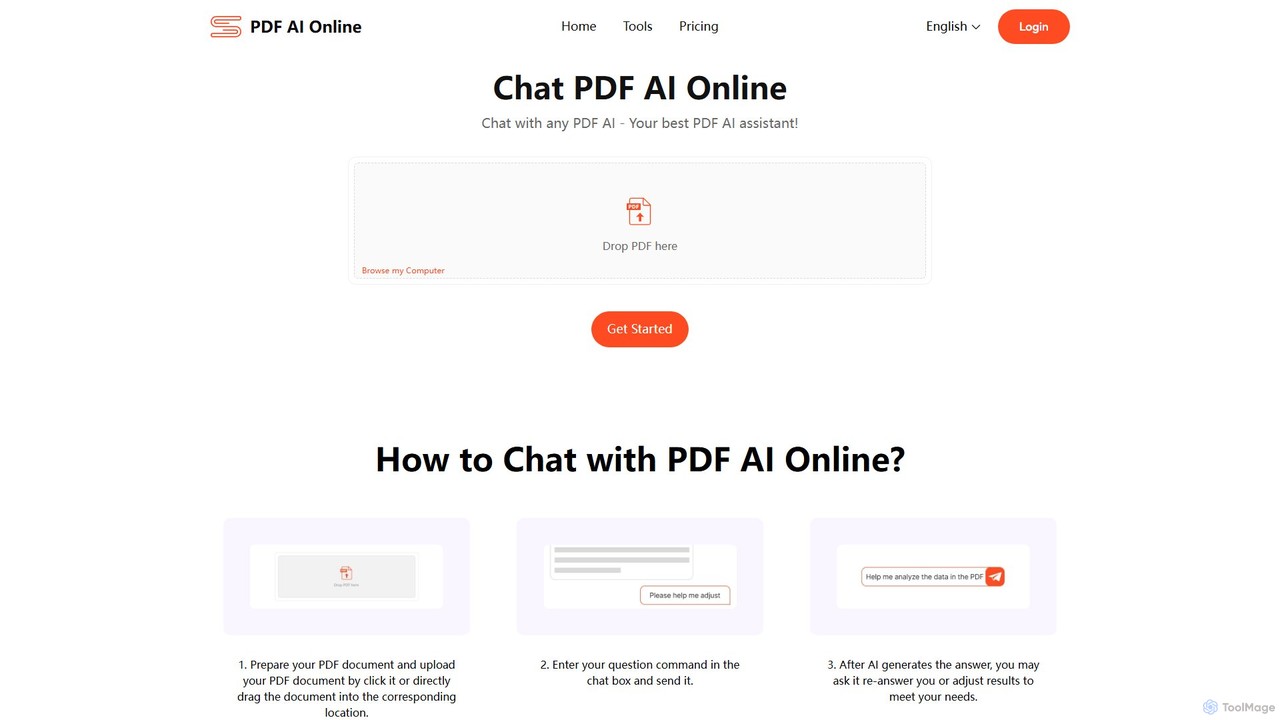
pdfaionline is a comprehensive AI-powered platform for interacting with your PDF documents. Chat with any PDF to get instant answers, summaries, and data analysis. It supports long documents, complex tables, and offers features like editing, mind mapping, and translation to over 100 languages. Powered by advanced models like GPT-4o and Claude-3, it ensures high accuracy and efficiency while prioritizing user data security.

Data Extraction
Visits 5.5KFavorites 79Likes 66
TinaMind
Freemium

TinaMind

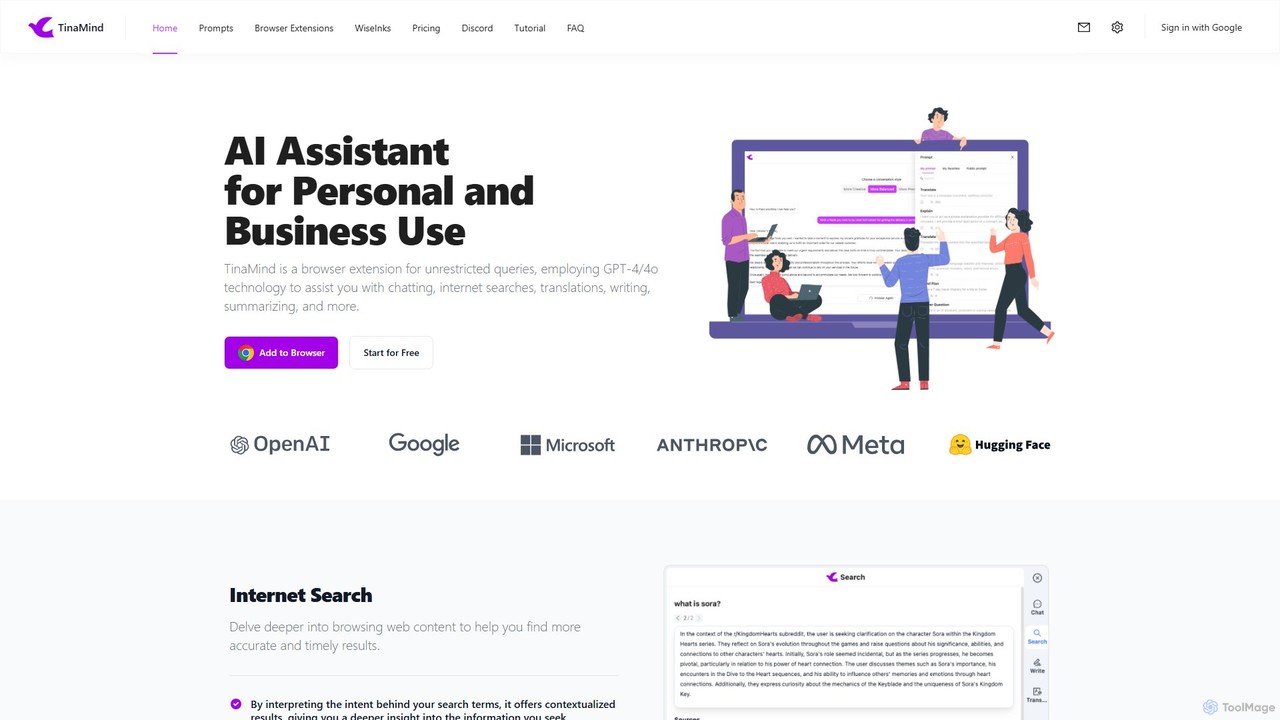
TinaMind is an AI-powered browser extension that enhances your productivity with GPT-4/4o. It acts as an all-in-one assistant for intelligent web search, document and YouTube summarization, content writing, high-quality translation, and efficient prompt management. Seamlessly integrated into your browser, it streamlines your workflow for both personal and business use.

Browser Extension
Visits 36.4KFavorites 105Likes 92
GenForge

GenForge

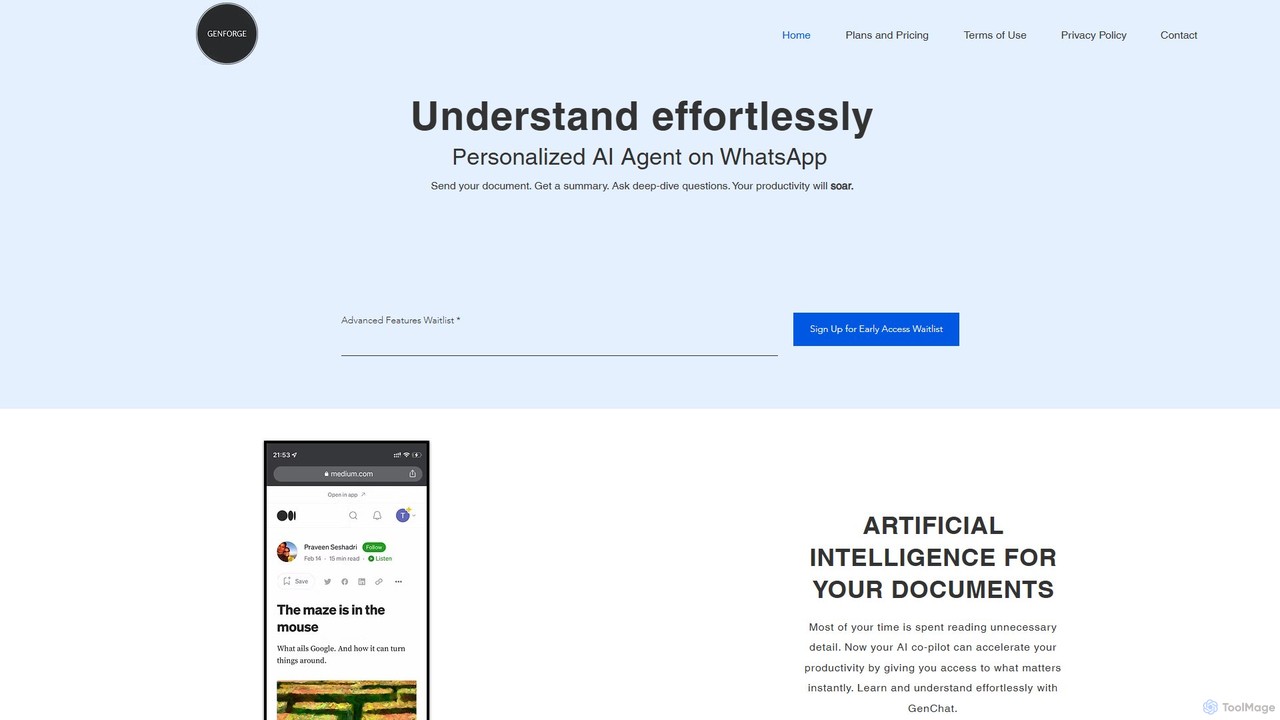
GenForge is a personal AI assistant on WhatsApp that transforms how you interact with documents. Simply send a PDF or other document to get instant summaries, ask detailed questions using text or audio, and receive real-time answers. It boosts your productivity by cutting through clutter, allowing you to understand complex information effortlessly. GenForge also includes AI chat support and on-the-go image generation, making it a versatile tool for students, professionals, and researchers.

Personal Assistant
Visits 3.6KFavorites 98Likes 85

About Document Summarizer

Document Summarizer tools are AI-powered applications specifically engineered to condense lengthy texts into concise, coherent summaries, extracting key information and main ideas. Leveraging advanced natural language processing (NLP) and machine learning algorithms, these tools efficiently transform extensive documents, reports, articles, and research papers into digestible formats. They significantly enhance productivity by enabling users to quickly grasp essential content without reading the entire original material, making information retrieval faster and more accessible for professionals and students alike. Unlike general summarizers, document summarizers are optimized for handling structured, often complex, long-form content.

Core Features

  • Automatic Keyphrase Extraction: Identifies and highlights the most important terms, concepts, and entities within the document, providing a quick overview of its main subjects.
  • Abstractive & Extractive Summarization: Offers the flexibility to generate either new, coherent sentences that rephrase the original content (abstractive) or to select and combine original sentences directly from the document (extractive) to form the summary.
  • Customizable Summary Length: Provides users with control over the output, allowing them to specify the desired length, word count, or percentage of the original document for the summary, tailoring it to specific needs.
  • Multi-format & Source Support: Processes a wide array of document types, including PDFs, Word documents (.docx), web pages (URLs), plain text files, and even scanned images with OCR capabilities.
  • Language Versatility & Translation: Supports summarization across numerous languages and some advanced tools can even summarize content while translating it, catering to diverse global content and international teams.

Applicable Scenarios

Professionals across various sectors, including academic researchers, legal practitioners, journalists, and business analysts, extensively utilize document summarizers to combat information overload. They are invaluable for quickly reviewing voluminous academic papers, understanding lengthy legal contracts, getting the gist of extensive market research reports, or preparing executive briefings from detailed internal documents, thereby saving significant time and effort in information synthesis and decision-making processes.

How to Choose

When selecting a document summarizer, prioritize tools with high summarization accuracy and coherence, especially for handling complex, domain-specific texts. Evaluate the range of supported document formats and languages, along with the flexibility to customize summary length and style. Consider integration capabilities with your existing document management systems or productivity suites, a user-friendly interface, and transparent pricing models that align with your usage volume and specific organizational needs.

Featured tool rankings

Document Summarizer use cases

1

Summarize Research Papers & Articles

Academic researchers and students use document summarizers to quickly grasp the core arguments and findings of lengthy scientific papers, journals, and articles, accelerating literature reviews and knowledge acquisition. This allows them to identify relevant studies without reading every word, saving hours in research and improving efficiency in academic pursuits.

2

Condense Legal Documents & Contracts

Legal professionals, such as lawyers and paralegals, employ these tools to rapidly extract key clauses, terms, and conditions from extensive legal contracts, case briefs, and regulatory documents. This streamlines due diligence, contract review, and preparation for court proceedings, significantly reducing manual review time and improving accuracy in legal analysis.

3

Generate Meeting Minutes & Transcripts Summaries

Business professionals and administrative staff utilize document summarizers to create concise summaries from long meeting transcripts, audio recordings (after transcription), or detailed discussion notes. This ensures that key decisions, action items, and important discussions are easily identifiable and shareable, improving follow-up efficiency and overall team communication.

4

Extract Key Information from Business Reports

Business analysts and executives leverage document summarizers to quickly digest comprehensive market research reports, financial statements, and internal performance reviews. This enables them to identify critical trends, opportunities, and risks for strategic planning and informed decision-making without sifting through hundreds of pages, leading to faster insights and more agile responses.

5

Create Content Briefs from Source Material

Content creators and marketers use document summarizers to distill essential information from various source materials, such as competitor analyses, industry reports, or long-form articles, into concise content briefs. This helps in outlining new articles, blog posts, or marketing campaigns, ensuring all key points are covered efficiently and consistently across different content pieces.

6

Review Technical Manuals & User Guides

Technical support teams and product users apply document summarizers to quickly find answers or understand complex instructions within lengthy technical manuals, software documentation, or user guides. This speeds up troubleshooting processes, improves user comprehension of product functionalities, and reduces the time spent searching for specific information in dense texts.

Document Summarizer FAQ

What are Document Summarizer tools?

Document Summarizer tools are AI-powered applications specifically designed to automatically condense long-form textual content, such as reports, articles, research papers, and legal documents, into shorter, more digestible summaries. They utilize advanced natural language processing (NLP) to identify and extract the most critical information, main ideas, and key arguments, presenting them in a concise format. Their primary goal is to save users time by allowing them to quickly understand the essence of extensive materials without reading them in their entirety.

How do Document Summarizer tools differ from general summarizers?

While both aim to condense text, Document Summarizer tools are specifically optimized for handling structured, often complex, and lengthy documents like PDFs, Word files, and web pages. They often feature robust capabilities for processing multi-page layouts, tables, and figures, and are designed to maintain coherence and accuracy across extensive content. General summarizers might be more suited for shorter texts, emails, or chat conversations, and may lack the advanced parsing and context retention needed for comprehensive documents.

What are the key benefits of using an AI Document Summarizer?

The primary benefits include significant time savings, as users can quickly grasp the core content of lengthy documents without manual reading. They help combat information overload by providing digestible summaries, improving productivity for researchers, students, and business professionals. Additionally, these tools enhance decision-making by allowing faster access to critical insights from reports and analyses, and can improve comprehension by highlighting essential points, leading to more efficient workflows.

Can Document Summarizers handle different document formats and languages?

Yes, most advanced Document Summarizer tools are built to support a wide range of document formats, including common ones like PDF, DOCX, TXT, and even URLs for web pages. Many also incorporate Optical Character Recognition (OCR) to process scanned documents or images containing text. Furthermore, leading tools offer multi-language support, enabling users to summarize content in various languages or even translate and summarize simultaneously, catering to a global user base.

How accurate are AI-generated document summaries?

The accuracy of AI-generated document summaries has significantly improved with advancements in NLP and machine learning. Modern tools can produce highly coherent and accurate summaries, especially when dealing with well-structured and clear source texts. However, accuracy can vary depending on the complexity, domain-specificity, and quality of the original document, as well as the specific algorithms used by the tool. It's often recommended to review critical summaries for complete accuracy, particularly in sensitive fields like legal or medical research.