ScrumDesk
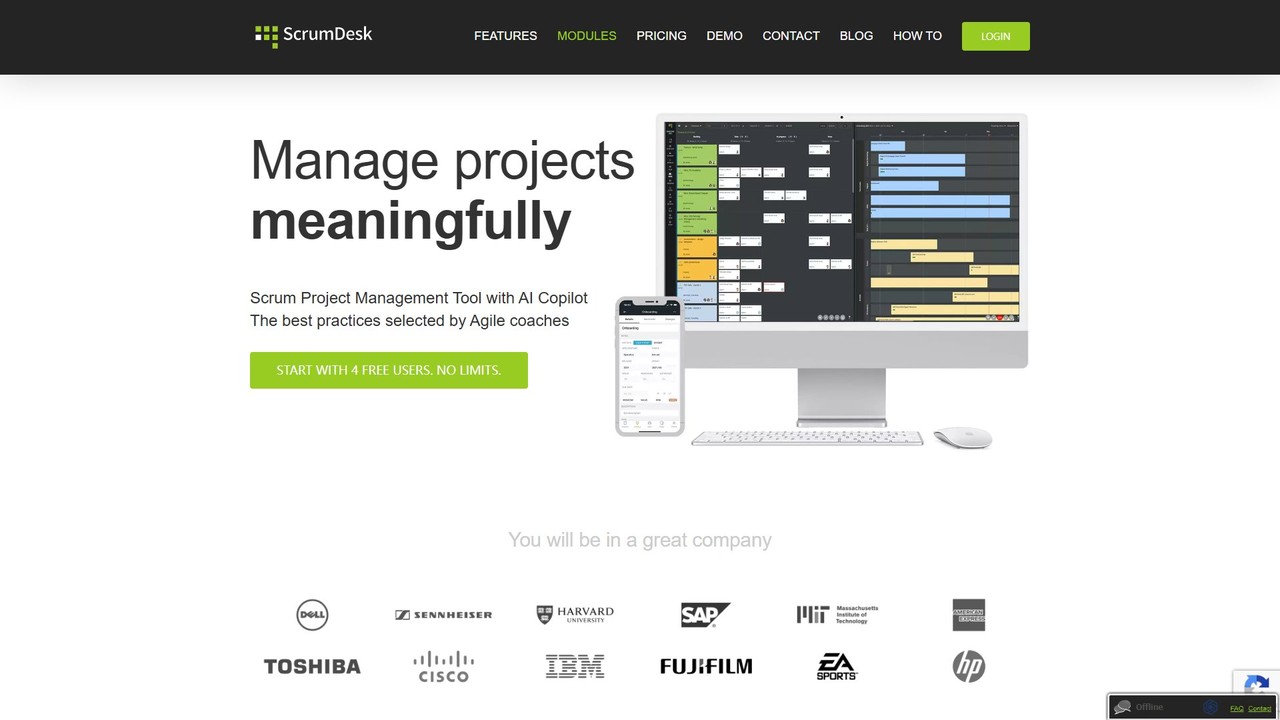
ScrumDesk is a comprehensive project management tool for Agile teams, integrating OKRs, backlogs, roadmaps, and Scrum/Kanban boards. It …
ScrumDesk is a comprehensive project management tool for Agile teams, integrating OKRs, backlogs, roadmaps, and Scrum/Kanban boards. It facilitates continuous improvement with advanced retrospective and root cause analysis features, and enhances collaboration through deep Slack integration. Ideal for Product Owners, Scrum Masters, and development teams.
Quila
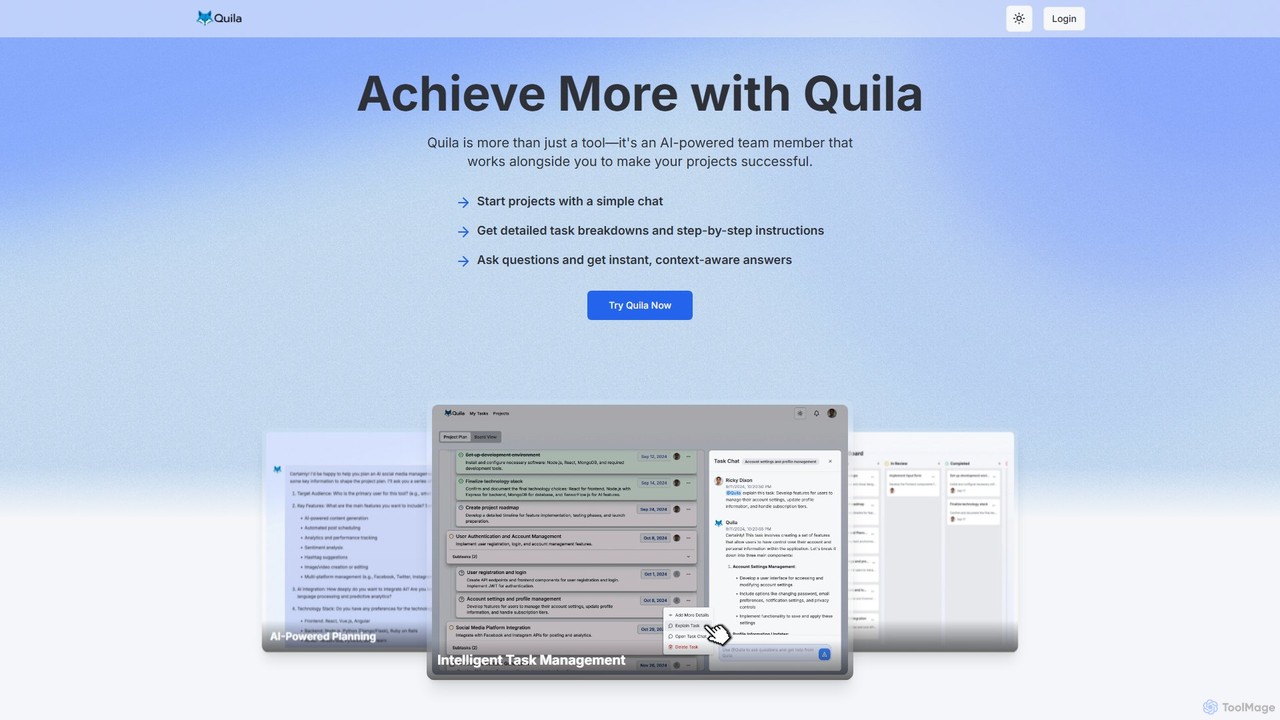
Quila is an AI-powered project management tool that acts as an intelligent team member. It transforms project ideas …
Quila is an AI-powered project management tool that acts as an intelligent team member. It transforms project ideas into detailed, actionable plans through a simple chat interface. Featuring a customizable Kanban board, AI-generated subtasks, and a collaborative AI assistant, Quila streamlines workflows, enhances team alignment, and eliminates ambiguity from start to finish.
The Drive AI
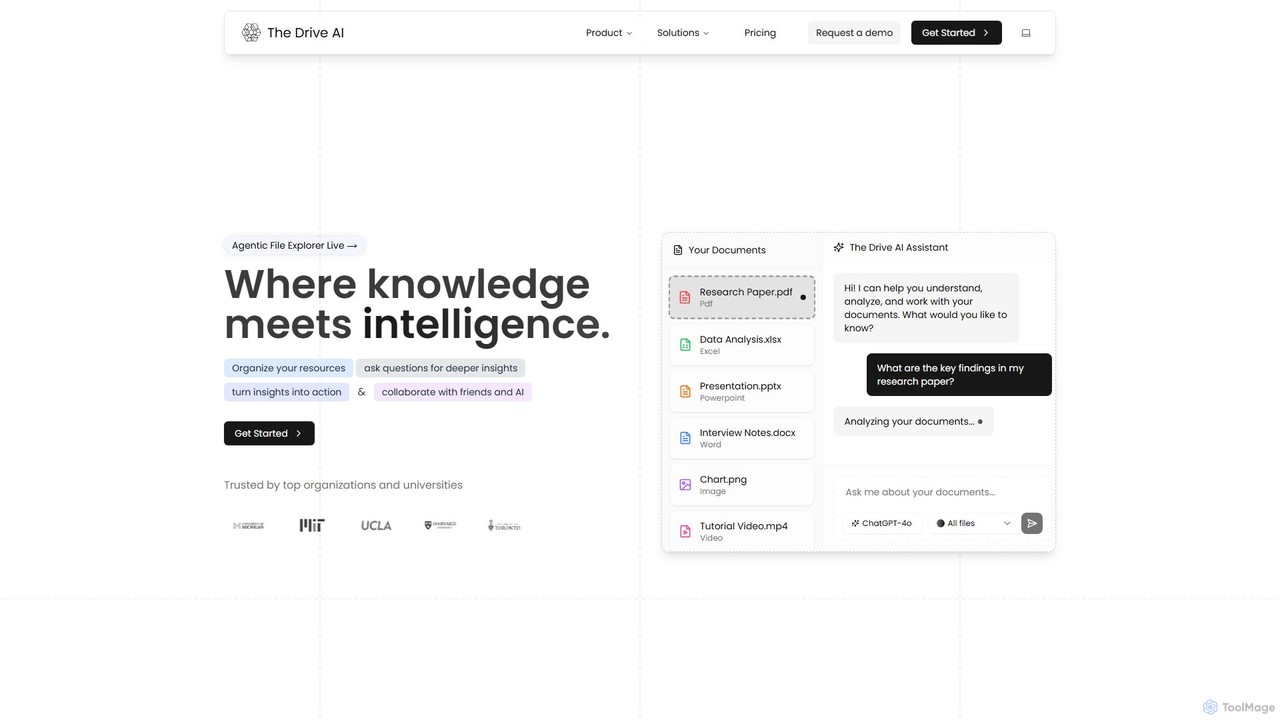
The Drive AI is an all-in-one AI-powered workspace that combines file management, document analysis, team collaboration, and content …
The Drive AI is an all-in-one AI-powered workspace that combines file management, document analysis, team collaboration, and content creation. Upload any file type, ask questions to get instant insights with cited sources, and collaborate with your team in real-time. It's designed to replace multiple tools, streamlining your workflow and boosting productivity for individuals and teams across various industries.
Planbow
Planbow is an AI-powered strategic planning platform designed to unify strategy, planning, execution, and monitoring. It helps teams …
Planbow is an AI-powered strategic planning platform designed to unify strategy, planning, execution, and monitoring. It helps teams design contextual strategies, activate adaptive workflows, and orchestrate execution seamlessly. With an AI Co-Pilot providing intelligent guidance, Planbow transforms complex business goals into actionable, data-driven plans, ensuring alignment and accelerating results for product managers, strategy teams, and founders.
Plexo
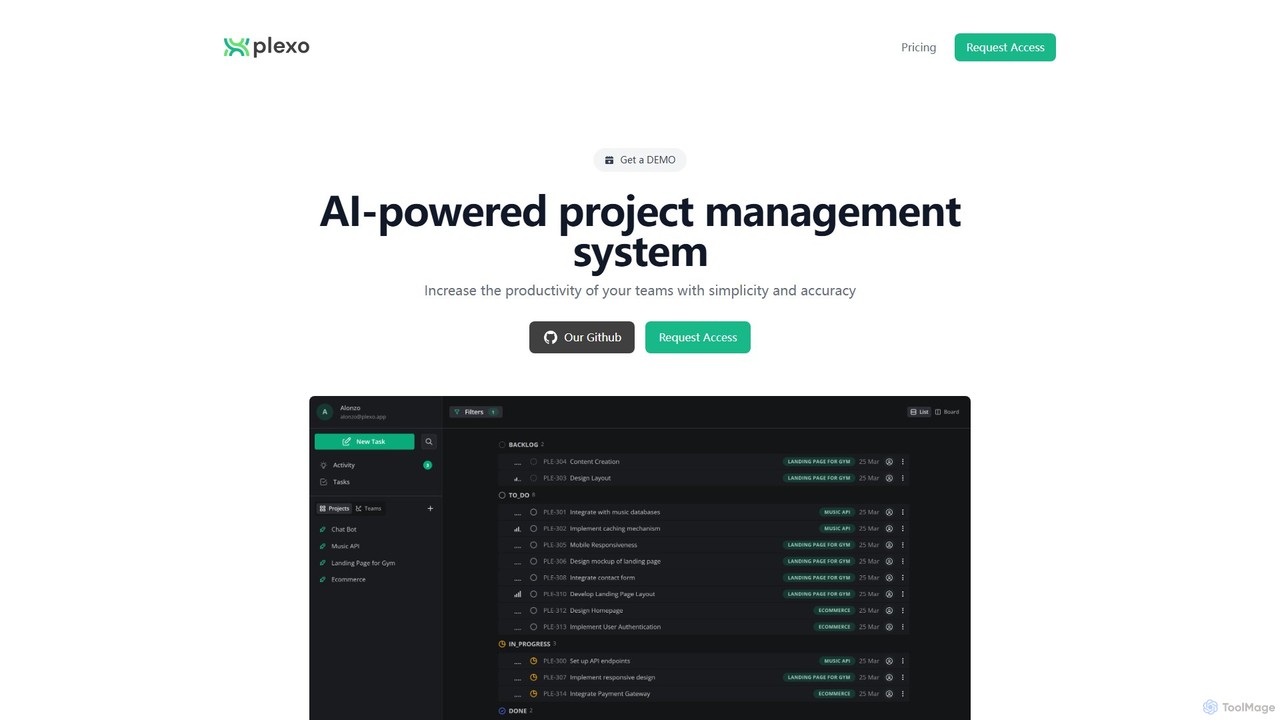
Plexo is an AI-powered project management system designed to boost team productivity. It uses artificial intelligence to automate …
Plexo is an AI-powered project management system designed to boost team productivity. It uses artificial intelligence to automate project design, generate tasks and subtasks, and provide an intelligent chat assistant, simplifying workflows and ensuring accuracy.
About Collaboration
AI Collaboration tools are platforms that use artificial intelligence to enhance real-time teamwork on shared documents, projects, and digital spaces. These tools often leverage AI to automate meeting summaries, suggest content improvements, and streamline communication within a shared environment. They are designed to improve the quality and efficiency of joint work by providing intelligent assistance directly within the collaborative workflow. This enables teams to co-create, iterate, and make decisions faster, regardless of physical location.
Core Features
- Real-time Co-editing: Multiple users can simultaneously edit documents, spreadsheets, or designs with cursors visible to all participants.
- AI Meeting Assistants: Automatically transcribe meetings, generate summaries, identify action items, and highlight key decisions.
- Intelligent Task Management: Suggests task assignments and deadlines based on conversation context or document content.
- Shared Digital Whiteboards: Provides an infinite canvas for brainstorming where AI can help organize ideas and create diagrams.
- Automated Version Control: Tracks changes intelligently, simplifies conflict resolution, and makes it easy to revert to previous versions.
Use Cases
These tools are particularly valuable for remote or hybrid teams in creative industries, software development, and consulting. For example, a marketing team can co-author a campaign brief with AI suggesting better phrasing, while a distributed engineering team can use an AI-powered whiteboard to map out system architecture during a virtual meeting.
How to Choose
When selecting an AI Collaboration tool, consider its integration capabilities with your existing stack (e.g., Slack, Jira, Google Workspace). Evaluate the specific AI features offered—do you need transcription, content generation, or task automation? Also, assess the platform's security protocols for protecting sensitive shared information and its scalability to support your team's growth.
CollaborationUse Cases
Co-authoring Marketing Campaign Briefs
A marketing team uses an AI collaboration platform to draft a new campaign brief. Multiple team members—a copywriter, a designer, and a strategist—work in the same document simultaneously. The AI assistant suggests stronger headlines, checks for brand voice consistency, and automatically creates a task list from action items mentioned in the comments, assigning them to the relevant team members. This process reduces review cycles from days to hours.
Remote Sprint Planning with a Digital Whiteboard
A distributed software development team conducts its sprint planning meeting using an AI-powered digital whiteboard. As team members add virtual sticky notes for user stories, the AI automatically groups related items by theme and identifies potential dependencies. At the end of the session, the AI generates a structured summary of the sprint plan and exports the user stories directly to their project management tool, like Jira, saving significant manual data entry time.
Automating Client Meeting Follow-ups
A consulting firm uses an AI collaboration tool that integrates with their video conferencing software. After a client call, the tool automatically generates a full transcript, a concise summary, and a list of action items. The consultant can quickly review and edit this output, then share it with both the client and internal team members. This ensures everyone is aligned on next steps and eliminates the manual work of note-taking and summarizing, improving client communication and internal accountability.
Collaborative Legal Document Review
A legal team collaborates on a complex contract using a secure AI platform. As multiple lawyers add comments and suggest edits, the AI tracks all changes and highlights potential conflicting clauses introduced by different contributors. It can also cross-reference clauses with a library of standard legal language to suggest more precise wording. This real-time, intelligent feedback mechanism accelerates the review process and reduces the risk of human error in critical legal documents.
Streamlining Academic Research Collaboration
A group of university researchers from different institutions uses an AI collaboration tool to co-write a research paper. The platform helps manage citations and automatically formats the bibliography in the required style. Its AI can also summarize lengthy source materials, helping the team quickly grasp key findings. The shared workspace ensures everyone is working on the latest version, preventing confusion and redundant work common in academic collaborations.
Developing a Product Roadmap Collaboratively
A product management team uses an AI collaboration tool to build their quarterly roadmap. They start with a brainstorming session on a digital whiteboard where AI helps categorize ideas into themes like 'User Growth' or 'Technical Debt'. Later, they transition to a shared document where they detail each initiative. The AI assistant links discussions from the whiteboard to the document, summarizes comment threads to identify key concerns, and helps draft initiative descriptions, ensuring the final roadmap is comprehensive and reflects the team's collective input.