ScrumDesk
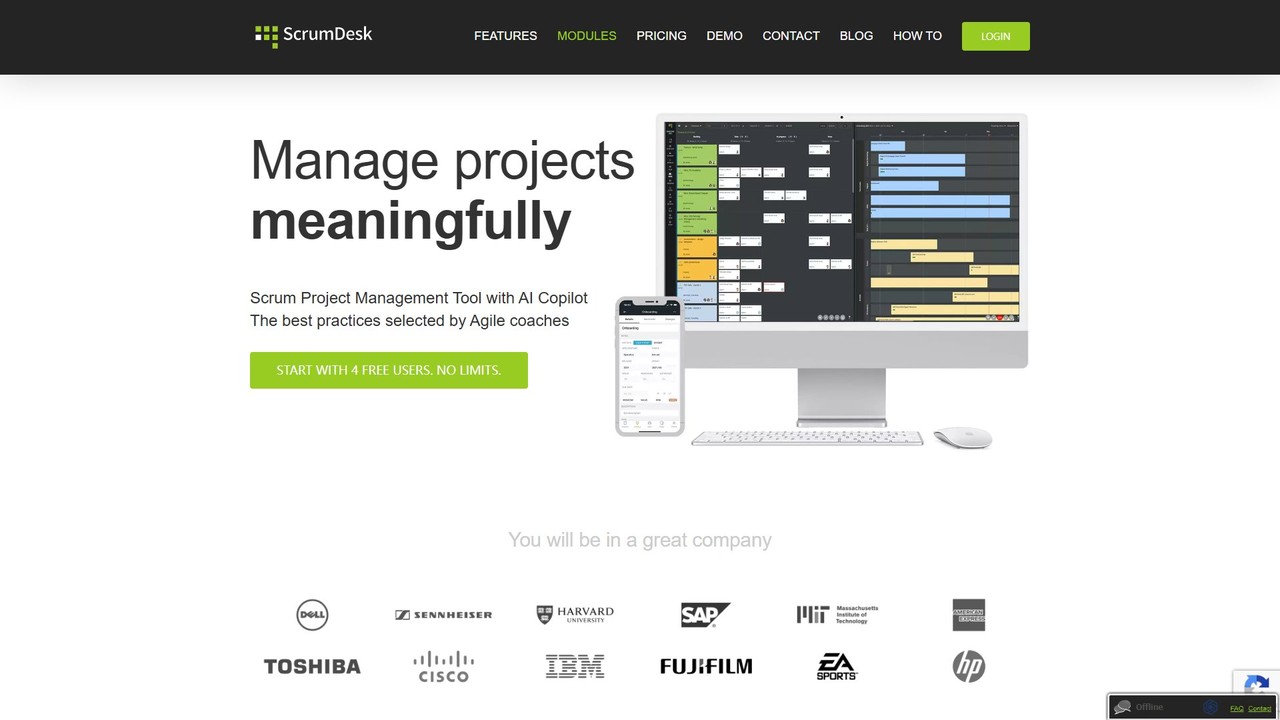
ScrumDesk is a comprehensive project management tool for Agile teams, integrating OKRs, backlogs, roadmaps, and Scrum/Kanban boards. It …
ScrumDesk is a comprehensive project management tool for Agile teams, integrating OKRs, backlogs, roadmaps, and Scrum/Kanban boards. It facilitates continuous improvement with advanced retrospective and root cause analysis features, and enhances collaboration through deep Slack integration. Ideal for Product Owners, Scrum Masters, and development teams.
Quila
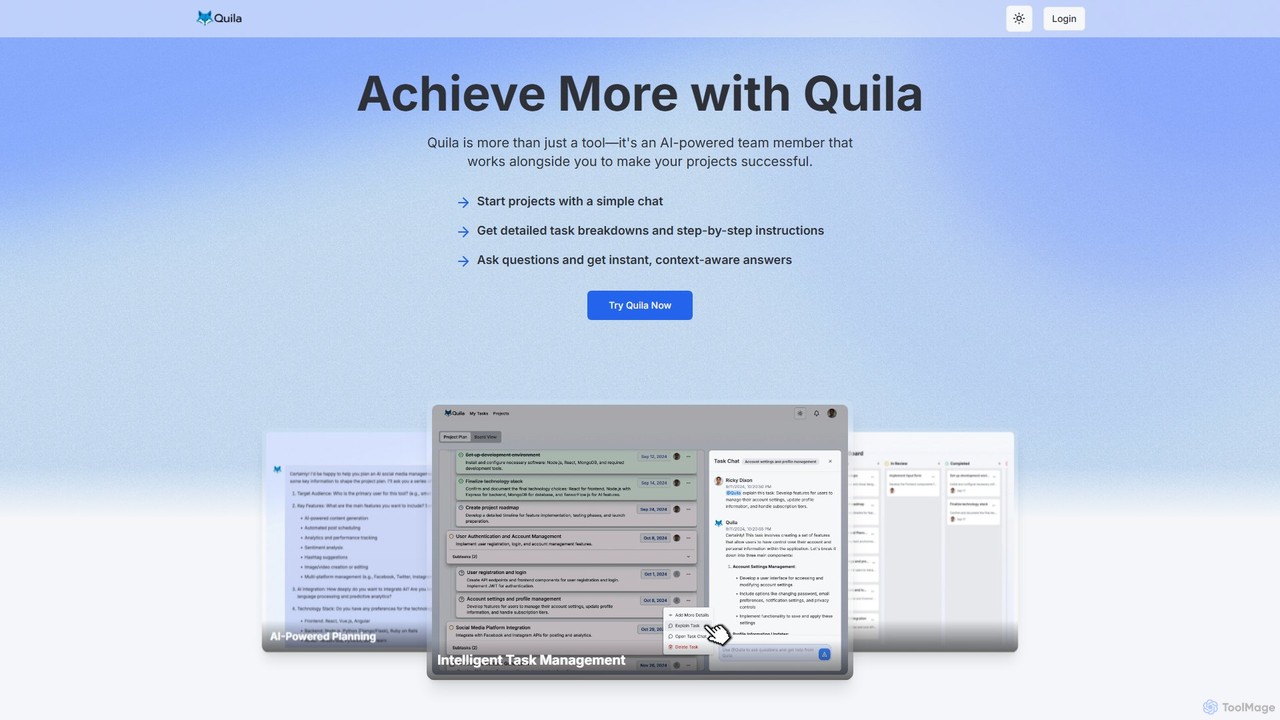
Quila is an AI-powered project management tool that acts as an intelligent team member. It transforms project ideas …
Quila is an AI-powered project management tool that acts as an intelligent team member. It transforms project ideas into detailed, actionable plans through a simple chat interface. Featuring a customizable Kanban board, AI-generated subtasks, and a collaborative AI assistant, Quila streamlines workflows, enhances team alignment, and eliminates ambiguity from start to finish.
The Drive AI
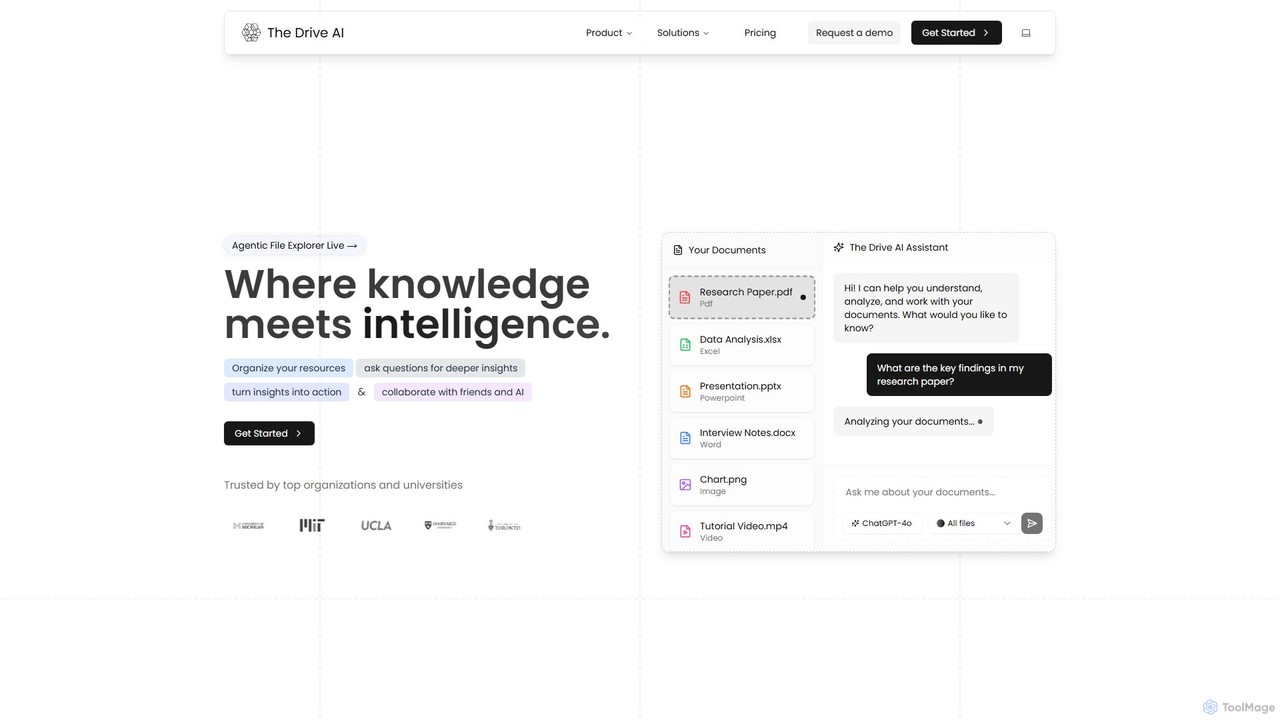
The Drive AI is an all-in-one AI-powered workspace that combines file management, document analysis, team collaboration, and content …
The Drive AI is an all-in-one AI-powered workspace that combines file management, document analysis, team collaboration, and content creation. Upload any file type, ask questions to get instant insights with cited sources, and collaborate with your team in real-time. It's designed to replace multiple tools, streamlining your workflow and boosting productivity for individuals and teams across various industries.
Planbow
Planbow is an AI-powered strategic planning platform designed to unify strategy, planning, execution, and monitoring. It helps teams …
Planbow is an AI-powered strategic planning platform designed to unify strategy, planning, execution, and monitoring. It helps teams design contextual strategies, activate adaptive workflows, and orchestrate execution seamlessly. With an AI Co-Pilot providing intelligent guidance, Planbow transforms complex business goals into actionable, data-driven plans, ensuring alignment and accelerating results for product managers, strategy teams, and founders.
Plexo
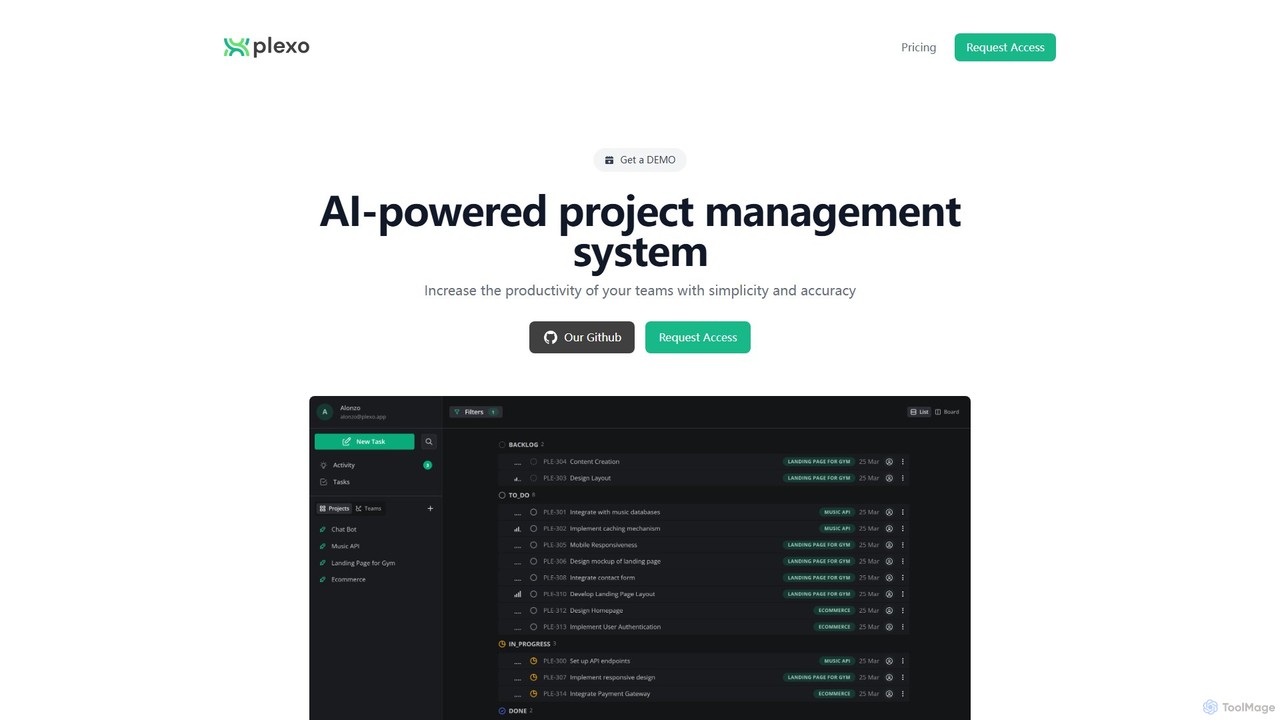
Plexo is an AI-powered project management system designed to boost team productivity. It uses artificial intelligence to automate …
Plexo is an AI-powered project management system designed to boost team productivity. It uses artificial intelligence to automate project design, generate tasks and subtasks, and provide an intelligent chat assistant, simplifying workflows and ensuring accuracy.
About Teamwork
AI Teamwork tools are platforms that leverage artificial intelligence to streamline collaboration, automate workflows, and enhance communication within teams. These tools utilize technologies like natural language processing (NLP) and machine learning to analyze project data, summarize discussions, and predict potential bottlenecks. Their primary value lies in reducing administrative overhead, improving decision-making with data-driven insights, and fostering a more connected environment for remote and hybrid teams. By automating routine tasks, they free up teams to focus on strategic, high-impact work.
Core Features
- Intelligent Task Management: Automatically suggests task assignments, prioritizes work based on project goals, and predicts completion timelines.
- AI Meeting Assistant: Generates real-time transcriptions, concise summaries, and actionable items from video or audio meetings.
- Collaborative Knowledge Hub: Uses semantic search to help team members quickly find relevant documents, past decisions, and internal experts.
- Automated Workflow Orchestration: Connects various applications and automates multi-step processes based on predefined triggers and team activities.
- Team Analytics and Insights: Provides reports on productivity patterns, communication flows, and overall project health to identify areas for improvement.
Use Cases
These tools are widely adopted by software development teams for agile sprint management, marketing agencies for coordinating complex campaigns, and large enterprises for managing cross-functional projects. They are particularly effective for remote-first companies that rely on asynchronous communication and need a central source of truth to maintain alignment and productivity across distributed teams.
How to Choose
When selecting an AI Teamwork tool, consider its integration capabilities with your existing software stack (e.g., Slack, Jira, Google Workspace). Evaluate its scalability to ensure it can support your team's growth. Assess the specific AI features offered to see if they match your primary needs, such as meeting summaries or predictive analytics. Finally, consider the user interface's intuitiveness to ensure high adoption rates among all team members.
TeamworkUse Cases
Automating Project Status Reporting
For project managers overseeing multiple initiatives, manually compiling status updates is time-consuming. An AI Teamwork tool automates this process. It integrates with task management boards, communication channels, and document repositories. The AI scans for task completions, key decisions in chat threads, and updated documents. It then generates a concise, structured status report highlighting progress, risks, and upcoming milestones. This saves the project manager several hours per week, reduces human error, and provides stakeholders with consistent, real-time updates without manual intervention.
Streamlining Agile Development Sprints
Software development teams using Agile methodologies need to maintain momentum and clarity. An AI Teamwork tool enhances this by intelligently managing the backlog. Based on historical data and dependencies, the AI can suggest sprint priorities and estimate story points more accurately. During daily stand-ups, an AI meeting assistant can capture updates and automatically flag blockers in the project board. This reduces time spent on administrative tasks and allows developers to focus on coding, while providing product owners with a clearer, data-informed view of the sprint's progress.
Capturing Action Items from Client Meetings
For account managers and sales teams, ensuring follow-through after a client call is critical. An AI Teamwork tool with a meeting assistant can record and transcribe the entire conversation. After the call, its NLP capabilities analyze the transcript to identify commitments, questions, and action items. It then automatically drafts these items and suggests assigning them to the relevant team members with due dates. This process ensures no deliverable is forgotten, creates a searchable record of the conversation, and improves accountability and client satisfaction.
Onboarding New Remote Employees
For HR departments and team leads, onboarding remote employees presents unique challenges in knowledge transfer. An AI Teamwork tool can create a centralized knowledge hub. New hires can use natural language queries to ask questions like "What is our vacation policy?" or "Where can I find the brand guidelines?" and receive instant answers from the AI, which sources information from company documents. The platform can also automate the onboarding checklist, assigning tasks like 'Set up IT equipment' to the IT department and 'Schedule introductory meetings' to the team lead, ensuring a smooth and consistent experience for every new employee.
Coordinating Multi-Channel Marketing Campaigns
Marketing teams juggle tasks across social media, email, content, and paid ads. An AI Teamwork platform acts as a central command center. It can automate the workflow for content creation, from drafting to approval and scheduling posts across platforms. The AI can analyze performance data from all channels and provide insights, such as suggesting the best times to post or identifying which content formats are performing best. This data-driven approach helps optimize campaign strategy in real-time, ensures brand consistency, and improves overall marketing ROI by focusing efforts on what works.
Managing Cross-Functional Product Launches
Product managers launching a new feature must coordinate engineering, marketing, sales, and support teams. An AI Teamwork tool provides a unified view of all launch-related activities. The AI can identify dependencies between tasks—for example, marketing cannot create tutorials until the feature is finalized by engineering. It can proactively flag potential delays if one team falls behind, allowing the product manager to reallocate resources or adjust timelines. This predictive capability moves project management from a reactive to a proactive state, increasing the likelihood of a smooth, on-time launch.