ToolMage
Sign in

Best 6 Artificial Intelligence AI tools for Technology

Popular Artificial Intelligence AI tools in Technology include Google Research, The Ankler, Adobe Newsroom, May Mobility, Benson, and Brimink, helping you work more efficiently.

Adobe Newsroom
Free

Adobe Newsroom

Adobe Newsroom is the official source for the latest news, press releases, and media assets from Adobe. It provides in-depth information on product updates, financial performance, and technological innovations, with a strong focus on Adobe's advancements in artificial intelligence across its Creative Cloud, Document Cloud, and Experience Cloud suites. It is an essential resource for journalists, analysts, partners, and customers.

3D
Visits 198KFavorites 127Likes 124
Brimink
Freemium

Brimink

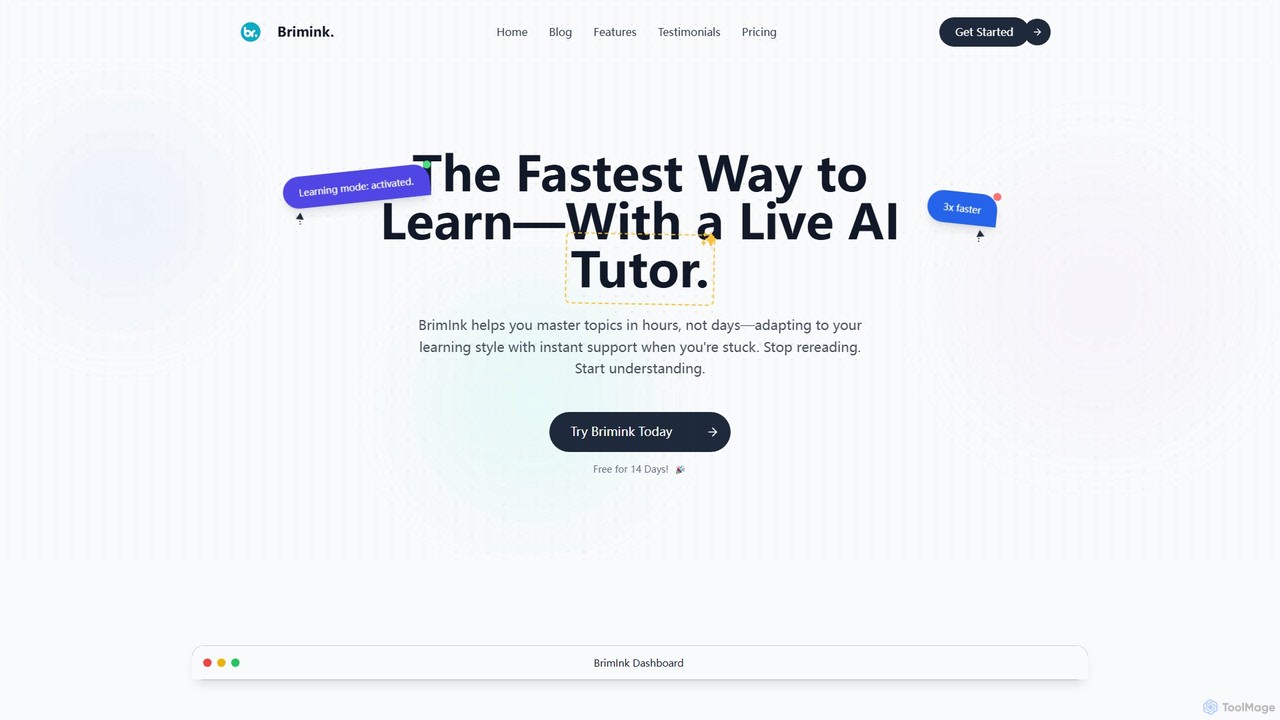
Brimink is a personal AI tutor designed to help you master topics 3x faster. It adapts to your unique learning style, providing instant support and visual explanations to replace dense text. Ideal for students and lifelong learners seeking deeper understanding and efficiency.

Tutoring
Visits 4.9KFavorites 130Likes 127
The Ankler
Freemium

The Ankler

The Ankler is a premier media platform and newsletter offering insider analysis and sharp commentary on the Hollywood entertainment industry. It provides in-depth coverage of business deals, power dynamics, and the transformative impact of technology, with a dedicated section, 'Reel AI,' focusing on Artificial Intelligence in film and television.

Market Intelligence
Visits 248.1KFavorites 125Likes 150
Google Research
Free

Google Research

Google Research is a premier hub for exploring groundbreaking advancements in science and AI. It provides open access to a vast repository of research papers, project showcases, and open-source resources across diverse fields like machine learning, quantum computing, and healthcare. It's an essential platform for researchers, developers, and enthusiasts to stay at the forefront of technological innovation and understand its real-world impact.

Learning Platform
Visits 1.5MFavorites 142Likes 129
May Mobility
Paid

May Mobility

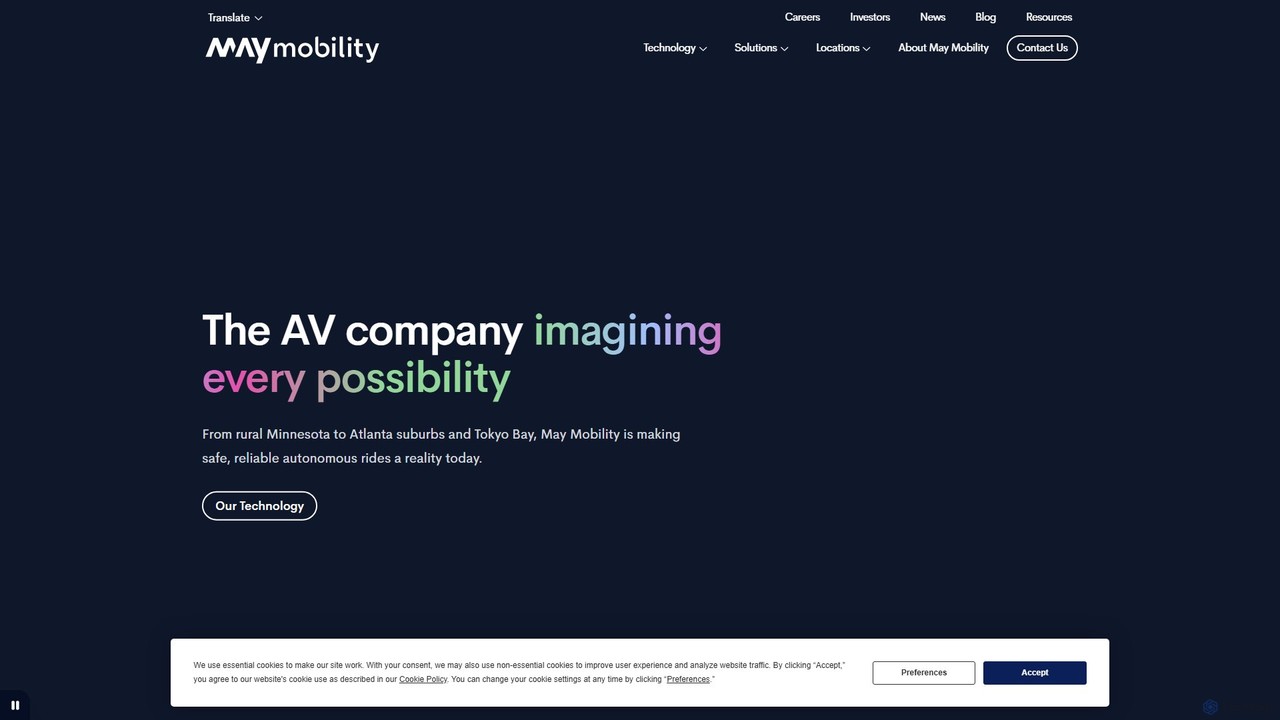
May Mobility is an autonomous vehicle (AV) technology company that develops and deploys self-driving transit solutions. Leveraging its proprietary Multi-Policy Decision Making (MPDM) AI, May Mobility provides safe, accessible, and reliable autonomous rides, partnering with cities, transit agencies, and businesses to solve transportation challenges.

Logistics
Visits 23.4KFavorites 122Likes 120
Benson

Benson

Benson is an AI-powered investment assistant designed to make stock market investing easy and accessible for everyone. It simplifies the process by screening thousands of stocks, providing clear, jargon-free recommendations, and allowing users to invest with a single tap. Benson automates portfolio management, making it ideal for beginners and busy individuals.

Investing
Visits 6.6KFavorites 130Likes 128

About Artificial Intelligence

Artificial Intelligence (AI) tools are advanced systems designed to simulate human intelligence, enabling machines to perform tasks that typically require cognitive abilities such as learning, problem-solving, and decision-making. These tools leverage complex algorithms, vast datasets, and sophisticated learning models to understand, reason, learn, and adapt to new information. They deliver significant value by automating processes, optimizing decision-making, extracting profound insights from data, and enhancing user experiences across various industries.

Core Features

  • Machine Learning: Empowers systems to learn from data, identify patterns, and make predictions or decisions with minimal human intervention, continuously improving performance.
  • Natural Language Processing (NLP): Allows computers to understand, interpret, and generate human language, facilitating interactions like chatbots, sentiment analysis, and language translation.
  • Computer Vision: Equips machines with the ability to "see," process, and interpret visual information from images and videos, enabling tasks such as object recognition, facial detection, and autonomous navigation.
  • Predictive Analytics: Utilizes statistical algorithms and machine learning techniques to analyze historical data and forecast future outcomes, helping businesses anticipate trends and mitigate risks.
  • Intelligent Automation: Combines AI capabilities with robotic process automation (RPA) to automate complex, multi-step business processes, leading to increased efficiency and reduced errors.

Applicable Scenarios

AI tools are widely adopted across diverse sectors, transforming operations and strategic capabilities. In healthcare, they assist with accelerated drug discovery, personalized treatment plans, and diagnostic imaging analysis. Financial institutions extensively use AI for robust fraud detection, algorithmic trading, and personalized financial advice. E-commerce platforms deploy AI for highly personalized product recommendations, dynamic pricing, and efficient customer service via intelligent chatbots. Furthermore, manufacturing benefits from AI-driven predictive maintenance, optimizing equipment uptime, and enhancing quality control processes.

How to Choose

Selecting the right Artificial Intelligence tool involves evaluating several critical factors to ensure alignment with your specific needs. First, clearly define the problem you aim to solve and assess the availability and quality of data for training the AI model. Consider the tool's integration capabilities with your existing IT infrastructure and its scalability to handle future data volumes and user growth. Evaluate the level of technical expertise required for implementation, ongoing maintenance, and model fine-tuning. Additionally, scrutinize the vendor's support, pricing model, and their commitment to ethical AI development and data privacy standards.


Artificial Intelligence use cases

1

Automating Customer Service Inquiries with AI Chatbots

Customer service departments leverage AI tools, specifically intelligent chatbots, to handle a high volume of routine customer inquiries 24/7. By deploying an AI chatbot trained on FAQs and historical interaction data, companies can provide instant answers to common questions, guide users through processes, and escalate complex issues to human agents. This significantly reduces response times, improves customer satisfaction, and frees up human agents to focus on more intricate problems, leading to substantial operational efficiency gains.

2

Delivering Personalized Content and Product Recommendations

E-commerce platforms and media streaming services utilize AI algorithms to analyze user behavior, preferences, and historical data to offer highly personalized content or product recommendations. AI tools process vast amounts of data on past purchases, viewing habits, search queries, and demographic information to predict what a user is most likely to engage with next. This enhances user experience, increases engagement, and drives sales by presenting relevant options tailored to individual tastes, optimizing conversion rates.

3

Implementing Predictive Maintenance for Industrial Equipment

Manufacturing and industrial sectors employ AI tools for predictive maintenance, moving beyond scheduled or reactive repairs. Sensors on machinery collect real-time operational data, which AI algorithms analyze to detect anomalies and predict potential equipment failures before they occur. This allows maintenance teams to schedule interventions precisely when needed, minimizing downtime, extending asset lifespan, reducing maintenance costs, and preventing costly production interruptions, thereby optimizing operational efficiency.

4

Assisting Medical Diagnosis and Personalized Treatment

Healthcare professionals use AI tools to enhance diagnostic accuracy and personalize treatment plans. AI algorithms can analyze medical images (like X-rays, MRIs), patient records, and genomic data to identify subtle patterns indicative of diseases, often with greater speed and precision than human eyes alone. This aids in early detection of conditions like cancer, helps predict patient responses to different therapies, and supports clinicians in making more informed, data-driven decisions for individualized patient care.

5

Enhancing Financial Fraud Detection and Security

Financial institutions deploy AI tools to combat sophisticated fraud schemes and enhance transaction security. AI systems continuously monitor millions of transactions in real-time, learning normal spending patterns for individual accounts. When an unusual transaction occurs that deviates significantly from these learned patterns, the AI flags it as potentially fraudulent. This proactive approach allows banks to quickly identify and block suspicious activities, minimizing financial losses for both the institution and its customers, and strengthening overall security.

6

Optimizing Supply Chain Logistics and Inventory Management

Businesses leverage AI to optimize complex supply chain operations, from forecasting demand to managing inventory and logistics. AI tools analyze historical sales data, market trends, weather patterns, and even social media sentiment to generate highly accurate demand forecasts. This enables companies to optimize inventory levels, reduce waste, improve delivery routes, and anticipate potential disruptions. The result is a more resilient, cost-effective, and responsive supply chain, enhancing overall operational efficiency and customer satisfaction.

Artificial Intelligence FAQ

What is Artificial Intelligence (AI)?

Artificial Intelligence (AI) is a broad field of computer science focused on creating machines that can perform tasks typically requiring human intelligence. This includes abilities like learning, problem-solving, decision-making, perception, and understanding natural language. AI systems achieve this by analyzing vast amounts of data, identifying patterns, and making predictions or taking actions based on learned insights, rather than being explicitly programmed for every scenario.

How does AI differ from traditional software or automation?

The key difference lies in adaptability and learning. Traditional software follows explicit, pre-programmed rules to perform tasks, while AI systems are designed to learn from data, adapt to new information, and improve their performance over time without constant human reprogramming. Traditional automation executes repetitive tasks based on fixed logic; AI-driven automation can handle variability, make decisions, and optimize processes based on evolving conditions and data insights.

What are the main branches or types of AI?

AI encompasses several key branches. Machine Learning (ML) is a core branch where systems learn from data to make predictions. Deep Learning is a subset of ML using neural networks with many layers. Natural Language Processing (NLP) enables computers to understand and generate human language. Computer Vision allows machines to interpret visual information. Other areas include robotics, expert systems, and planning, each addressing different aspects of intelligent behavior.

How can businesses effectively implement AI?

Effective AI implementation starts with clearly defining a business problem that AI can solve, rather than just adopting technology for its own sake. Businesses should ensure they have access to high-quality, relevant data for training AI models. It's crucial to start with pilot projects, build a skilled AI team or partner with experts, and consider the ethical implications and potential biases. A phased approach, focusing on measurable outcomes and continuous iteration, is often most successful.

What are the ethical considerations in AI development and deployment?

Ethical considerations are paramount in AI. Key concerns include algorithmic bias, where AI systems perpetuate or amplify societal biases present in their training data, leading to unfair outcomes. Data privacy is another critical aspect, ensuring personal information is protected. Accountability for AI decisions, transparency in how AI systems work, and the potential impact on employment are also significant. Developers and deployers must prioritize fairness, transparency, and human oversight to build trustworthy AI.