Socratic by Google
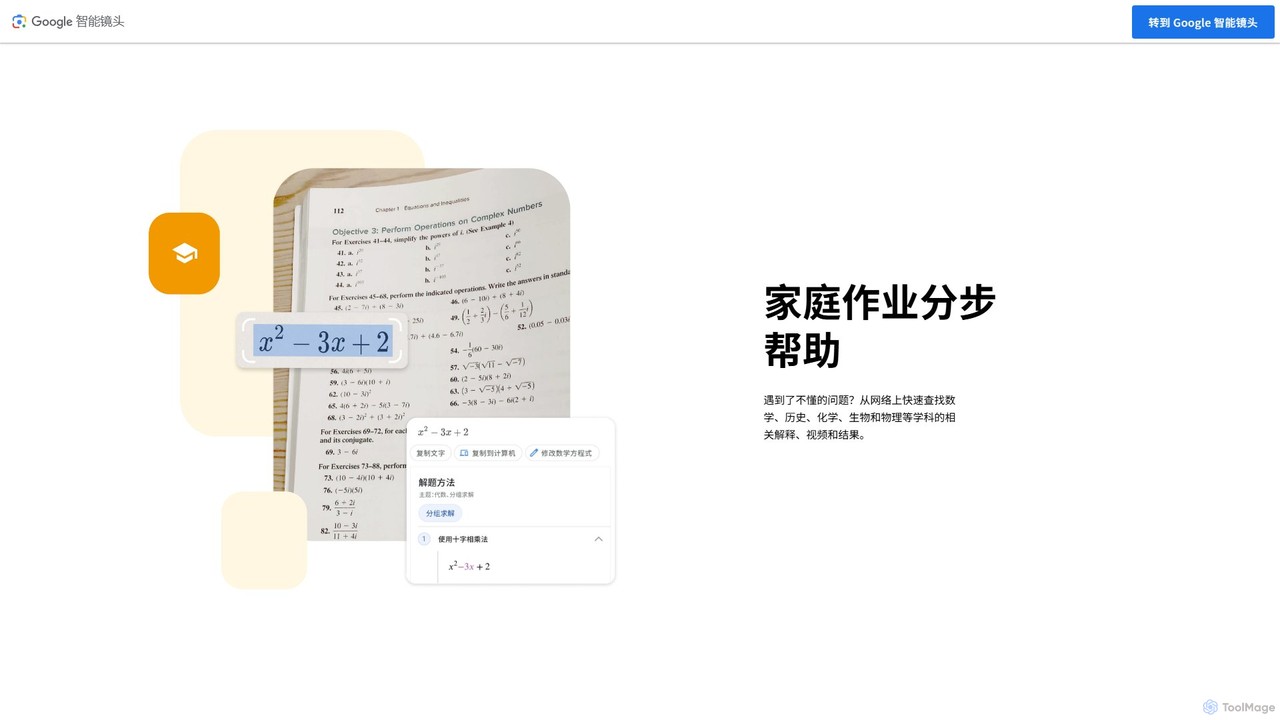
Socratic by Google is an AI-powered learning app designed to help students with their homework. By taking a …
Socratic by Google is an AI-powered learning app designed to help students with their homework. By taking a photo of a question, users can access detailed explanations, step-by-step solutions, and curated educational resources across various subjects like math, science, and history, fostering a deeper understanding of core concepts.
About Scanner
AI Scanners are advanced tools that leverage artificial intelligence, primarily computer vision and machine learning, to digitize, analyze, and interpret physical objects or documents. Unlike traditional scanners, these intelligent systems go beyond simple image capture, enabling automated data extraction, object recognition, quality inspection, and even 3D model reconstruction. They significantly enhance efficiency and accuracy in various industries by transforming raw visual data into actionable insights.
Core Features
- Intelligent OCR & Data Extraction: Automatically recognizes text, handwriting, and specific data fields from documents, converting them into editable and searchable formats.
- Object Recognition & Classification: Identifies and categorizes physical objects based on visual patterns, useful for inventory, quality control, and security.
- Anomaly Detection: Utilizes AI to spot defects, irregularities, or deviations from expected patterns in scanned items or surfaces.
- 3D Reconstruction: Captures multiple perspectives of an object to generate detailed three-dimensional digital models for design, inspection, or virtual environments.
- Document Understanding: Classifies and organizes documents based on their content and structure, automating filing and information retrieval.
Applicable Scenarios
AI Scanners are invaluable in sectors requiring high-volume data processing or precise visual analysis. They are widely adopted in manufacturing for automated quality checks, in logistics for package sorting and inventory tracking, and in healthcare for digitizing patient records and analyzing medical images. Businesses also use them for intelligent document management, converting paper archives into searchable digital databases.
How to Choose
When selecting an AI Scanner, consider its accuracy in data extraction and object recognition, compatibility with your existing systems (integration capabilities), and the types of data or objects it can process. Evaluate the software's user-friendliness, scalability for future needs, and adherence to data privacy and security standards. Finally, assess the total cost of ownership, including licensing, maintenance, and potential customization.

ScannerUse Cases
Automated Document Processing for Enterprises
Large organizations, such as banks or legal firms, face immense volumes of paper documents. AI Scanners automate the entire process from digitizing physical contracts, invoices, or application forms to intelligently extracting key information like names, dates, and amounts. This eliminates manual data entry errors, drastically reduces processing time, and enables instant searchability, streamlining compliance and operational workflows.
Quality Control in Manufacturing Lines
Manufacturers utilize AI Scanners for real-time, automated quality inspection of products on assembly lines. These scanners, equipped with computer vision, can detect subtle defects, misalignments, or missing components that might be missed by the human eye. This ensures consistent product quality, reduces waste, and prevents faulty items from reaching consumers, leading to significant cost savings and improved brand reputation.
Retail Inventory and Planogram Compliance
Retailers deploy AI Scanners to monitor shelf inventory and ensure planogram compliance. Cameras or mobile devices equipped with AI scanning capabilities can quickly capture images of shelves, identify products, count stock levels, and verify if items are placed according to the store's layout. This provides real-time insights for restocking, optimizes product placement, and enhances the overall shopping experience.
Digitizing Historical Archives and Libraries
Cultural institutions and libraries use AI Scanners to digitize fragile historical documents, rare books, and manuscripts without causing damage. Beyond simple imaging, AI can enhance faded text, correct distortions, and perform OCR on various fonts and languages, making these invaluable resources accessible to researchers worldwide and preserving them for future generations.
3D Model Generation for E-commerce and AR/VR
E-commerce businesses and content creators leverage AI Scanners to create high-fidelity 3D models of products or real-world objects. By scanning an item from multiple angles, AI algorithms reconstruct a detailed 3D representation, which can then be used for interactive product displays, augmented reality (AR) experiences, or virtual reality (VR) simulations. This enhances customer engagement and reduces returns.
Medical Image Analysis and Pathology Digitization
In healthcare, AI Scanners are used to digitize pathology slides, X-rays, MRIs, and other medical images. AI algorithms then analyze these high-resolution scans to assist pathologists and radiologists in identifying anomalies, tumors, or disease markers with greater speed and accuracy. This technology supports faster diagnoses, improves treatment planning, and facilitates remote consultations.